
Rías Baixas
"Every plate of mussels here tastes like the water is still in them — because it practically is."
The first time I understood what the Rías Baixas actually were, I was standing on a hill above the Ría de Arousa watching mussel rafts drift on water so still it looked lacquered. The rías — literally the drowned mouths of ancient river valleys, flooded when the sea rose after the last ice age — cut inland from the Atlantic like fingers, creating sheltered inlets of extraordinary richness. The water is cold enough to keep the shellfish sweet and warm enough to grow things. The hillsides above them are covered in the white Albariño grape. Everything here exists in a kind of productive argument between the land and the sea.
I had rented a small car in Pontevedra and driven south without much plan, stopping in fishing villages when the light looked good or when I saw smoke coming from a kitchen I couldn’t identify. In O Grove, I sat at a counter beside a retired fisherman who was eating barnacles — percebes — one by one, cracking the grey tubes with practiced fingers and pulling out the bright orange meat with his teeth. He didn’t look up. A woman behind the bar poured me a glass of Albariño without asking. It was eleven in the morning and this seemed completely reasonable.
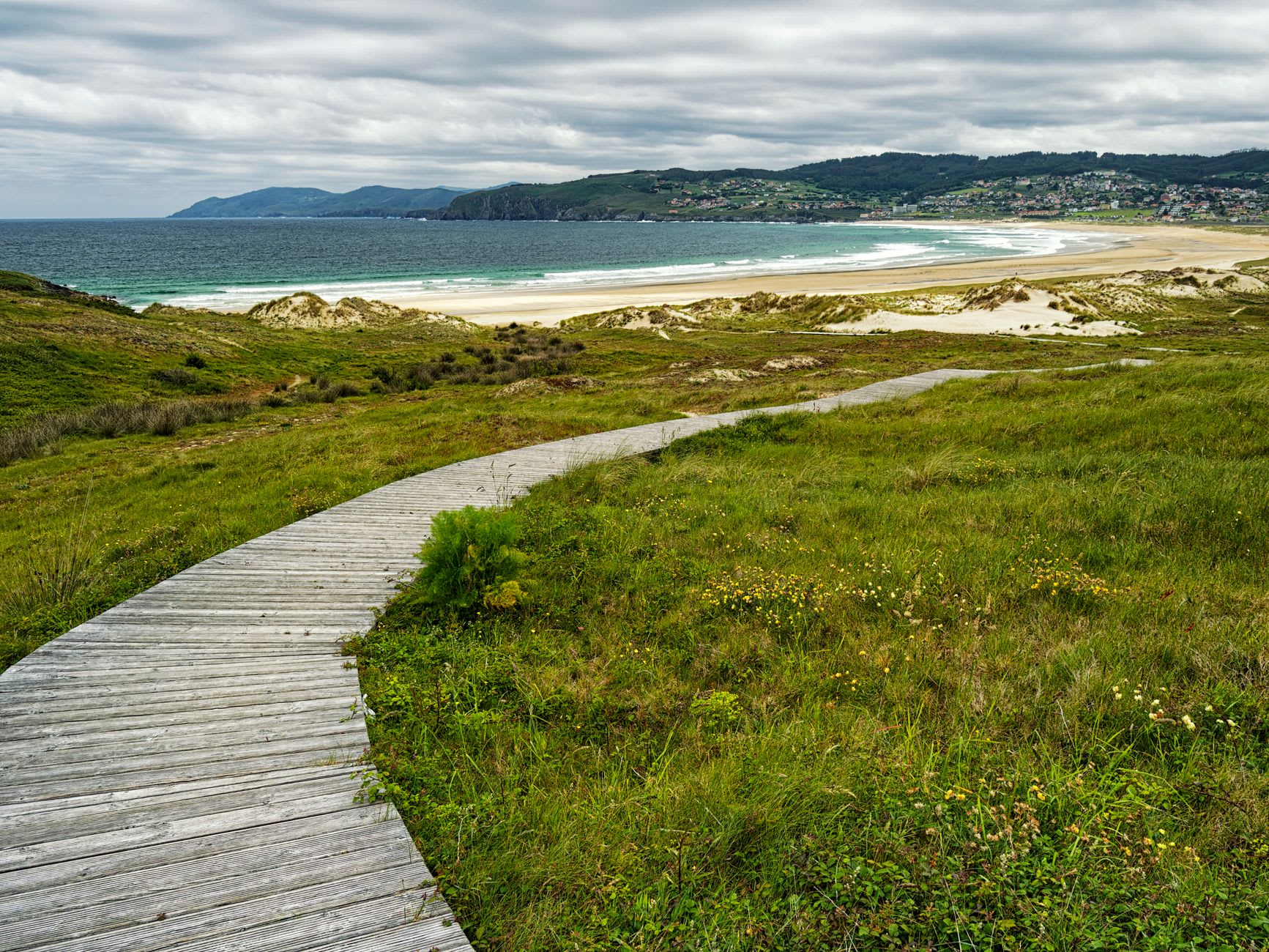
The wine is what the outside world knows best. Albariño from the Rías Baixas is one of those regional whites that tastes wrong anywhere except at its source — the way Muscadet needs the Loire, or Txakoli needs the Basque coast. Chilled in a small glass, it has a saline edge that makes every piece of shellfish taste more like itself. The vineyards are strung on pergola systems — parrales — that lift the vines off the ground to keep the humidity from the water from rotting the grapes. Walking between them in September when the harvest is coming in, with the smell of ripe fruit mixing with the salt air, is one of those accidental experiences I keep returning to when I think about what makes Galicia different from every other corner of Spain.
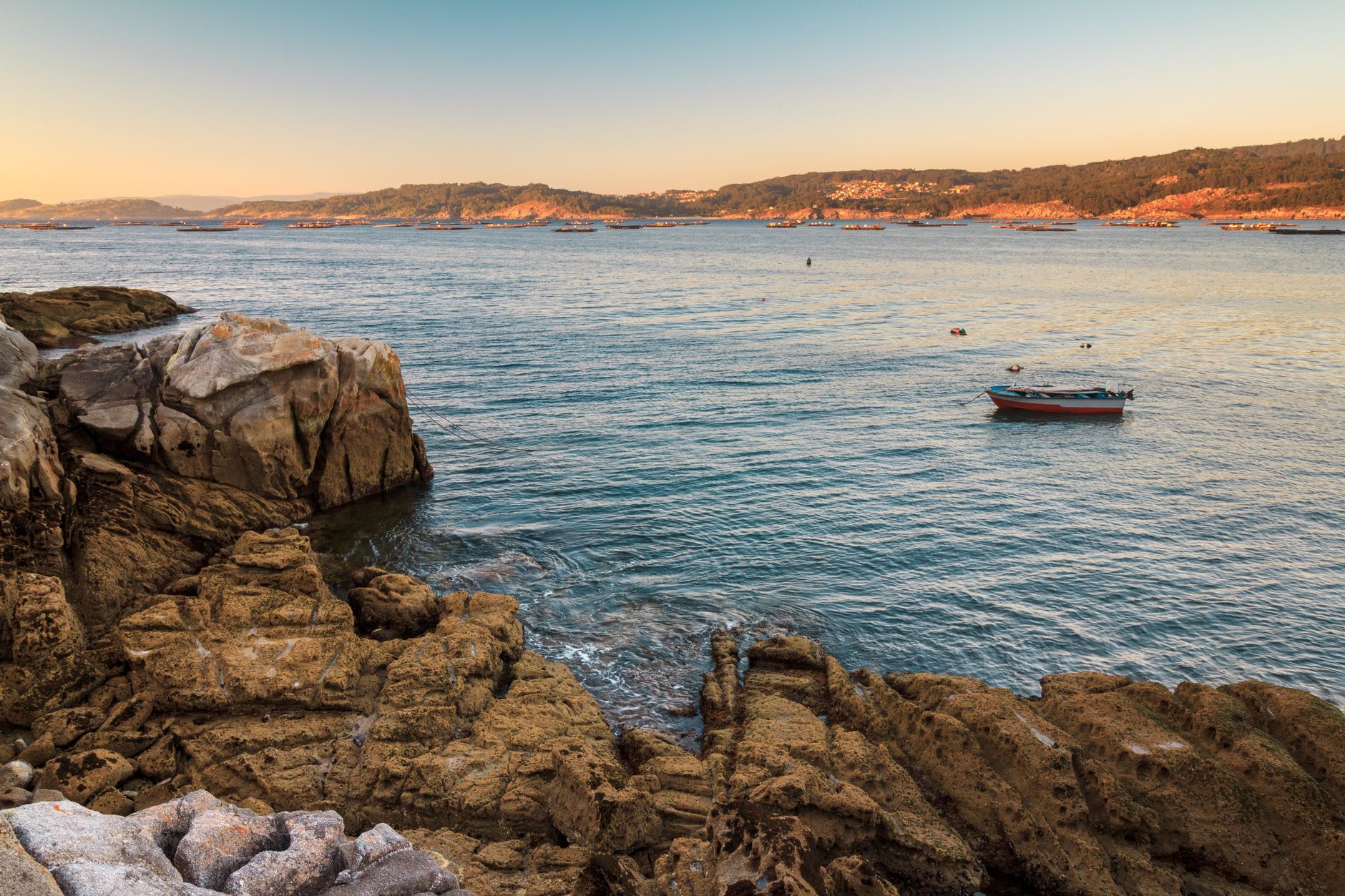
The villages along the inlets — Cambados, Sanxenxo, Combarro — each have their own character. Cambados is the heart of Albariño country, with a ruined Gothic church and a main square ringed by stone colonnades where wine festivals happen in August. Sanxenxo is more resort-like, busy in July and August with Spanish holidaymakers who want beach rather than barnacles. But out of season, even Sanxenxo empties into something quieter and more honest — a long arc of sand and hardly anyone on it, a café where they still have the catch written on a board in Galego.
When to go: May and June for quiet beauty and full markets. September is harvest season for Albariño and one of the best months in all of Galicia — warm days, cooling evenings, the vines heavy with fruit. July and August are high season; the beaches fill, the seafood remains excellent, but prices rise. The shellfish festival in O Grove happens each October and is worth planning around.