
Pontevedra
"The silence of a city that removed its cars is a different silence than countryside — it still smells of coffee and bread."
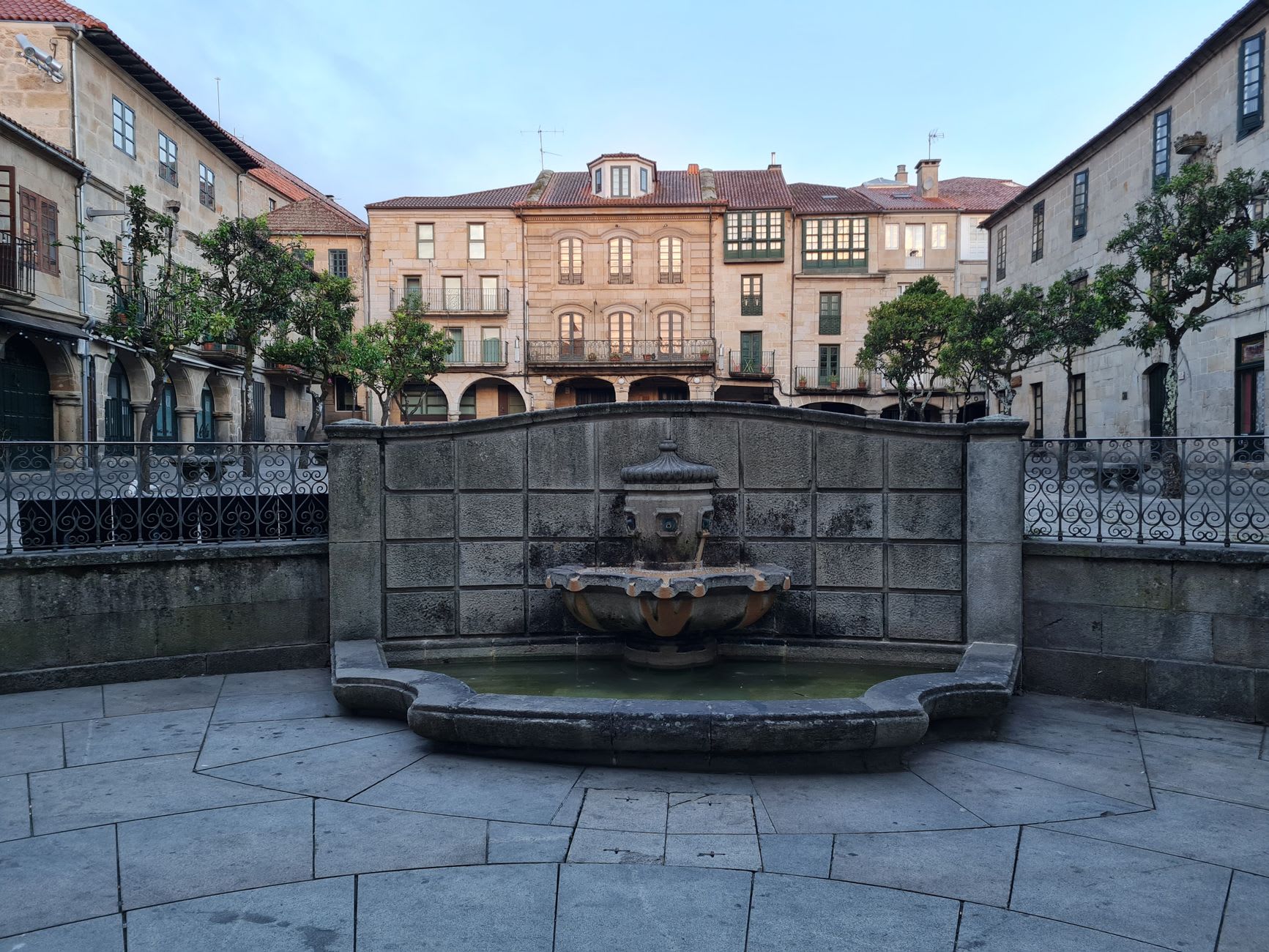
Pontevedra made a decision in the 1990s that felt radical at the time and now looks like simple sanity: it removed cars from most of its historic centre. The result is a medieval granite city where you walk on streets that were built for walking, where conversations happen across café tables that spill onto plazas with no traffic noise to compete with, and where the sound of the city is footsteps on stone, children on bicycles, and the particular ambient hum of people living their lives without engines. I arrived expecting to be charmed. I ended up staying an extra two days because I couldn’t think of a good reason to leave.
The old quarter is compact — you can walk its edges in thirty minutes — but dense with the things that make a Spanish city worth stopping in. The arcaded streets, supported by stone columns that have been there since the Middle Ages, keep pedestrians dry in Galician rain while letting them window-shop, stop at bookstores, and drink coffee in the open air simultaneously. The Praza da Ferrería and the Praza da Peregrina, connected by a short stretch of colonnade, form the heart of the social day: market stalls in the morning, children in the fountains at noon, couples and students and retired men with newspapers in the afternoon. The Basílica de Santa María la Mayor has a Renaissance facade of such extravagant carved detail — ships, angels, apostles, a full naval battle compressed into stone — that it rewards an hour of slow looking.
I ate well in Pontevedra, which is not something I always expect from a mid-sized Spanish city. The tapas culture here is genuine — bars in the old quarter offer a small plate with every drink, and after three or four bars the evening has become a meal without anyone planning it. The pulpo a feira — octopus dressed in smoked paprika and olive oil, served on a wooden board — is the regional dish that Galicia insists on, and Pontevedra’s bar kitchens do it without fussiness, the octopus tender from long cooking, the paprika dark and fragrant. I also found an excellent caldo gallego — the local broth of white beans, chorizo, pork rib and turnip tops — at a bar near the market that looked like it had been serving exactly this soup for at least fifty years, which I suspect it had.
The city’s museum — spread across several connected old buildings near the old town — is one of the best regional museums in Galicia and contains, among other things, the finest collection of Celtic gold jewellery I’ve seen outside Dublin. Galicia’s Celtic heritage is not a marketing claim; the torques and lunulae in these cases are evidence of a pre-Roman culture that was genuinely here. The collection sits quietly in its display cases without making too much of itself, which is very much in the spirit of the city.
When to go: Pontevedra works beautifully year-round as a base for the Rías Baixas. Spring and autumn are perfect — the old quarter is always active but never overwhelmed. Summer evenings are long and sociable. The Peregrina festival in late August fills the old quarter with processions and folk music and is worth experiencing rather than avoiding.