Lugo
"Walking Lugo's Roman walls at dusk, I kept thinking: people have been doing this for two thousand years."
Most Roman walls in the world are ruins — carefully preserved ruins, perhaps, with information boards and ticket booths, but ruins nonetheless. The walls of Lugo are different. They are complete. All 2.1 kilometres of them, up to fifteen metres high and four metres thick in places, running in an unbroken circuit around the old city exactly as they did when they were finished in the third century AD. And you can walk on top of them — all the way around, as long as you like, for free, at any hour. On the evening I arrived, I watched a man jogging the circuit in shorts and trainers, a woman pushing a pram, two teenagers sitting on the parapet eating sandwiches and watching the sun go down over the Galician countryside. The Romans would have recognized the behavior, if not the clothes.
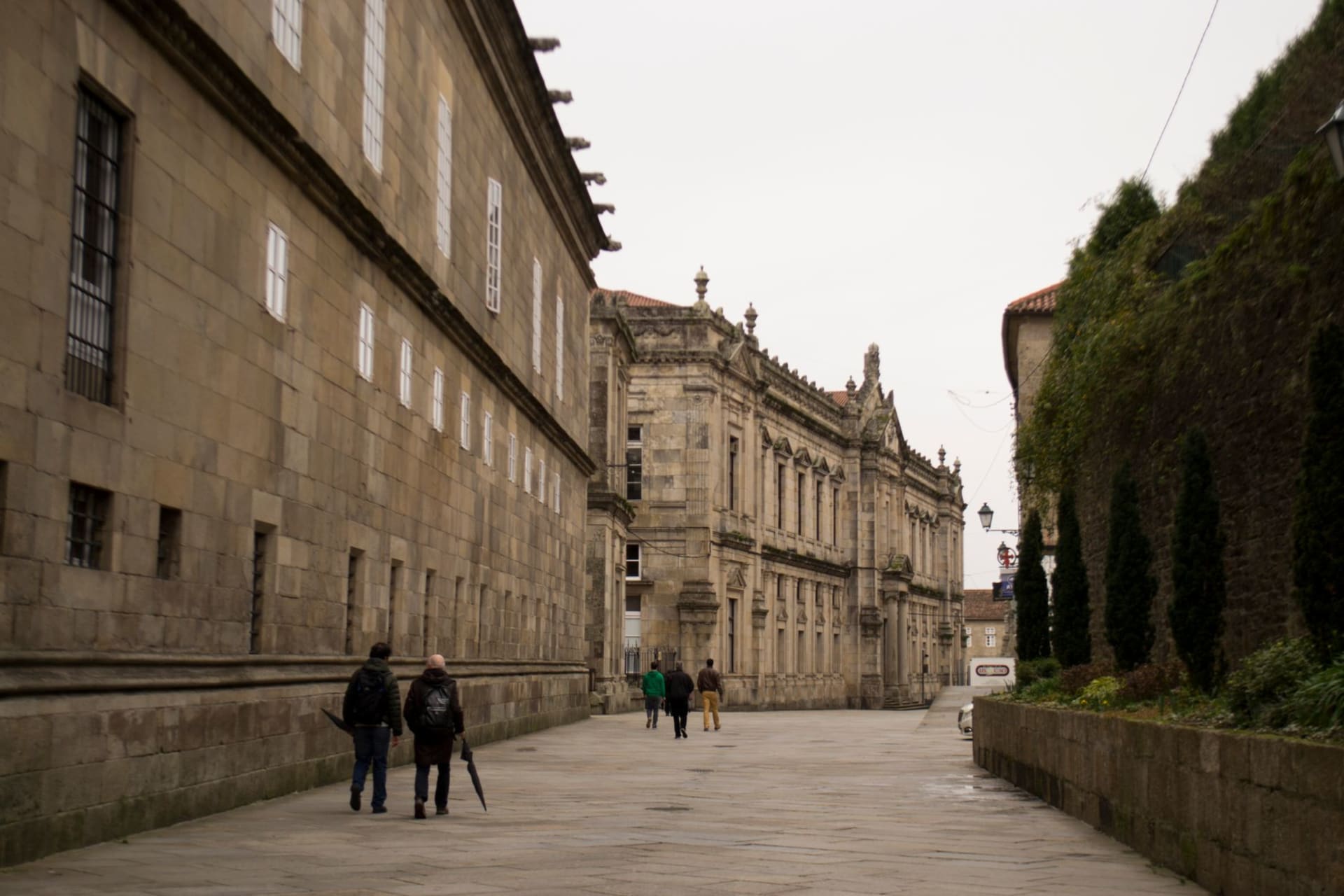
Lugo sits in the interior of Galicia, away from the coastal scenery that draws most visitors, and this relative obscurity is its best quality. The city is genuinely local — less polished for tourism than Santiago, less industrial than Vigo, more interested in its own rhythms than in performing itself for outsiders. The old city within the walls has the density and ease of a place where people have been living for a very long time without ever needing to explain why they stayed. The cathedral — Romanesque in origin, with every subsequent century adding something — is remarkable precisely because it is not swamped with pilgrims; you can take it at your own pace and sit in the quiet nave for twenty minutes without company.

The food culture in Lugo is perhaps the best argument for spending a full day here rather than passing through. Lugo has a tradition of tapas that puts most Spanish cities to shame: many bars in the old city still give a free tapa — sometimes a substantial one — with every drink you order. On a Friday evening I ate my way across three bars in the Praza do Campo, accumulating two plates of tortilla, a small bowl of caldo gallego, a piece of lacón (cured pork shoulder) on bread, and a thimble of local orujo brandy, all for the price of three glasses of wine. Nobody planned this meal. It simply accumulated, which is the best way for meals to happen.

The Wednesday and Saturday markets outside the walls draw farmers and producers from the surrounding countryside — the Galician interior, the Terra Chá plateau to the north, and the valleys leading toward the mountains. Wheels of tetilla cheese, blood sausage still warm, honey in unlabelled jars, eggs from chickens whose names the seller probably knows. This is Galicia’s interior facing its own mirror rather than looking out at the coast, and the result is a market unlike the more tourist-facing ones in Santiago.
When to go: Lugo works year-round but is particularly rewarding in autumn and winter, when the interior Galician climate is crisp and clear. The Arde Lvcvs Roman festival in June reconstructs Roman life within the walls for a long weekend and is extraordinarily well done. The Christmas food market in December is one of the best in Galicia.