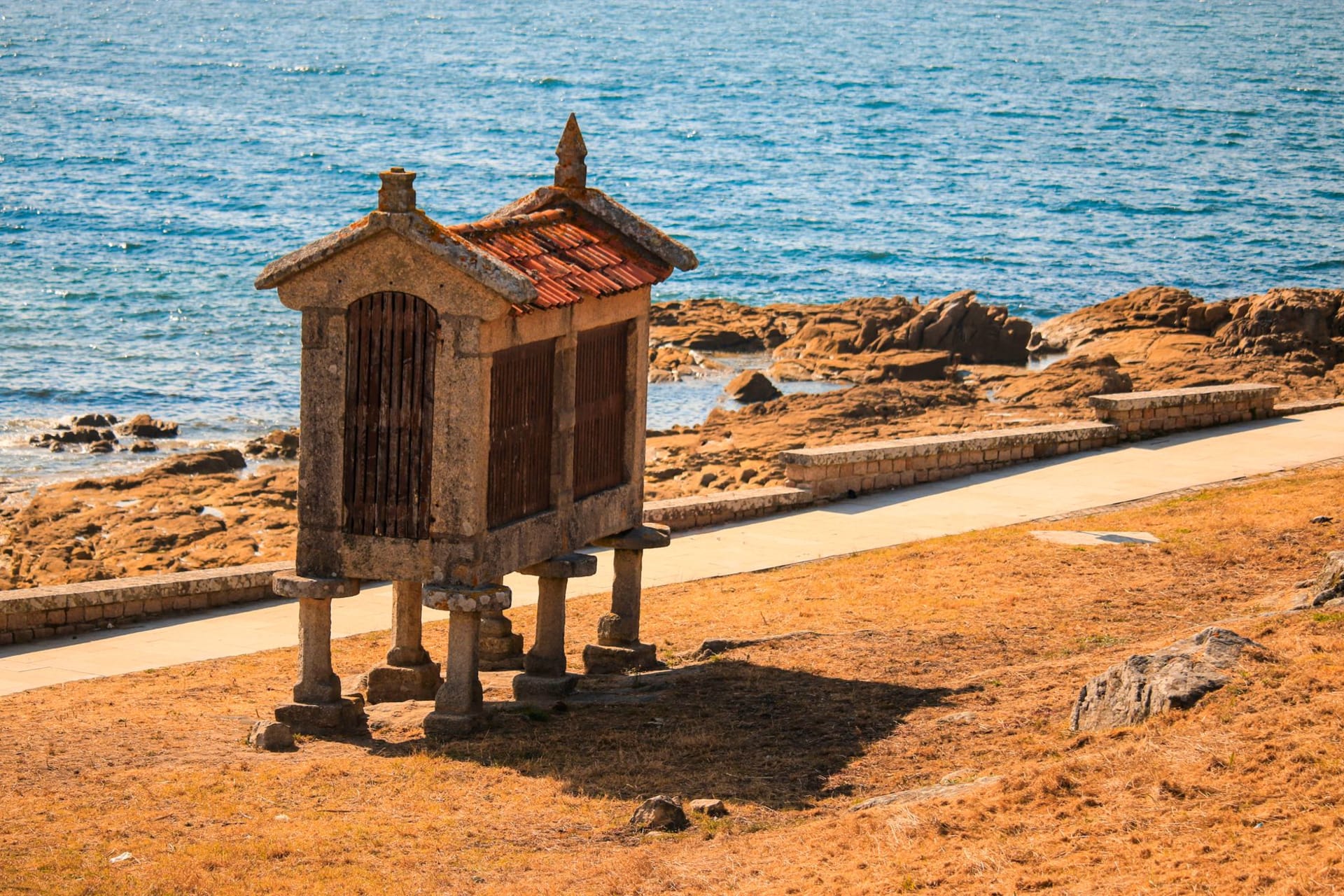
Illas Cíes
"Rodas Beach was voted the world's best. I didn't care about the ranking — I just cared that the water was that colour."
The ferry from Vigo takes about forty-five minutes and by the time you arrive at the Illas Cíes, the city has become a distant blur and the Atlantic has become a presence. Three islands — Illa do Faro, Illa de Monteagudo, and Illa de San Martiño — form the outer barrier of the Ría de Vigo, and together they constitute a national park that limits daily visitor numbers, requires a permit in summer, and has no permanent residents. The result is a place that feels, by Galician coastal standards, improbably pristine.
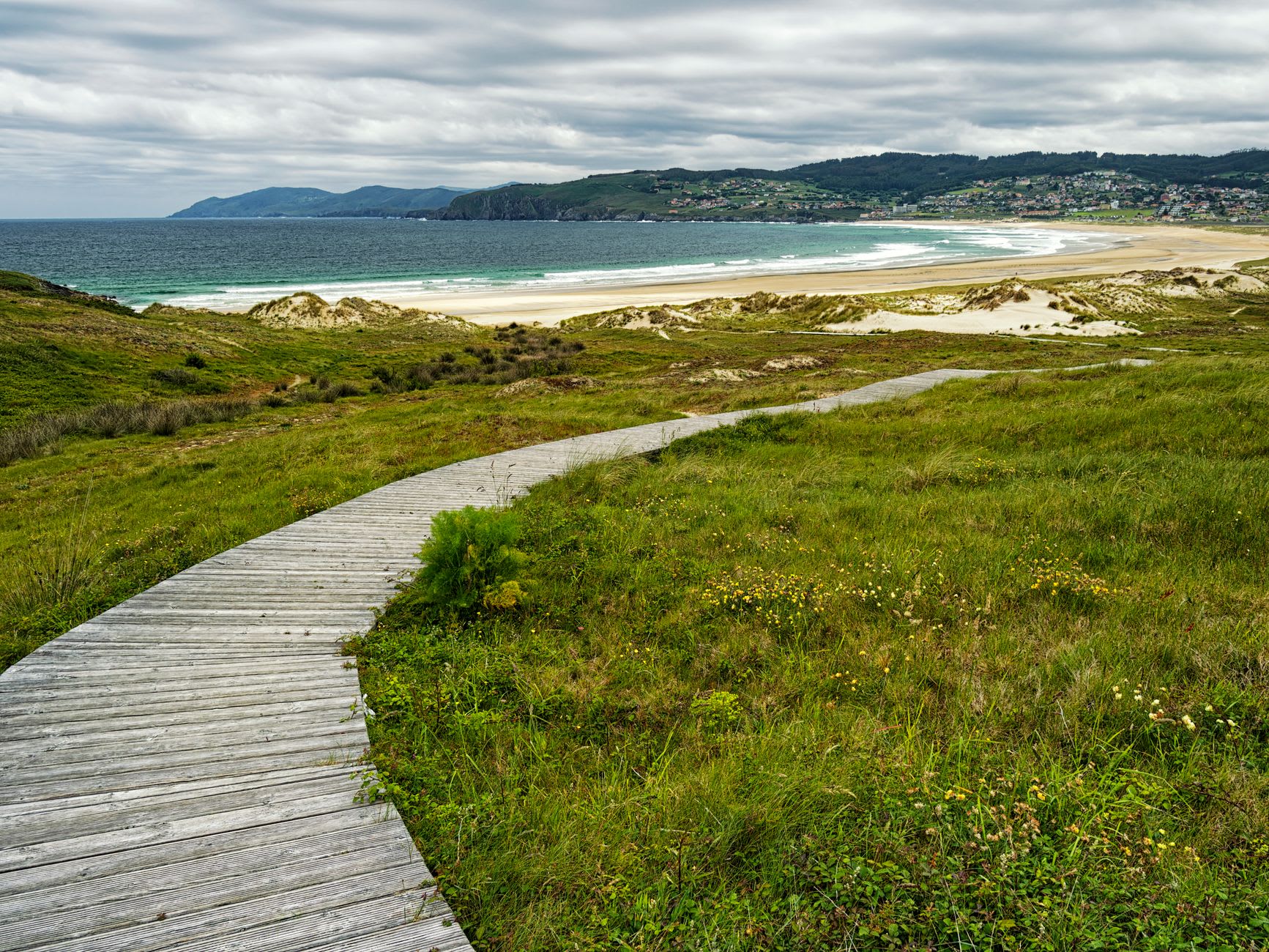
I arrived in late September, which meant the summer crowds had thinned but the ferries still ran. The Praia das Rodas, the beach formed by the tombolo connecting two of the islands, was first listed as one of the world’s best beaches by a British newspaper and has been in circulation ever since. I find the ranking both accurate and misleading — accurate because the arc of white sand, the water that shades from jade to cobalt in the distance, and the complete absence of development behind the dunes is genuinely extraordinary; misleading because the Cíes are not a beach destination in the conventional sense. They are an ecosystem. The beach is incidental to the gannets.
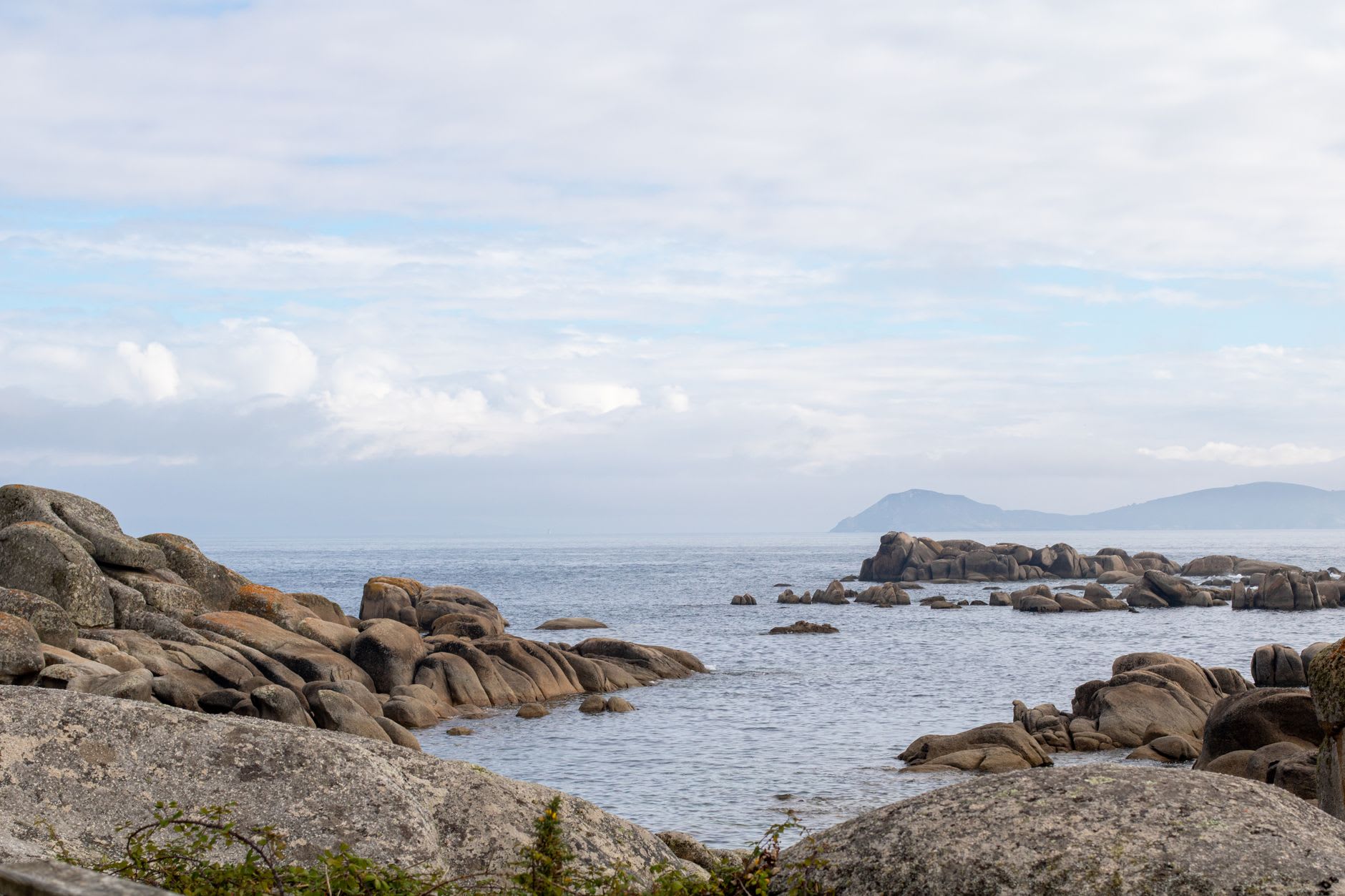
The gannet colony on the Illa do Faro is one of the largest in Europe, and the cliffs above the western coast are alive with birds in a way that makes the beach crowds irrelevant. I walked the trail from the beach up through Atlantic pine and eucalyptus to the cliffs and sat there for an hour watching gannets dive from height — folding their wings at the last moment and entering the water like needles, coming up with silver fish and shaking the water from their blue-ringed eyes. The sound of a gannet colony at close range is not peaceful; it is a full-throated industrial argument between several thousand birds, punctuated by dive entries and the sound of breaking water.
The water in the sheltered Rodas Beach was cold — this is Atlantic Galicia, not the Mediterranean — but transparent in a way that made the cold feel incidental. I swam for twenty minutes in September sunshine with the island’s pine forest on one side and the open sea on the other, which is an extremely specific experience that I have been unable to reproduce anywhere else.
There is a campsite and a simple restaurant on the islands — both managed by the national park and both perfectly calibrated to the idea of a nature reserve: no luxury, no pretension, excellent percebes, cold Albariño wine from a plastic cup. Staying overnight changes the experience completely; once the last ferry leaves and the day visitors go, the islands fall into a silence that makes the gannet colony seem loud by contrast. I didn’t stay overnight on my first visit. I regret that.
When to go: The islands are accessible by ferry from Vigo from Easter through October, with bookings required in summer. Late September and October are the sweet spot: fewer visitors, full ferry schedule, gannets still active, beach water cold but swimmable, the pines golden and the sea a deeper green. July and August require advance booking and the islands reach their daily visitor cap quickly.