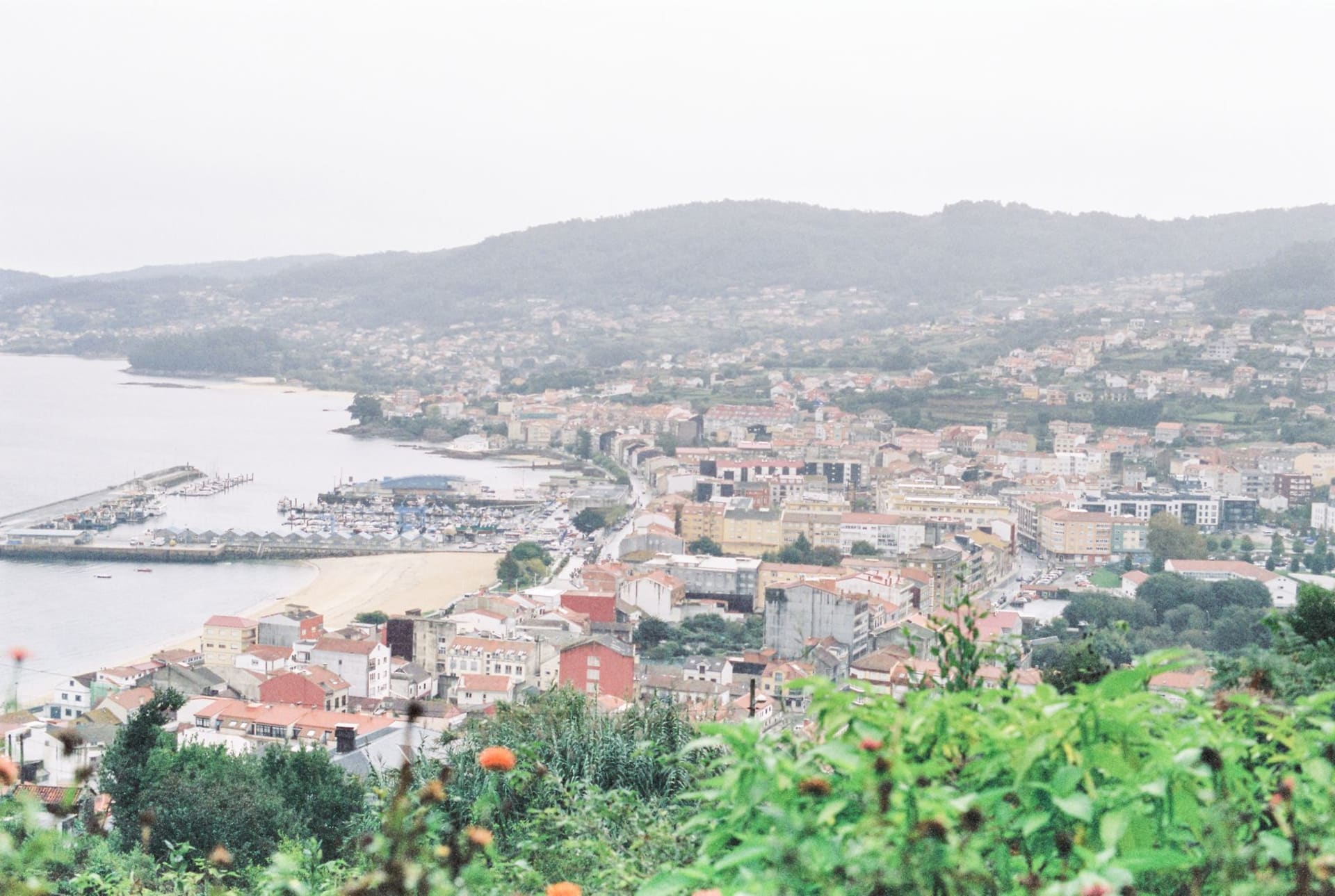
There is a moment, arriving in Combarro from the main road, when the old village comes into view below and you genuinely wonder if someone has preserved it specifically to make photographers feel accomplished. The hórreos — granite grain granaries built on mushroom-shaped stone legs to keep rats out and air circulating — line the waterfront of the Ría de Pontevedra in a row that seems too composed, too still, too perfectly mirrored in the water at low tide. Then you walk closer and realize the stone is six hundred years old, the rust on the iron crosses on top of each granary is genuine, and the cats sleeping on the walls don’t know or care that they are picturesque.
I came in late afternoon on a weekday in October, which meant the village was almost entirely mine. Combarro is a stop on the Rías Baixas tourist circuit and draws real crowds in summer, but out of season it becomes a living place rather than a stage set. An old woman was hanging washing between two hórreos — not for effect, simply because that’s where the line was. A man was mending a fishing net on a stone step worn smooth by centuries of the same. The café at the end of the waterfront sold albariño by the glass and empanada de atún by the slice, and the woman behind the bar spoke to me in Galego until I answered in Spanish, at which point she switched, without comment, to a Spanish that still had a strong Galego music in it.

The hórreos are the thing, but the streets behind them are just as remarkable. Combarro’s old quarter is built on a slope above the ría, its lanes so narrow that two people walking abreast must turn sideways to pass. The stone is the grey-gold granite that Galicia uses for everything — buildings, walls, paving, cruceiros (wayside crosses), church towers. After a few days in the region you begin to think in granite, to see it as the element from which Galician culture is most fundamentally made. In Combarro, the density of old stone is so high that it feels like the village was not built but rather found, already formed, in the hillside.

The ría itself is shallow here and the tide makes a significant difference to how the village looks. At high tide the water comes up to the base of the hórreos and the reflections are perfect. At low tide, the mud flats expose the clam beds that locals still work with long-handled rakes, bent double in the thin January sun. I watched a woman work one of these beds for twenty minutes, methodical and completely unhurried, filling a bucket I could barely carry. She waved when she saw me watching, then went back to her raking as if I’d never been there.
When to go: October through May for genuine quiet and the village in its working state. June and September are beautiful with manageable crowds. July and August the village fills with visitors and cars clog the approach road — the place is still worth it, but you’ll share it. The light on the ría is best in the hour before sunset on a clear autumn day.