Fatu Hiva
"There's no airstrip. You arrive by boat or you don't arrive, and that fact alone changes what kind of place it stays."
The most remote inhabited island in the Marquesas, reachable only by boat, where the Bay of Virgins cuts a fjord-like gash into cliffs and tapa cloth is still pounded by hand.
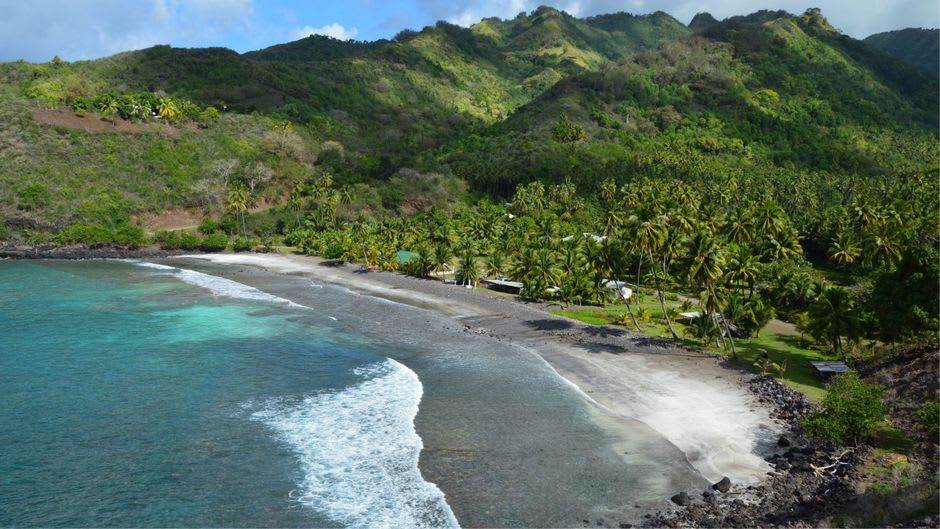
Fatu Hiva has no airport, which in the Marquesas — an archipelago already several time zones removed from convenient — says something. I got there on the Aranui, the supply and passenger cargo ship that services the islands roughly every three weeks, a journey of a full night from Hiva Oa across open water that had me questioning several of my life choices around 3 a.m. Arriving by sea into the Bay of Virgins at dawn made the seasickness worth it instantly and completely.
The bay — originally named Baie des Verges by missionaries in a rather less family-friendly reference, later softened to “Vierges,” Virgins, by the church — is flanked by basalt spires that rise almost vertically from the water, weathered into shapes that do resemble robed figures if you squint and have been primed by the name. The village of Omoa sits at the head of the bay, a scatter of houses along one road, chickens everywhere, and an almost total absence of anything resembling tourist infrastructure beyond a couple of family guesthouses.
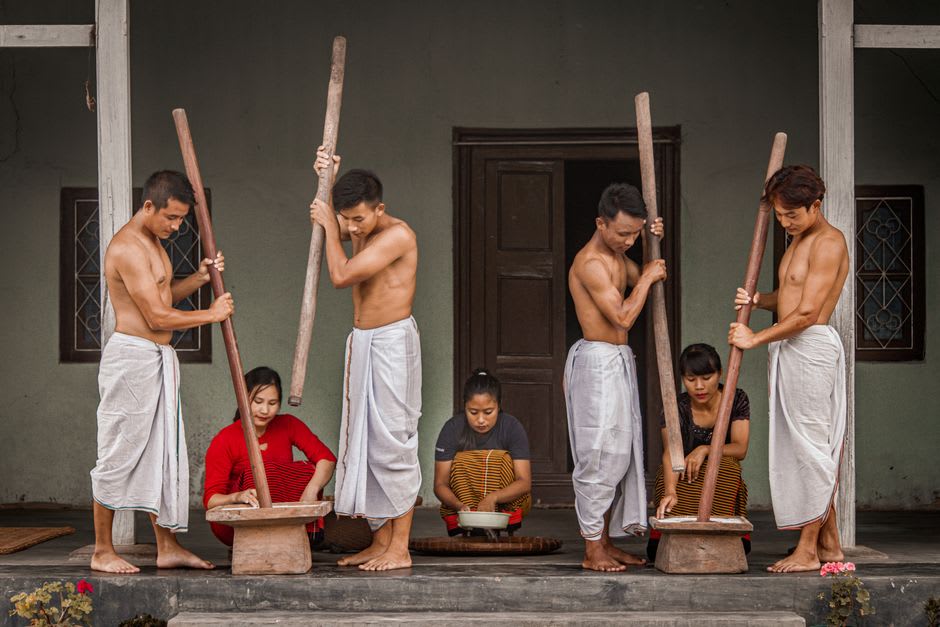
Fatu Hiva is the last place in French Polynesia where tapa cloth — bark cloth beaten from the inner bark of banyan, breadfruit, or paper mulberry trees — is still made in any real quantity, and I spent an afternoon watching a woman in Omoa pound strips of soaked bark with a wooden mallet on a flat stone, folding and re-beating the fibers for hours until they fused into a single sheet thin enough to paint on. The painted motifs, geometric patterns and stylized tiki faces in reddish-brown pigment made from local earth and plants, are sold to the rare visitors who make it out here and to a wider market through occasional trips to Tahiti.
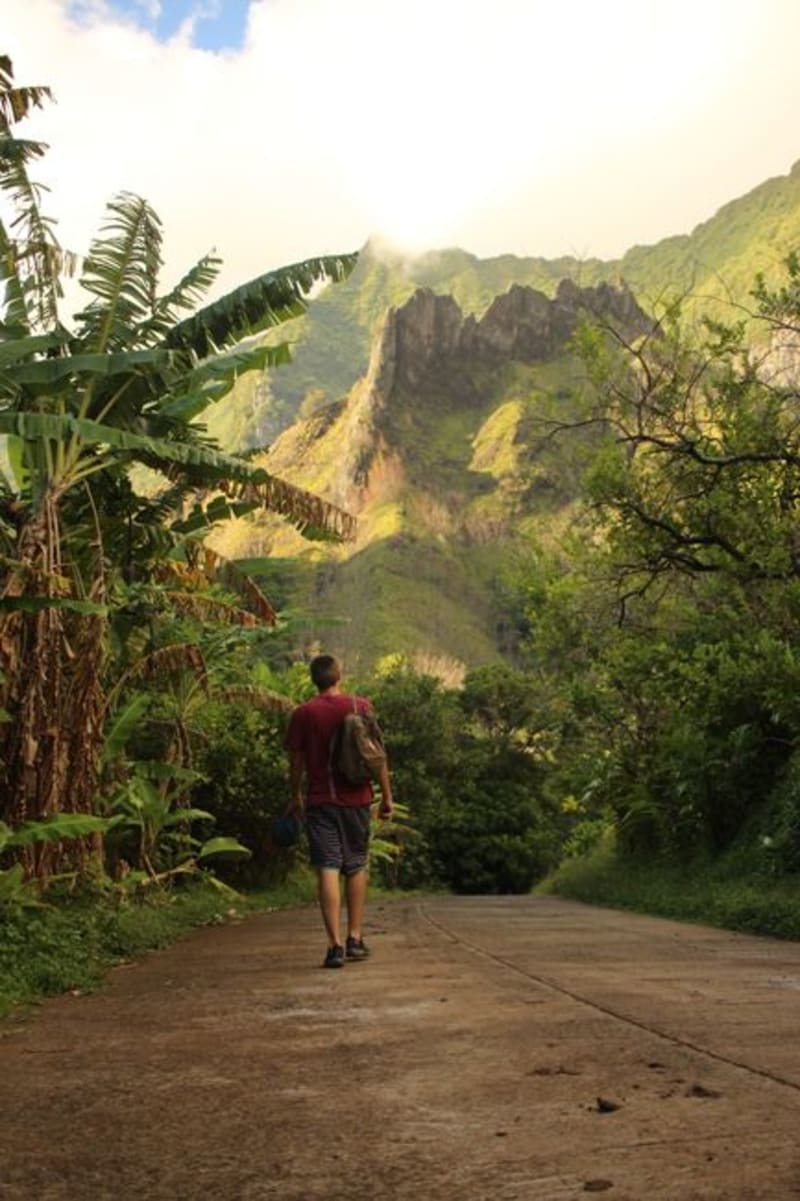
I walked the steep road connecting Omoa to Hanavave, the second village on the bay itself, a climb and descent through valleys thick with wild orange and grapefruit trees that had gone semi-feral generations ago and now just drop fruit on the path for anyone passing. The whole crossing took most of a day, and I didn’t see another traveler on it — just a farmer on horseback who nodded and kept moving, entirely unsurprised by my existence.
When to go: The Aranui runs on a roughly three-week cycle year-round, so plan around its schedule rather than the season. May to October brings drier weather for the hike between villages; expect the crossing by boat to be rough regardless of month, given the exposed passage from Hiva Oa.
Keep exploring
More from French Polynesia
 french-polynesia
 Hiva Oa
The Marquesan island where Gauguin and Brel both chose to die, ringed by black volcanic cliffs and stone tikis older than either of their legends.
Explore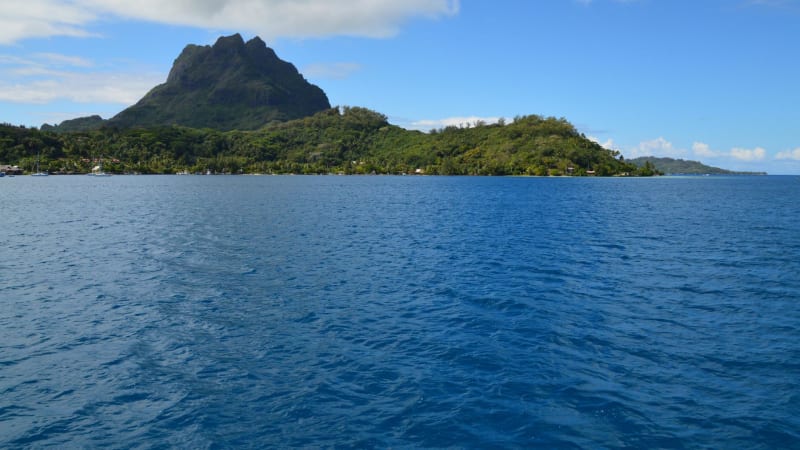 french-polynesia
 Huahine
The island French Polynesia forgot to develop, where ancient marae sit in the jungle and the lagoon is entirely yours.
Explore french-polynesia
 Maiao
A tiny Society Island barely anyone visits, ringed by a lagoon closed to any real boat traffic, where the mountain forest reaches almost to the sand.
Explore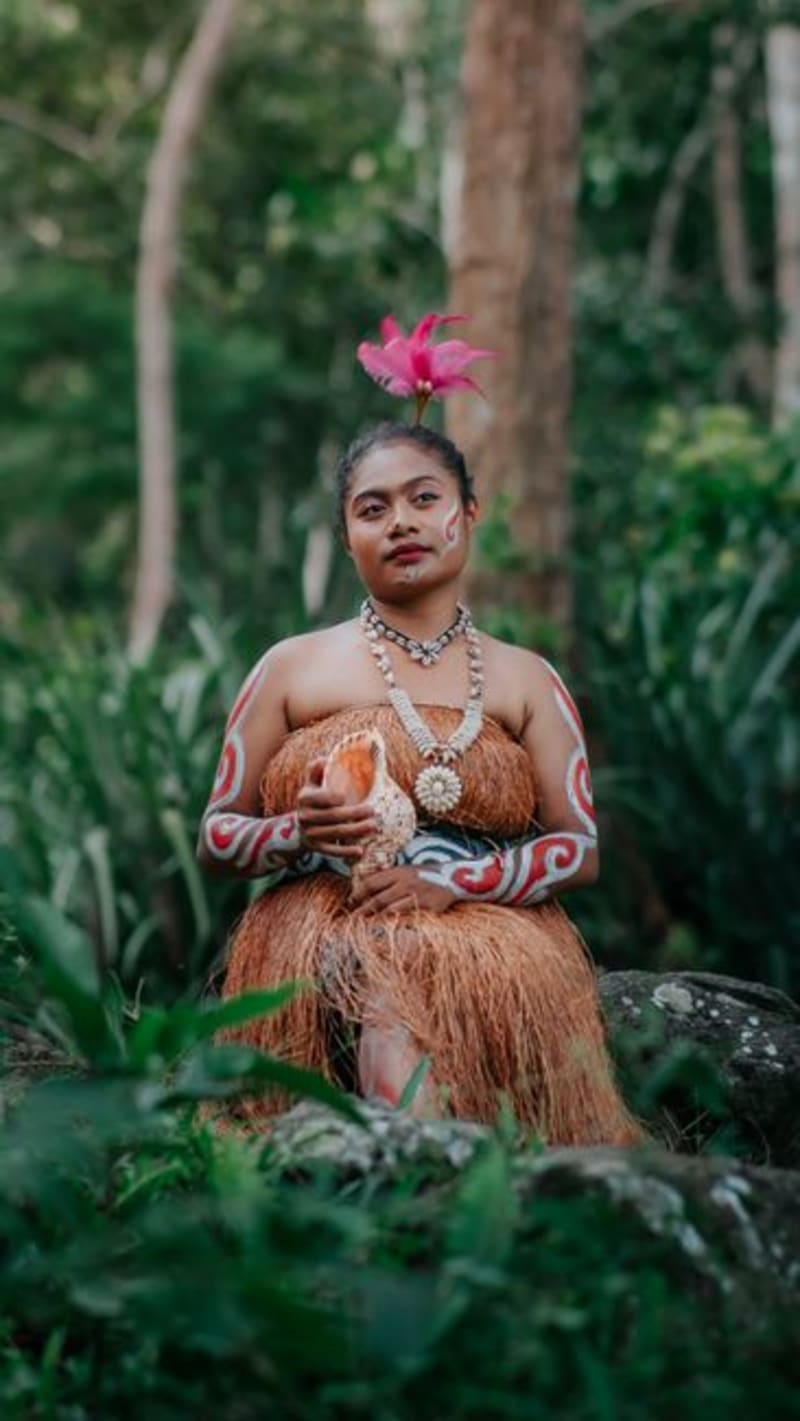 french-polynesia
 Mangareva
The main island of the remote Gambier archipelago, where a nineteenth-century cathedral built from coral stone rises improbably above pearl farms and near-total isolation.
Explore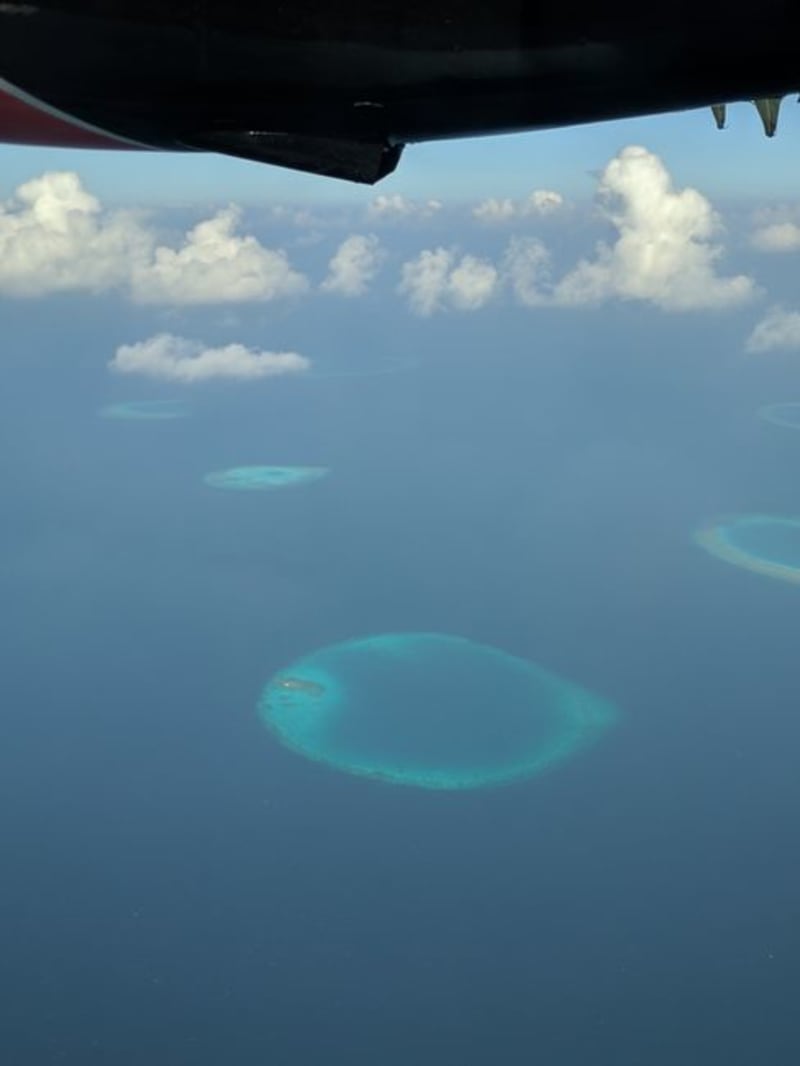 french-polynesia
 Mataiva
The westernmost atoll of the Tuamotus, with a lagoon carved into a strange checkerboard pattern of coral ridges that looks manufactured until you remember nature doesn't need a reason.
Explore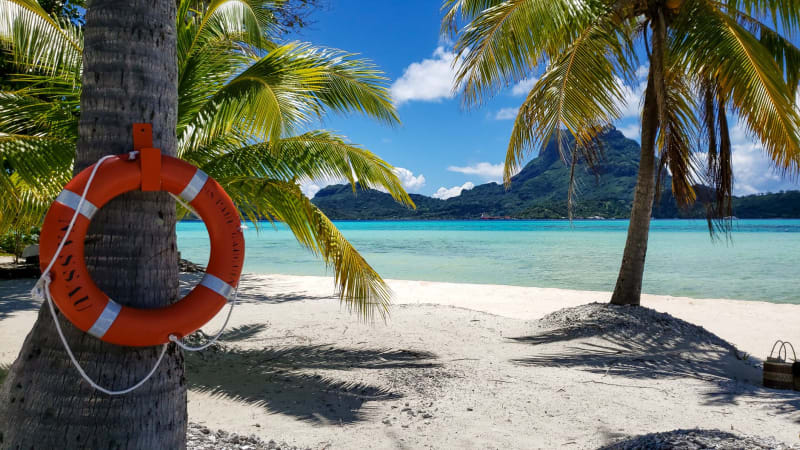 french-polynesia
 Maupiti
Bora Bora's forgotten twin — same volcano, same lagoon colors, a fraction of the visitors, and a pass so narrow the supply boat can only enter at slack tide.
Explore