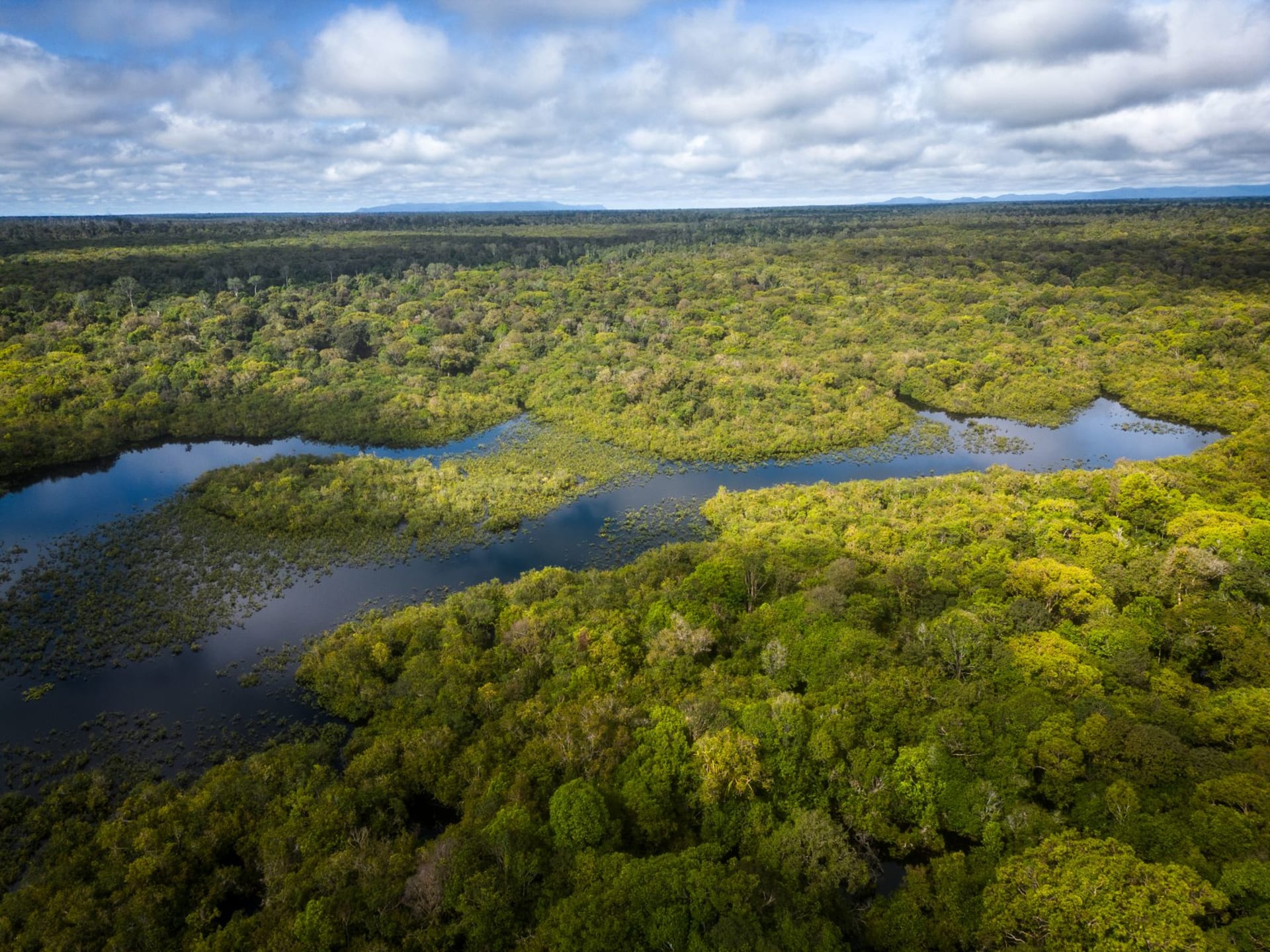
Kaw Marshes
"The guide cut the engine, swept his torch across the black water, and a dozen pairs of orange eyes lit up at once. I have rarely felt so thoroughly outnumbered."
Getting to Kaw is half the experience. The road from the coast climbs over the forested Montagne de Kaw on a winding, broken ribbon of tarmac and laterite, through some of the densest rainforest in French Guiana, and then drops suddenly to the edge of the marshes at the tiny village of Kaw, which clings to a ridge above a sheet of water that stretches to the horizon. We arrived in the late afternoon, the light going gold over a landscape that is neither land nor lake but something in between — a flooded savannah of floating grasses and water lilies threaded by black-water channels, one of the largest wetlands in the country and a protected nature reserve. The village is a handful of stilted houses, a few pirogues, and a profound, humid quiet.
Onto the black water
The marsh reveals itself only from a boat, and you really want to go at dusk. We pushed off in a low wooden pirogue as the sun dropped, and the transformation was immediate and total. By day the marsh is birds — herons, jacanas walking on lily pads with their ridiculous long toes, hoatzins crashing about in the bankside vegetation like badly built prehistoric chickens, and, if you are lucky, the slow flap of an ibis going home. Then the light failed, the insects came up in a wall of sound, and the guide switched on his torch.
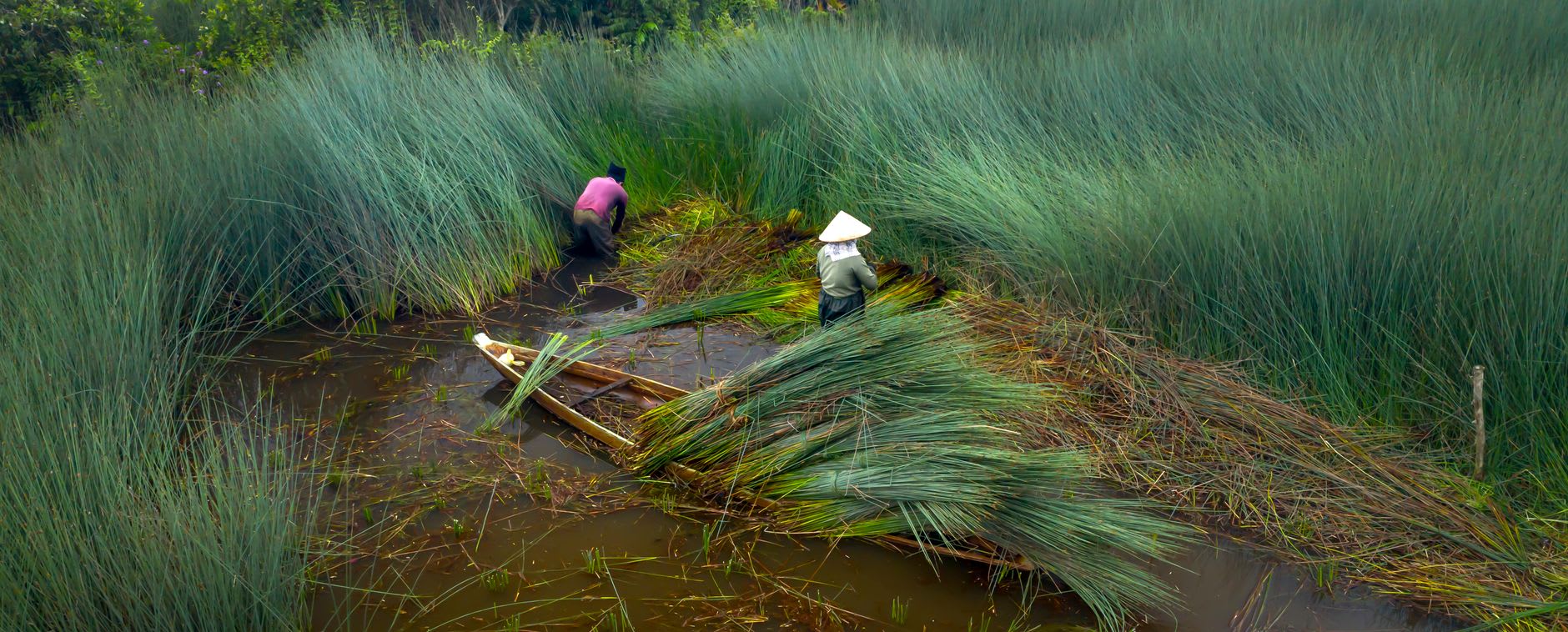
Kaw is one of the best places on earth to see the black caiman, the largest predator in the Amazon basin, a creature that can exceed five metres. The technique is unsettlingly simple: you sweep a strong torch across the surface and the caimans’ eyes throw the light straight back, glowing orange, two low coals floating on the water. The guide counted them under his breath, edging the pirogue closer to a juvenile resting in the grass until we could see the whole animal, ridged and ancient and utterly indifferent to us. Lia, gripping the gunwale, asked very quietly how big the big ones got, and when he told her she suggested, equally quietly, that we not get any closer. The reserve protects them, and the population here is one of the healthiest anywhere, which is precisely why being on the water after dark feels like a privilege you have not entirely earned.
A fragile, complicated place
What stays with me about Kaw is not just the wildlife but the strangeness of its situation. This is officially France — euros, French road signs, a French postal service — and yet here is a tropical wetland teeming with caimans, giant otters, and more bird species than I could begin to log, an hour and a half from a town with a European supermarket. The reserve has been the subject of long, bitter fights over a proposed power plant and over how to balance protection with the livelihoods of the people who have always fished and hunted here. None of that is visible from a pirogue at dusk. What is visible is a horizon-wide marsh going slowly dark, the eyes lighting up one by one, and the unnerving sense of being a small, soft, temporary guest in a very old food chain.
We stayed overnight in a hammock at a simple lodge on the ridge, listening to the marsh make its enormous quantity of noise, and went out again at first light when the mist sat on the water and the birds started up. It is not an easy or a comfortable trip. It is one of the most genuinely wild nights I have ever spent, an hour and a half from a roundabout.
When to go: The drier months, roughly August to November and again February to March, make the mountain road more passable and the marsh easier to navigate. Go on an overnight trip with a local guide from Cayenne or Roura — a dusk-and-dawn boat outing is the heart of the experience, and the caiman-spotting only happens after dark.