Americas
French Guiana
"The strangest thing France has ever done is also one of its best."
I landed in Cayenne late on a Thursday evening, and the first thing I noticed was the gendarmerie logo on the patrol car outside arrivals — the same logo as in Lyon or Bordeaux. French Guiana does this to you constantly: just as you settle into the rhythm of equatorial South America, France reasserts itself. Euro coins in your pocket. A pharmacie on the corner. A préfecture behind colonial-era walls painted in shades of mustard and terracotta. And then you look up and there is an iguana the length of your forearm sunning itself on the sidewalk.
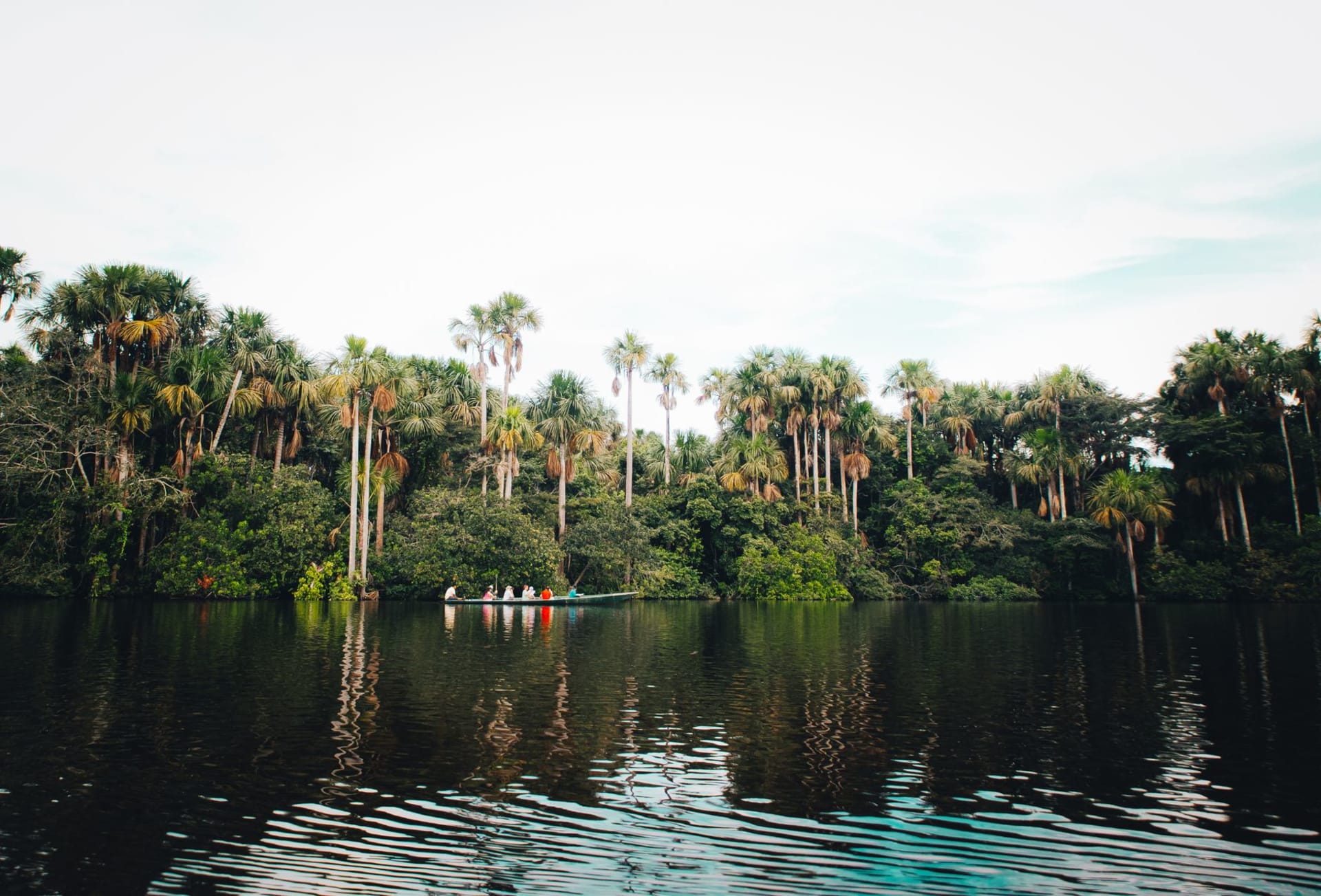
The Amazon is not a backdrop here — it is the operating system. Over ninety percent of the territory is primary rainforest, one of the largest intact stretches on earth. The rivers — the Maroni, the Oyapock, the Approuague — are the actual roads into the interior, and the communities that live along them, the Aluku, the Saramaka, the Teko, carry traditions that trace back to escaped enslaved people who built free societies in the jungle centuries before anyone was paying attention. I spent three days on the Maroni river, staying in a village that runs on solar panels and river fish, where the wooden carvings in every house are museum-quality and nobody has told them so. The pirogue ride at dawn — low mist, herons lifting from the banks, the engine cutting out so we could listen — is the quietest I have been in years.
Cayenne itself is easy to underestimate. It is small, slightly chaotic, and not particularly photogenic in the conventional sense. But Rue du Marché on a Saturday morning is worth arriving for: Chinese merchants, Brazilian vendors, Creole grandmothers with buckets of freshwater fish still moving, and the smell of acras frying in oil so fresh it hasn’t had time to go wrong. The Creole food here is its own thing — distinct from Martinique or Guadeloupe, brighter with cassava and more influenced by the Amerindian kitchen. Try bouillon d’awara, the traditional palm-fruit stew that takes three days to make and is eaten communally during Easter. If you time it right, someone will have made too much.
And then there is the Guiana Space Centre at Kourou, forty minutes from Cayenne, which is either the most surreal attraction in South America or the most French thing imaginable — probably both. Watching an Ariane rocket lift off over the jungle at night, shaking the ground, turning the sky orange, while spider monkeys presumably panic somewhere in the canopy, is an experience that has no obvious category.
When to go: February and March offer a short dry season that is genuinely pleasant — tolerable heat, less mud on forest trails, and rivers at navigable levels. The long dry season runs July to November, which is better for interior travel but can be relentlessly hot. Avoid the rainy seasons (April–June and December–January) unless you are comfortable with floods and impassable tracks.
What most guides get wrong: They treat French Guiana as a curiosity — the space centre, a couple of jungle lodges, done. What they miss is the extraordinary layering of cultures: Creole, Amerindian, Maroon, Hmong (yes, there is a Hmong farming community from the 1970s resettlement, and they grow the best vegetables in the territory), Brazilian, Haitian. This is one of the most demographically complex places in the western hemisphere, all compressed into a territory the size of Portugal. The jungle is spectacular but the human story is what will stay with you.