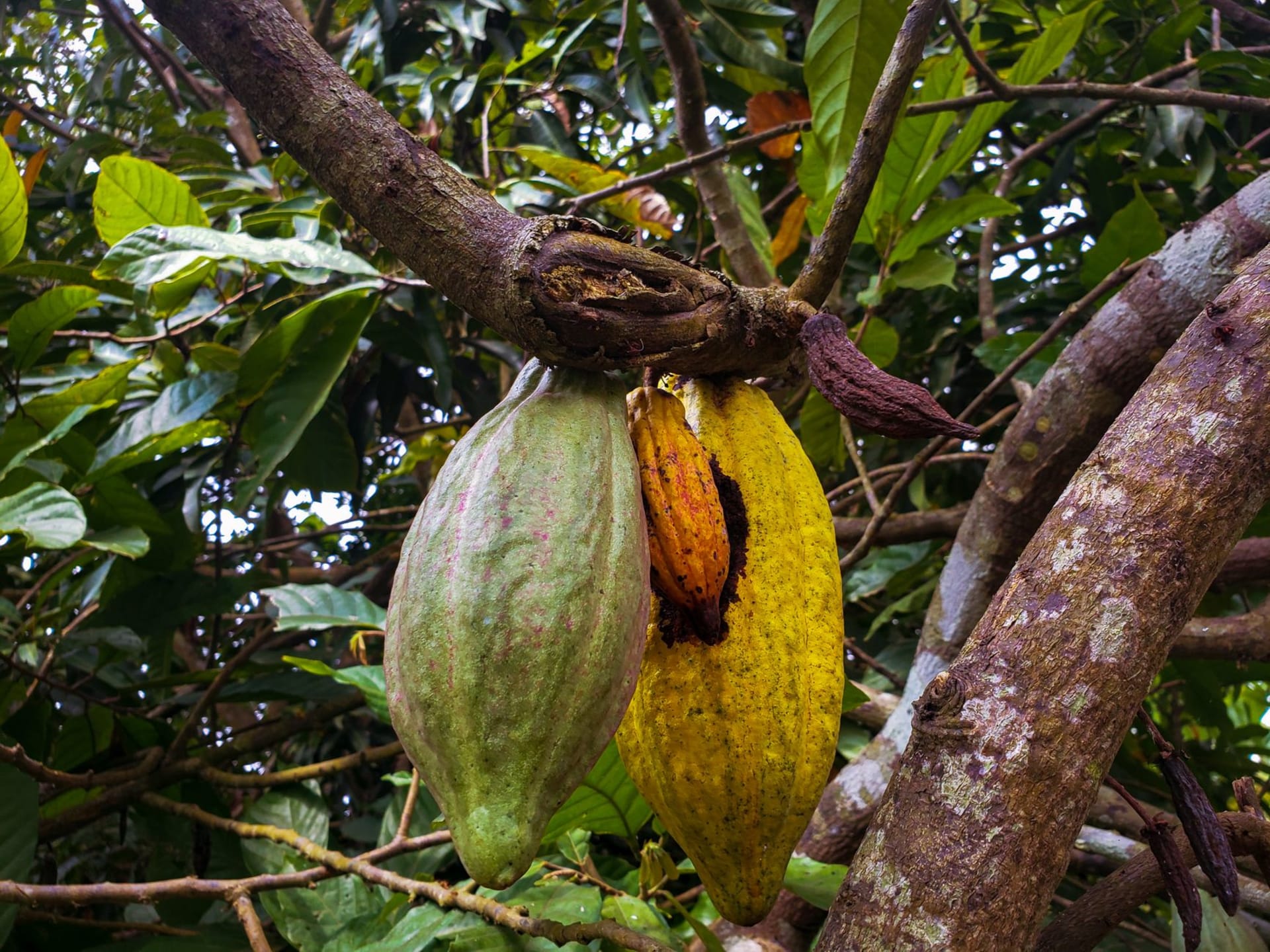
Cacao
"I heard Hmong spoken in the Amazon and thought: geography has completely lost the plot."
The road from Cayenne to Cacao runs about seventy-five kilometers through secondary forest, ascending slowly, and the air changes as you go — cooler, more vegetable, less coastal. I arrived on a Sunday morning, which is the only morning that matters in Cacao, because that is when the market happens and the market is the entire reason anyone outside the village knows it exists. I parked behind a tour bus from Cayenne and followed a group of French retirees down a path toward the sound of music I could not immediately identify. It was Hmong pop, playing from a speaker at a food stall, and it resolved into sense only when I remembered where I was and why.
The Hmong community of Cacao was resettled here in 1977, refugees from Laos after the Secret War that consumed their highlands following the American withdrawal from Southeast Asia. The French government offered resettlement to communities who had supported French interests in Indochina, and several hundred Hmong families were brought to French Guiana — a place they had not chosen, in a climate nothing like the mountains of northern Laos, with no preparation and no real plan. They adapted with a tenacity that still shows in everything around them. The village grows food that has no business thriving here: lettuce, strawberries, coriander, Asian herbs, Thai basil, spring onions, tomatoes so perfectly formed they look like they were styled for a photograph. They supply supermarkets in Cayenne. They supply restaurant kitchens. They have made themselves indispensable to a territory that was indifferent to them on arrival.
The market itself is joyful in a way that feels accidental. Stalls sell spring rolls that are just right — tightly wrapped, with herbs inside I couldn’t name in French or English — alongside bowls of pho that steam improbably in the morning heat. Pa ndau textiles are everywhere: the traditional Hmong embroidery of story cloths and appliqué panels, done in colors that suggest a different kind of jungle than the one immediately visible. The women who make them learned from their mothers who learned in Laos, and the motifs — flowers, animals, geometric borders — carry a highland culture into a lowland setting with complete unselfconsciousness. I bought a small story cloth that I don’t have the context to read but that I have looked at every day since.
The food is the thing I want to talk about most. I ate a bowl of khao poon — Laotian coconut curry noodle soup — sitting at a plastic table under a tarp with the jungle pressing in from three sides, and it was the kind of thing that lands in your food memory permanently, that you describe to people later and watch their faces register disbelief. The broth was pale orange and faintly sweet and threaded with galangal and lemongrass, and the woman who made it had a garden plot behind the stall where I could see the lemongrass growing. Nothing in it came from a can.

The village beyond the market is quieter — houses with vegetable gardens terracing down toward the creek, a school, a Buddhist temple that sits in the landscape with the same muted confidence as everything else the community has built here. I walked up past the temple to where the forest resumed and stood there for a while. The sound of the market came up from below, Hmong voices and the smell of frying, and above me the canopy was doing what canopy does — holding the heat, humming with things I couldn’t see. French Guiana has a dozen like this — a dozen moments where the expected and the impossible occupy the same square meter — but Cacao is one of the most complete.
When to go: Sunday mornings only for the market — arrive before 10am for the best selection of produce and textiles, as popular stalls sell out. The village is accessible by car from Cayenne year-round, though the road can be muddy in the rainy seasons. The market continues even in light rain.