Chartres
"There's a specific blue in that glass that nobody has ever fully explained, and honestly I hope they never do."
A cathedral whose blue stained glass I'd seen in a hundred textbook photos before I ever saw it in person, and which still made Lia go completely silent the moment we walked in.
Chartres is an hour southwest of Paris by train, close enough for a day trip but distinct enough from the capital that arriving feels like stepping into an entirely different, slower France. The town itself is a modest provincial capital built along the Eure river, but it exists in the world’s imagination almost entirely because of one building: Notre-Dame de Chartres, a Gothic cathedral so influential that art historians still teach it as the model against which every French cathedral that came after was measured. Lia and I came on a whim one October, mostly because I’d promised her the stained glass was worth the train fare, and I underpromised.
The blue that no one has ever quite replicated
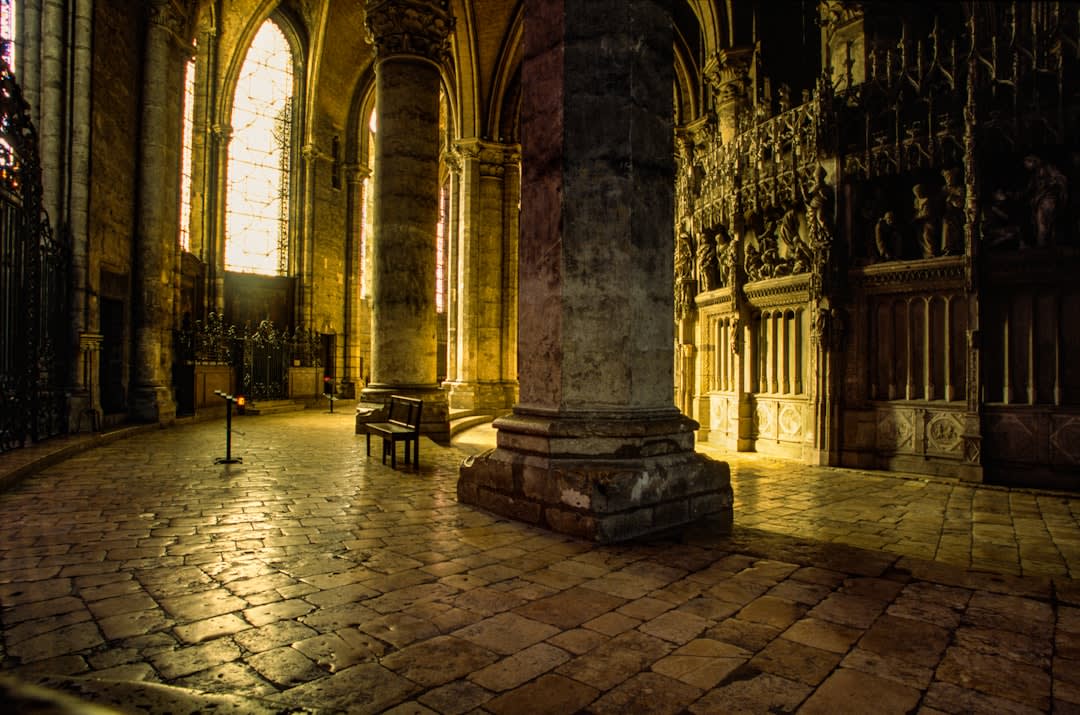
The cathedral was largely rebuilt after a fire in 1194, and remarkably, most of its original thirteenth-century stained glass survived both that fire and the two World Wars, which is a huge part of why Chartres matters so much to historians — this is one of the most complete and best-preserved collections of medieval glass anywhere in Europe. The famous “Chartres blue,” used most strikingly in the Notre-Dame de la Belle Verrière window, is a deep, saturated cobalt that glassmakers and chemists have never fully reverse-engineered; something about the exact combination of minerals and firing conditions used in the twelfth and thirteenth centuries produced a colour nobody has managed to duplicate since. We stood under the west rose window as the afternoon sun came through it, watching the light shift color across the stone floor, and Lia — who is not usually one for lingering in churches — didn’t say anything for a good five minutes.
Walking the labyrinth, and the old town below
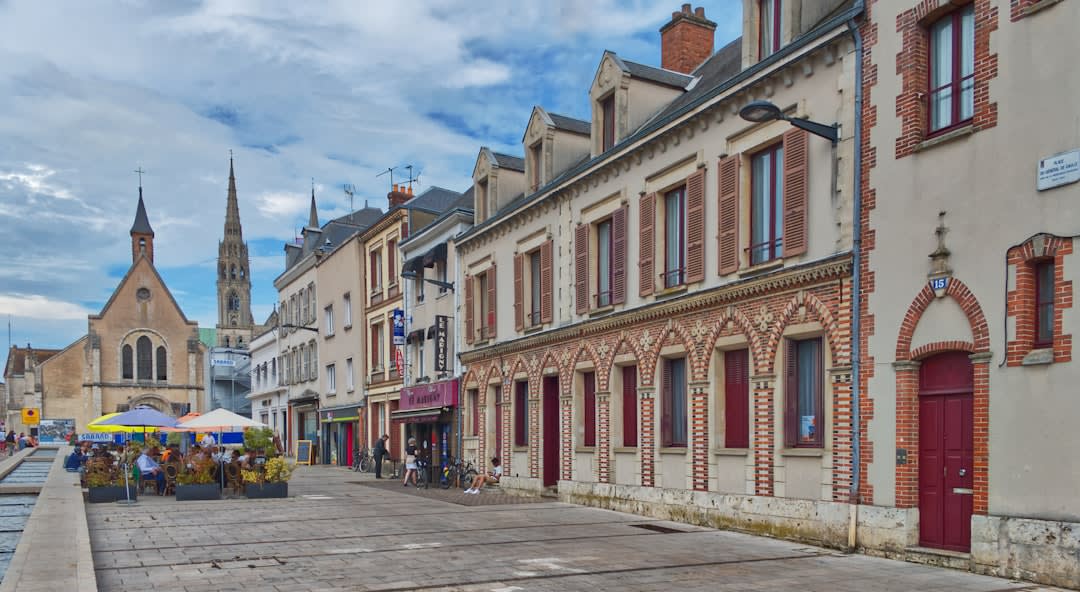
Set into the nave floor is the cathedral’s labyrinth, a nearly thirteen-metre circular path laid in dark and light stone, built in the early thirteenth century as a form of symbolic pilgrimage for those who couldn’t make the actual journey to Jerusalem. It’s usually covered by chairs, but on Fridays from spring through autumn the chairs are cleared and you can walk it yourself, tracing the single winding path to its center and back out, which we happened to catch by pure luck. Afterward we wandered down into the old town, all steep cobbled lanes, half-timbered houses, and footbridges over the Eure, stopping at a lookout point where you get the classic postcard view: the cathedral’s two mismatched spires — one plain Romanesque, one ornate Gothic, built three centuries apart — looming over the rooftops below.
When to go: Aim for a sunny afternoon, since the stained glass is dramatically better when direct light is coming through it — grey days mute the colours considerably. If you want to walk the labyrinth, check that your visit falls on a Friday between Lent and All Saints’ Day, when the chairs covering it are cleared.
Keep exploring
More of Paris