
Granville
"Dior grew up staring at this sea from his bedroom window. After a week in Mexico's dust and heat, I understood immediately why he never really left it behind."
A fortified granite town perched on its own cliff, where Christian Dior grew up looking at the sea before he ever designed a dress, and where the Chausey ferry still leaves every morning like clockwork.
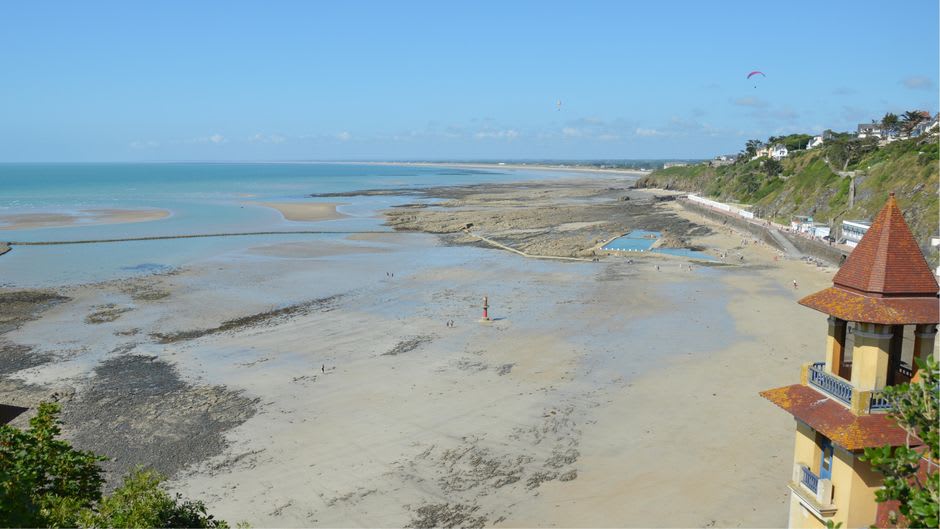
Granville splits itself neatly in two, and it took me a day to stop treating that as a flaw. There’s the lower town, a working fishing and ferry port with all the practical clutter that implies, and then there’s the Haute Ville up on its own rocky headland, walled and gated like the fortress it was built to be, looking down over the Baie du Mont-Saint-Michel toward the Chausey Islands on a clear day. Locals here call it “the Monaco of the North,” a nickname I found charming for about a minute before I remembered we were standing in a stiff Channel wind in fleece jackets, nothing at all like the Riviera except in the shared instinct to build somewhere dramatic and defensible.
Walking the ramparts Dior once walked
The Haute Ville was fortified by the English in the 1440s during the Hundred Years’ War, then reinforced repeatedly by the French afterward, and you can still walk almost the full loop of ramparts around the old town, granite underfoot, the sea dropping away on one side. What pulled us up there specifically, though, wasn’t the military history, it was Christian Dior. He spent his childhood at the Villa Les Rhumbs, a pink belle-époque house perched right on the cliff edge just below the ramparts, and the house is now the Musée Christian Dior, filled with couture pieces and, more memorably to me, his mother’s clifftop garden, restored to something close to what it looked like when Dior was a boy wandering it. He wrote later that the garden’s flowers, the sea light, and the cliffside setting shaped his sense of color and silhouette more than any atelier ever did, and standing in that garden with the wind coming straight off the Channel, salt-heavy, I believed him completely.
Catching the morning boat to Chausey
The other reason to base yourself in Granville is the Chausey archipelago, a scatter of granite islets an hour offshore by ferry, technically part of the same commune, and by some counts holding the largest tidal range of islands in Europe — the sea here can retreat far enough to link islets that are fully separate at high tide. We caught the early boat from the port, more out of habit than plan, and spent a slow day walking Grande Île’s single gravel lane past a handful of fishermen’s cottages, eating a lunch of just-landed scallops at the only restaurant that was open, then watching the tide come back in and swallow the sandbar path we’d walked out on that morning.
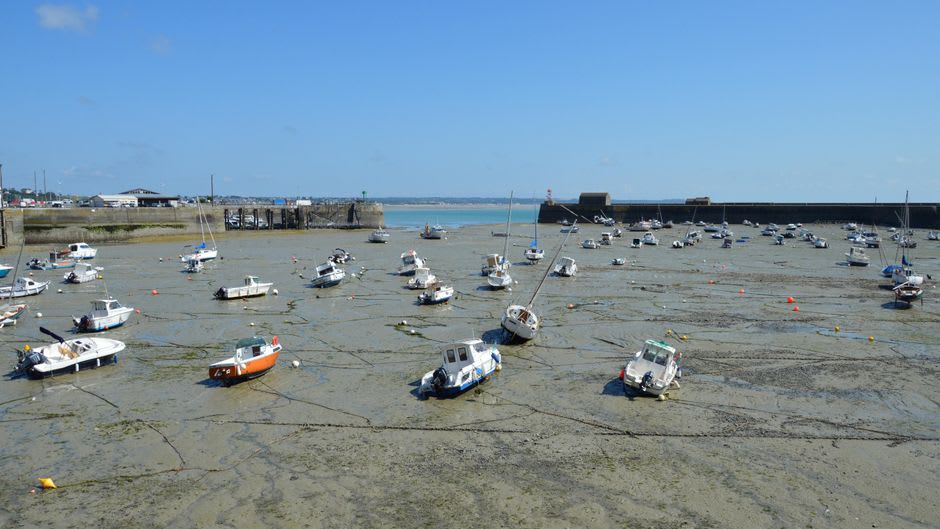
When to go: Spring and early summer give the clearest crossings to Chausey and the fullest Dior gardens in bloom; check the tide tables before you plan a Chausey day trip, since the boat schedule bends entirely around the tidal range.
Keep exploring
More of Normandy