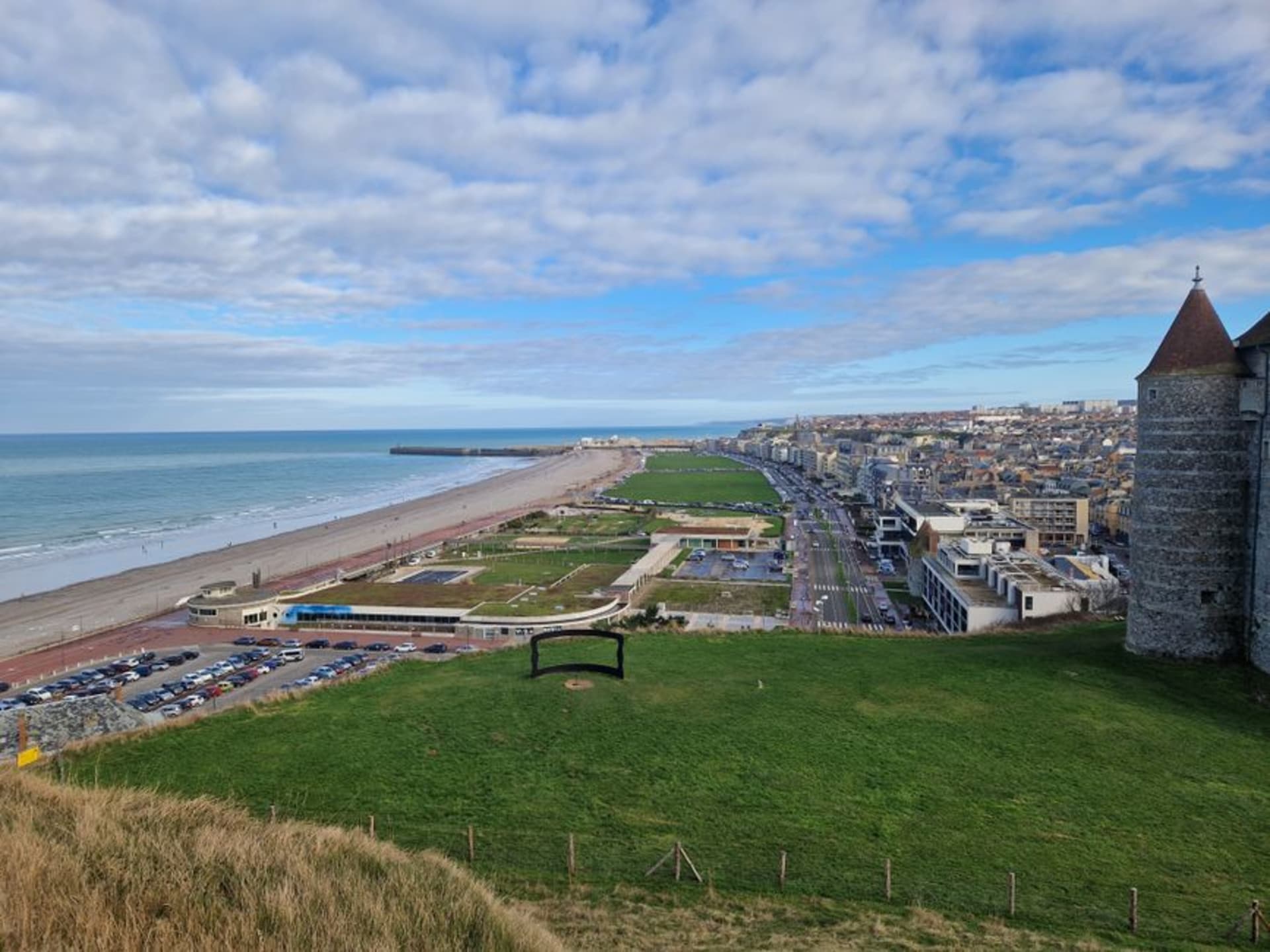
Dieppe
"This coast has a lot of D-Day memorials. Dieppe is the one that remembers a failure."
Normandy's oldest seaside resort, a working Channel port, and the scarred site of a 1942 raid that cost more lives in one morning than almost anywhere else on this coast.
Dieppe is far enough east that it barely registers as part of the same Normandy people picture when they think of the D-Day beaches, closer to the Channel crossing to England than to Omaha or Utah. We came up from Rouen for the day, mostly for the seafood, and left having thought a lot harder about 1942 than we’d planned to.
The oldest resort on the Channel, and a scallop trade to match
Dieppe has a claim, disputed but persistent, to being France’s first seaside resort — fashionable Parisians were coming here to bathe as early as the 1820s, decades before Deauville or Trouville existed as resorts at all, and the long pebble beach backed by grand 19th-century façades still has that slightly formal, old-resort feel rather than the newer glamour further along the coast. It’s also, unglamorously and more usefully, a working fishing and ferry port, and its scallop fleet is one of the largest in France — the town holds an annual scallop festival in November, and even outside of it the harbor stalls and restaurants serve coquilles Saint-Jacques so fresh and simply prepared that we ended up eating them two days running, which I don’t regret.

A raid that went badly wrong, and a town that remembers it
On the morning of August 19, 1942, over six thousand Allied troops, most of them Canadian, landed on Dieppe’s beaches in a large-scale raid meant to test German coastal defenses ahead of a future invasion. It went badly: exposed on open shingle beneath cliffside gun positions, the force suffered catastrophic losses in a matter of hours, with well over half the Canadian troops who landed killed, wounded, or captured. The lessons learned, brutally, are widely credited with shaping the planning that made the actual D-Day landings two years later far better prepared. The Dieppe war cemetery outside town holds hundreds of Canadian graves, and the clifftop Château-Musée, a 15th-century castle overlooking the beach, holds artifacts and photographs from the raid alongside its older collections of ivory carving, a strange but honest juxtaposition of the town’s longer history against one catastrophic morning.
When to go: Visit in November for the scallop festival if seafood is the draw, or in August around the 19th if you want to be there for the raid’s memorial ceremonies.
Keep exploring
More of Normandy