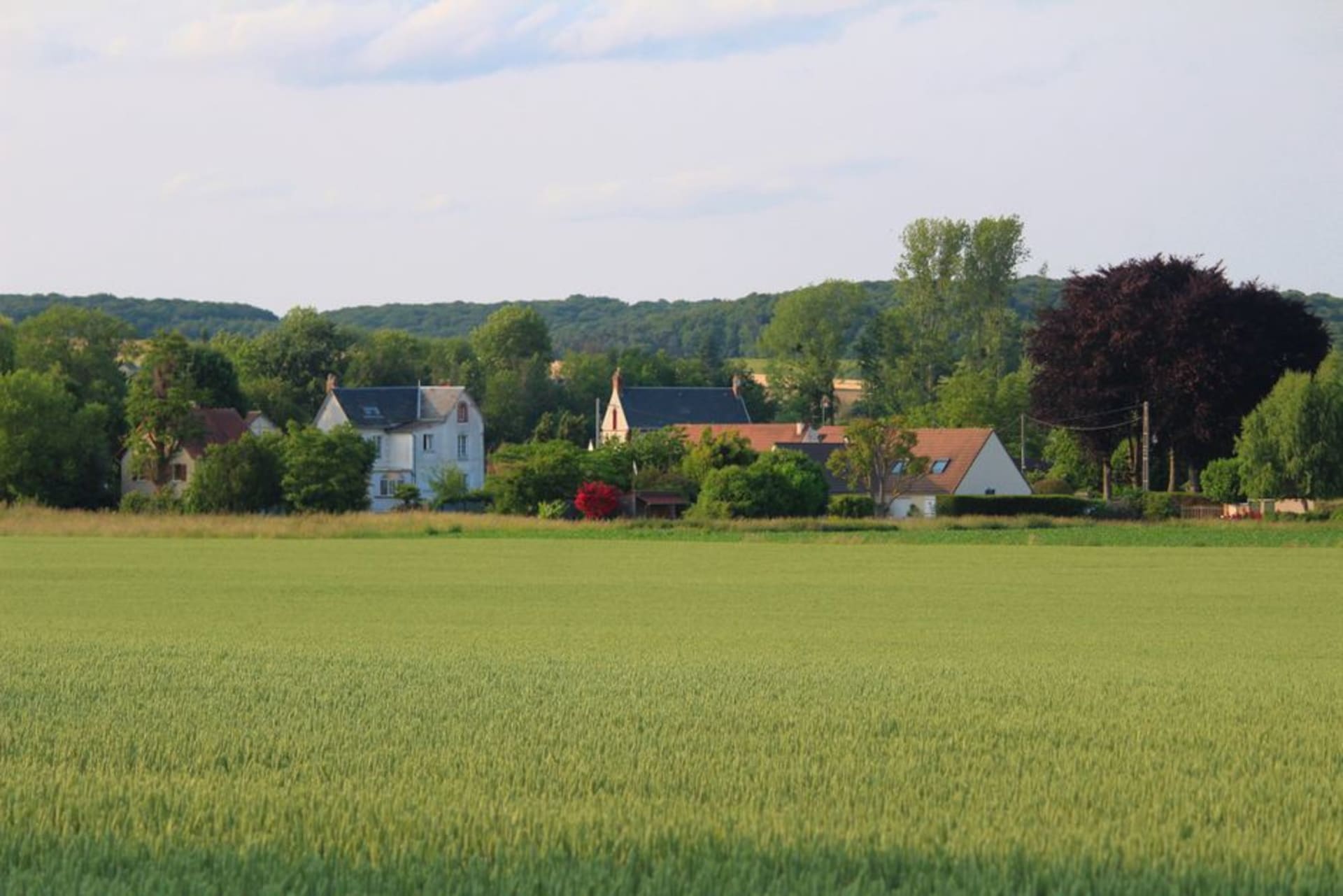
Ussé
"I've seen Ussé described as a fairytale castle so many times I assumed it was marketing. Then I saw it."
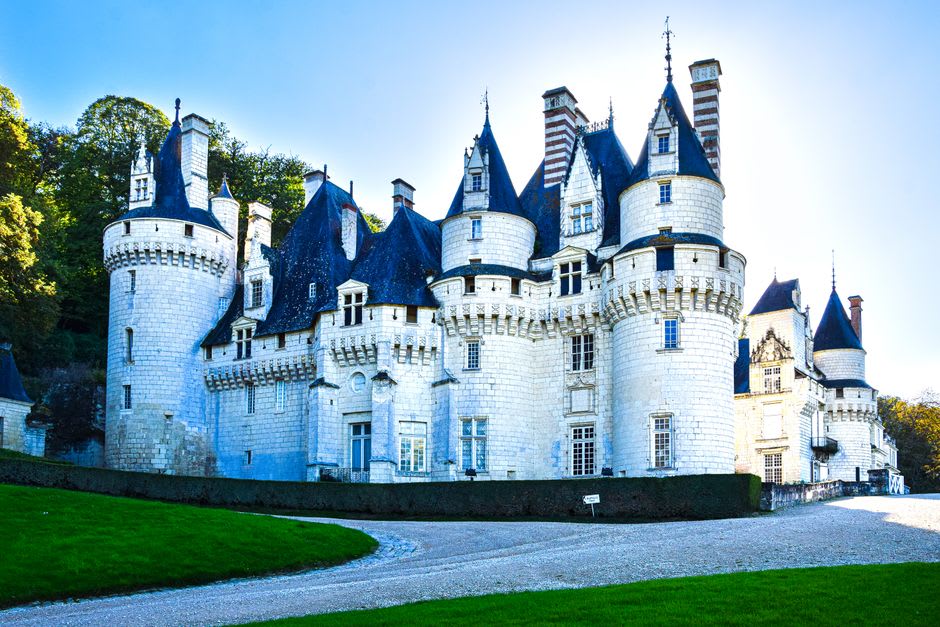
The white-turreted château on the edge of the Chinon forest that supposedly gave Charles Perrault the idea for Sleeping Beauty, and that made Lia genuinely gasp when it appeared through the trees.
I try not to trust superlatives on brochures, because every third château in France claims to be “the one that inspired” something. But we came around the last bend of the D7 toward Ussé at the end of a grey afternoon, forest on one side and the Indre valley opening up on the other, and the château appeared all at once above its terraces — white tufa stone, a jumble of blue-slate turrets and spires against the tree line — and I heard Lia actually gasp next to me. I’ve driven her past a lot of châteaux by now. That doesn’t happen often.
The castle that became a fairytale
The connection to Charles Perrault isn’t just tourist board folklore, either. Perrault is widely believed to have been inspired by Ussé’s silhouette when he wrote La Belle au Bois Dormant — Sleeping Beauty — in the late seventeenth century, and the château has leaned into that heritage rather than resisting it, which I appreciated more than I expected to. Several of the towers are staged with wax figures acting out scenes from the tale: the princess asleep in her tower, the prince approaching, the whole cast frozen mid-story in rooms with real period furniture around them. It could easily read as kitsch, and in a lesser building it probably would. At Ussé it works, because the architecture itself already looks like an illustration — a fortress on one side facing the old road, and a soft Renaissance face on the other looking over the gardens, as if the building itself couldn’t decide whether it wanted to defend the valley or charm it.
Gardens laid out by Le Nôtre’s discipline
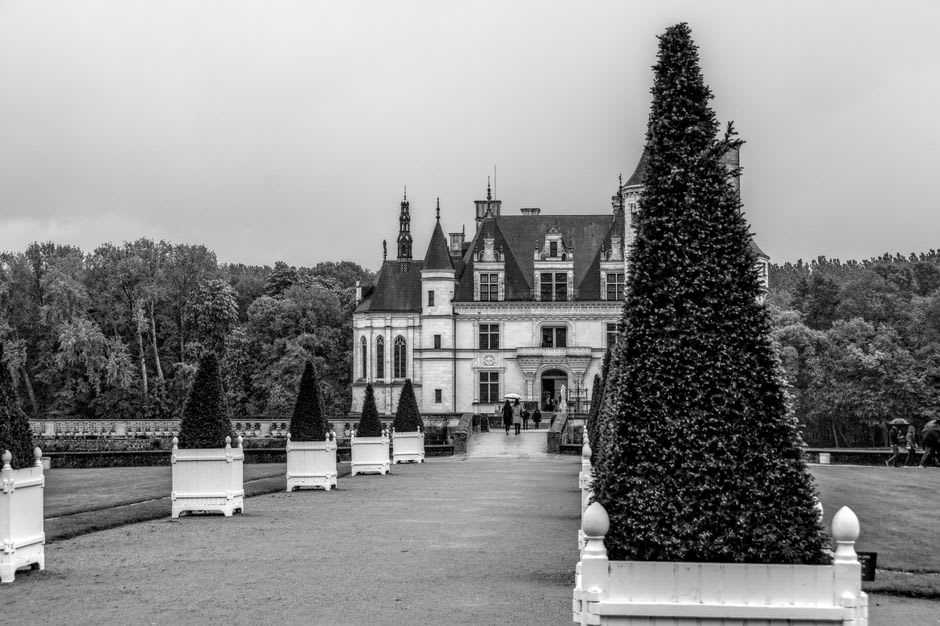
The terraced gardens below the château were designed under the influence of André Le Nôtre, the same landscape logic behind Versailles, and walking down through them toward the Indre gave me a completely different register of the place than the fairytale towers above. Everything is symmetrical, clipped, and deliberate — box hedges in tight geometric patterns, gravel paths that force you to walk at a certain pace whether you intend to or not. Lia pointed out that you get two entirely different buildings depending on where you stand: severe and formal from the garden side, playful and turreted from above. We ended up circling the grounds twice just to keep flipping between the two impressions.
When to go: Aim for late afternoon in spring or early autumn, when the light comes in low across the valley and catches the white stone — it’s the closest the real building gets to looking like the illustration everyone expects.
Keep exploring
More of Loire Valley