
Pauillac
"Lia pointed out that we'd just driven past more first-growth wealth in ten minutes than either of our families has seen in ten generations."
A modest little Gironde port town that happens to sit between three first-growth châteaux, which meant our short walk along the estuary quay passed more concentrated wine history than most people see in a lifetime.
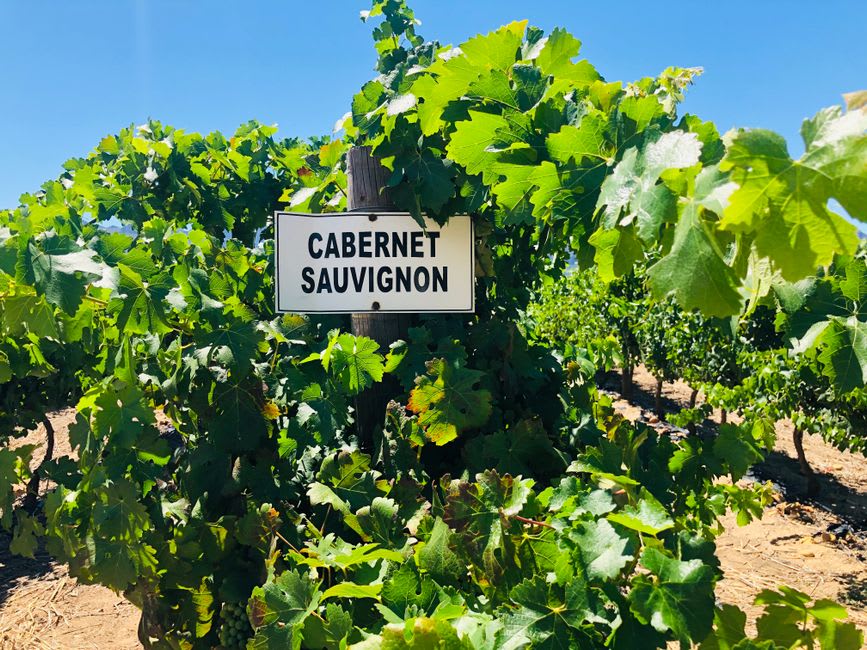
Pauillac is a small, unpretentious port town on the Gironde estuary, north of Bordeaux in the heart of the Médoc, and it is almost comically outmatched by the wine growing in its own commune. This is the appellation that produced, in the 1855 classification that still structures Bordeaux’s wine hierarchy today, three of the five original first-growth Médoc châteaux — Lafite Rothschild, Latour, and Mouton Rothschild — all within a few kilometers of the town’s small central square. Nowhere else on earth packs that particular density of wine reputation into so little space.
Driving past more history than seems reasonable
We came up from Bordeaux for the day, more out of curiosity than any real plan, and the drive along the D2 north of town does something strange to your sense of scale. Château Lafite Rothschild’s low, understated buildings sit behind gates that give almost nothing away; a short distance on, Château Latour’s distinctive round tower, the one that actually gives the estate its name, rises over the vines close enough to the road that we pulled over just to look at it properly. Mouton Rothschild, a little further out, has turned part of its estate into a genuinely serious art museum, with labels for its wine commissioned from artists including Picasso, Dalí, and Chagall over the decades — a level of self-mythologizing that only a first growth could pull off without seeming absurd.
None of these estates are set up for casual walk-ins, and most require a booked appointment arranged well in advance, which we hadn’t done. But simply driving the gravel lanes between them, past gates and low stone walls with nothing more than a discreet name plate to announce three hundred years of wine history, was its own kind of experience — understated in exactly the way old money usually is.
A working port that has stayed itself
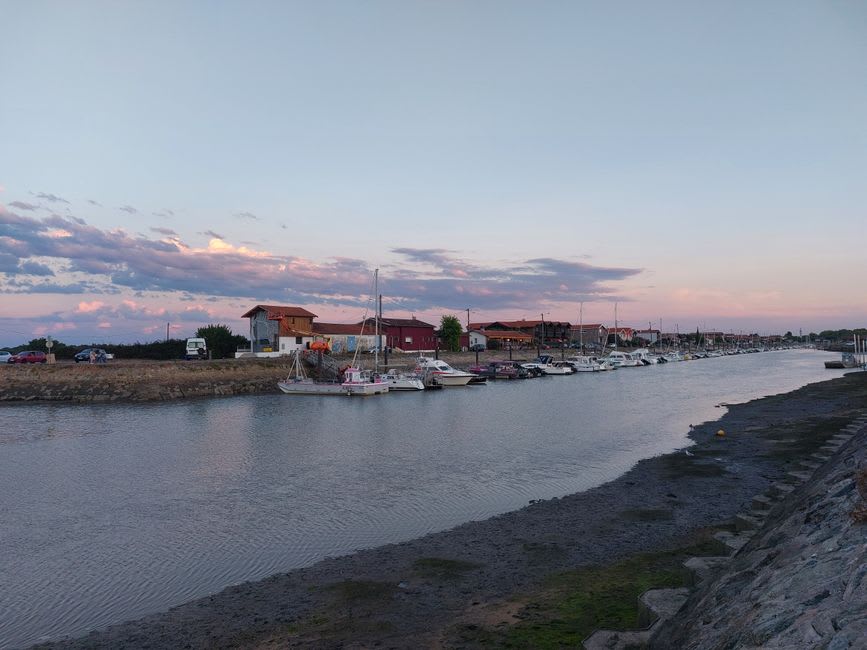
Pauillac town, by contrast, is refreshingly ordinary. It grew as a real river port, a stop for transatlantic liners in the nineteenth century and a base for the local fishing fleet, and it still has the low-key, salt-air feel of a working harbor rather than a wine-tourism showcase. We walked the quay along the wide, muddy-green Gironde, watched a handful of small boats come in, and ate a straightforward lunch of grilled lamproie, the eel-like river fish that’s a genuine local specialty even if it looks a little alarming on the plate, at a café facing the water.
What struck me most was the contrast: some of the most famous, expensive wine on the planet grows within walking distance of a town where lunch cost us twenty-two euros and nobody looked twice at our rental car. Bordeaux itself, an hour south, trades heavily on its wine prestige in its architecture and its restaurants; Pauillac just quietly grows the stuff and gets on with being a small port town, first-growth neighbors or not.
When to go: Late September or early October during harvest, if you can arrange château visits in advance — otherwise late spring gives good weather for the estuary walk and fewer crowds at the handful of estates that do accept visitors without a long lead time.
Keep exploring
More of Dordogne & Bordelais