Martel
"Martel calls itself the town of seven towers, and it's the rare nickname that undersells the place."
A town so proud of its skyline that it named itself after seven towers, and where we ended up chasing truffles and a century-old steam train instead of counting rooftops.
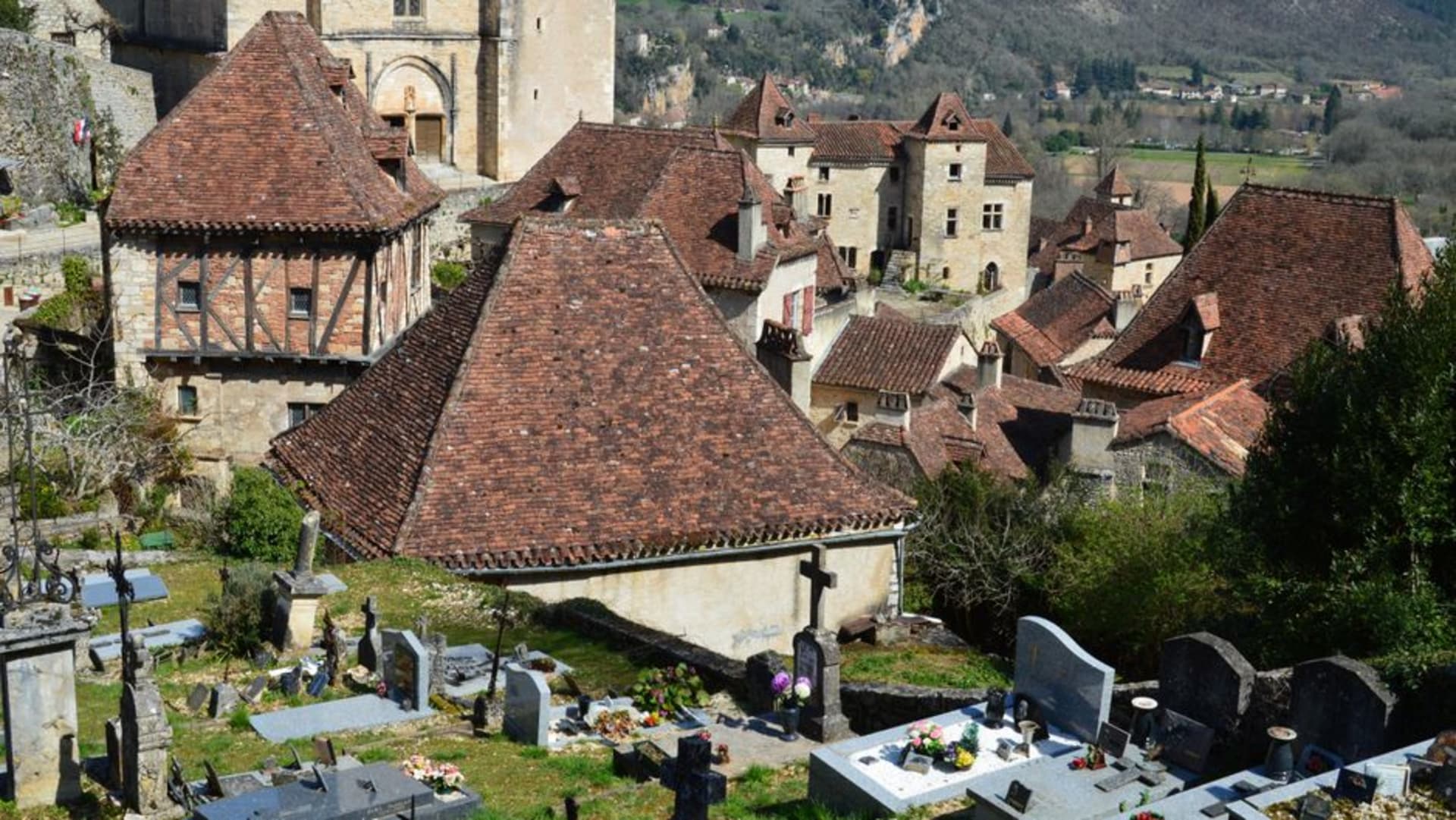
Martel sits on the limestone plateau above the Dordogne valley, midway between Souillac and Rocamadour, and it earned its nickname — the ville aux sept tours, the town of seven towers — from the cluster of medieval defensive and merchant towers still visible above its rooftops, remnants of a town that grew wealthy on trade routes and needed to defend that wealth. We came for an afternoon market and ended up staying because of a smell coming from somewhere off the main square.
Truffles, walnuts, and a market that hasn’t changed its rhythm
Martel’s covered market hall, a 19th-century structure with a timber roof supported by wooden pillars, still hosts the town’s Wednesday and Saturday markets, and in winter it becomes one of the region’s serious truffle markets, where local producers bring in black Périgord truffles dug that week from oak groves nearby. We were there in autumn for the walnut harvest instead, which is nearly as central to the local economy — Quercy walnuts have their own AOC designation, and every stall seemed to be selling them in some form, shelled, candied, pressed into oil, baked into a dense walnut cake we bought on the spot and finished before we’d left the square. Around the market, the old town’s stone houses and towers, including the Tour Tournemire and the fortified Église Saint-Maur, give the whole place a defensive, slightly stern silhouette that softens considerably once you’re inside it eating cake.

A steam train that still climbs the causse
The other reason to build a day around Martel is the Train du Haut Quercy, a heritage steam and diesel train that runs along a restored stretch of track above the Dordouze gorge, offering views down into the valley that you’d otherwise only get from a car pulled over on a blind curve. We booked the round trip out of Martel’s old station, and the train itself — vintage carriages, an actual steam locomotive on certain departures — felt less like a tourist gimmick and more like a genuine piece of railway history that happened to survive because the scenery underneath it was worth preserving. The ride out and back took under two hours, easily fit around a morning at the market.
When to go: Saturday mornings year-round for the market, with winter weekends best for the truffle trade specifically; the steam train typically runs from spring through autumn, so check schedules before planning a visit around it.
Keep exploring
More of Dordogne & Bordelais