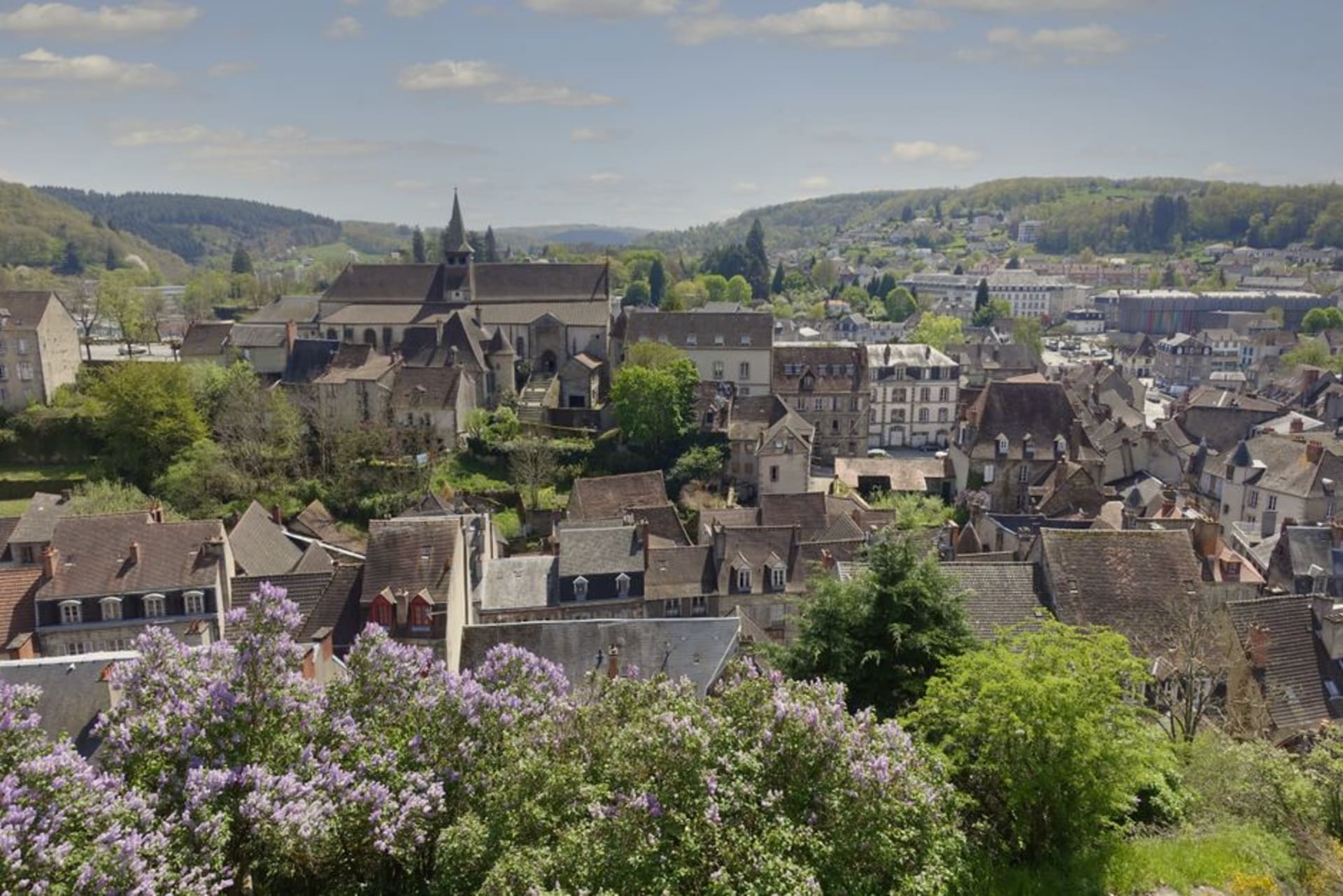
Figeac
"I came to Figeac for the old houses and left thinking mostly about a man who read a dead language nobody else could."
A medieval merchant town on the Célé and Lot rivers that produced, almost as an afterthought to its wool and leather trade, the man who cracked the Rosetta Stone.
Figeac doesn’t get anywhere near the attention Sarlat or Rocamadour pull further up the Dordogne valley, and that’s more or less why we liked it. It grew rich in the Middle Ages on wool, leather and tanning, trading down the Célé and Lot rivers, and it never had to reinvent itself for tourism the way some of its more photogenic neighbours did — the old town just kept being a working town, which is part of what makes walking it feel less like a stage set.
A town built by tanners, argued over by scholars
The medieval centre is a genuine maze of narrow streets lined with soleilhos — the distinctive open-air upper galleries under steep roofs where tanners and merchants once dried skins and stored goods, a detail unique enough to this stretch of the Lot valley that you notice it in almost every building once someone points it out. We wandered without much plan for most of a morning, past the Hôtel de la Monnaie with its Romanesque arcades and the old commercial hôtels particuliers, before ducking into a shaded courtyard for coffee and getting genuinely lost trying to find our way back to the car.
The man who read the Rosetta Stone
Figeac’s most famous export isn’t leather, it’s Jean-François Champollion, born here in 1790, who in 1822 became the first person in the modern era to decipher Egyptian hieroglyphs using the Rosetta Stone, unlocking a language nobody had been able to read for over a thousand years. His childhood home is now a small museum, and the square in front of it, Place des Écritures, holds a striking oversized granite reproduction of the Rosetta Stone set into the pavement, designed by American artist Joseph Kosuth — you can walk directly across the three scripts, hieroglyphic, demotic and Greek, that Champollion cross-referenced to break the code. Standing on it, in the middle of a quiet provincial square, felt like an odd but fitting way to be reminded that one of the great intellectual breakthroughs in history came out of a small town on the Lot, not a capital.
When to go: Late spring or early autumn, when the town is quiet enough to wander without a plan; it makes an easy half-day stop between Cahors and Rocamadour and rewards travelers who don’t need every stone building to have a gift shop attached.
Keep exploring
More of Dordogne & Bordelais