
Duras
"I spent an hour in the château library looking for a Marguerite Duras connection that, it turns out, exists mostly on paper."
The château town that gave Marguerite Duras her pen name, perched over the Dropt valley with its own quietly excellent wine appellation that almost nobody outside France has heard of.
Duras sits just over the departmental line in Lot-et-Garonne, which technically puts it outside the Dordogne proper, but nobody who visits treats it that way — it’s the same rolling bastide country, the same honey-colored stone, and it’s an easy detour off the road between Bergerac and Bordeaux that we almost skipped and were glad we didn’t. What pulled me there in the first place was the name. I’d read Marguerite Duras in university in Paris, long before I ever imagined living the kind of expatriate life she wrote about, and I wanted to see if the town that gave her a pen name had anything of her in it.
A borrowed name and an unexpected château
The connection is real but thinner than I expected. Marguerite Donnadieu adopted “Duras” as her literary name in the early 1940s, apparently because her father had owned a house in or near the town — the exact provenance is debated by her biographers, and the town itself doesn’t oversell it. There’s no museum, no plaque marking a childhood home, just the fact of the name itself, which I found oddly fitting for a writer whose whole style was built on what’s left unsaid rather than spelled out.
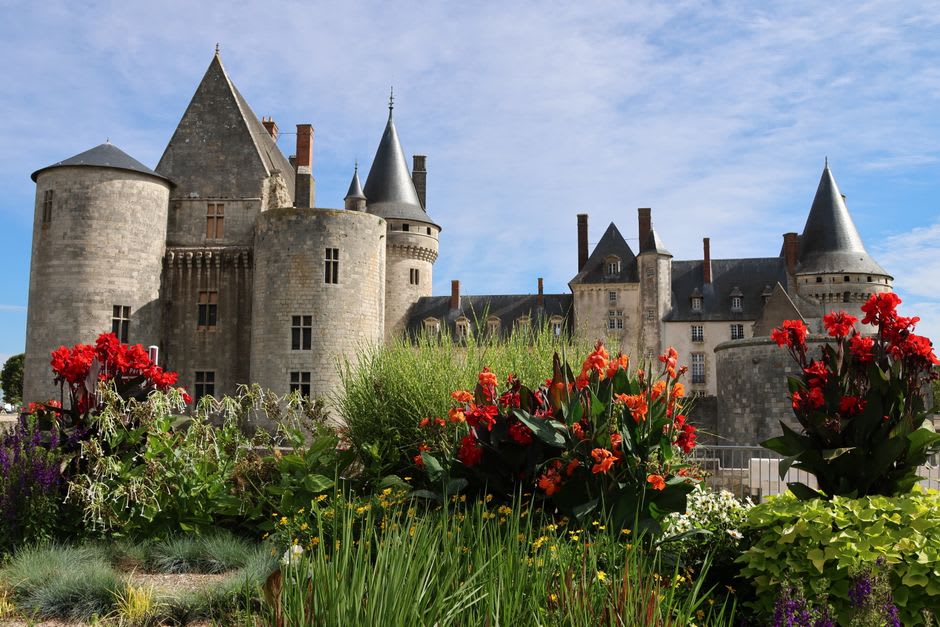
What Duras does have, unambiguously, is one of the most striking châteaux in the region. Built originally in the twelfth century and rebuilt into its current, almost palatial form by the Durfort-Duras family in the 1600s, it dominates the ridge above the Dropt valley with four massive corner towers and a scale that feels out of proportion with the small town clustered beneath it. We toured the interior on a quiet Tuesday morning with maybe six other visitors total, wandering through vaulted kitchens and a genuinely impressive great hall, and the caretaker who sold us tickets talked for a good ten minutes about the family’s fall from grace during the Revolution, when the château was seized and partially dismantled before being restored a century later.
Wine that stays under the radar
Below the château, the town itself is small — a covered market hall, a scatter of restaurants, and vineyards running in every direction the moment you leave the last house behind. Côtes de Duras is one of those appellations that has the same grape mix as Bordeaux, Sémillon and Sauvignon Blanc for the whites, Merlot and Cabernet Franc for the reds, and arguably comparable quality on a good vintage, but sells for a third of the price because it doesn’t carry the Bordeaux name on the label. Lia, who has gotten genuinely serious about wine since we moved to Mexico and started missing easy access to good French bottles, made a point of stopping at a cooperative cellar just outside town where we tasted through five whites before settling on a case of a dry, mineral Sauvignon that we drank half of before we’d even left the region.
We ate a long lunch on the terrace of a small restaurant just below the château walls, looking out over vines that seemed to run to the horizon, and it struck me that this was the France I’d half forgotten existed when I was still living in Paris — unhurried, under-visited, entirely confident in its own quality without needing anyone to notice.
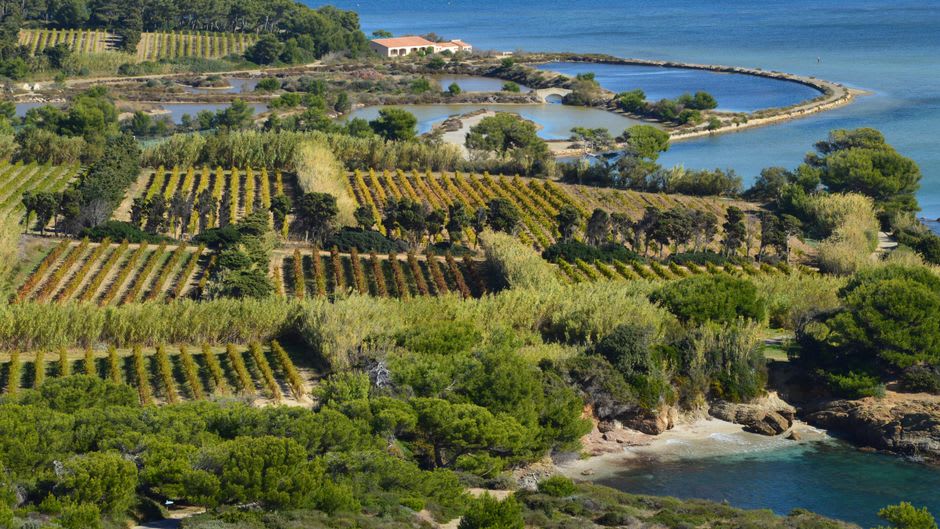
When to go: Late spring or September, when the château gardens are at their best and the wine cellars are open for tastings without the summer crowds that gather in nearby, better-known Dordogne towns.
Keep exploring
More of Dordogne & Bordelais