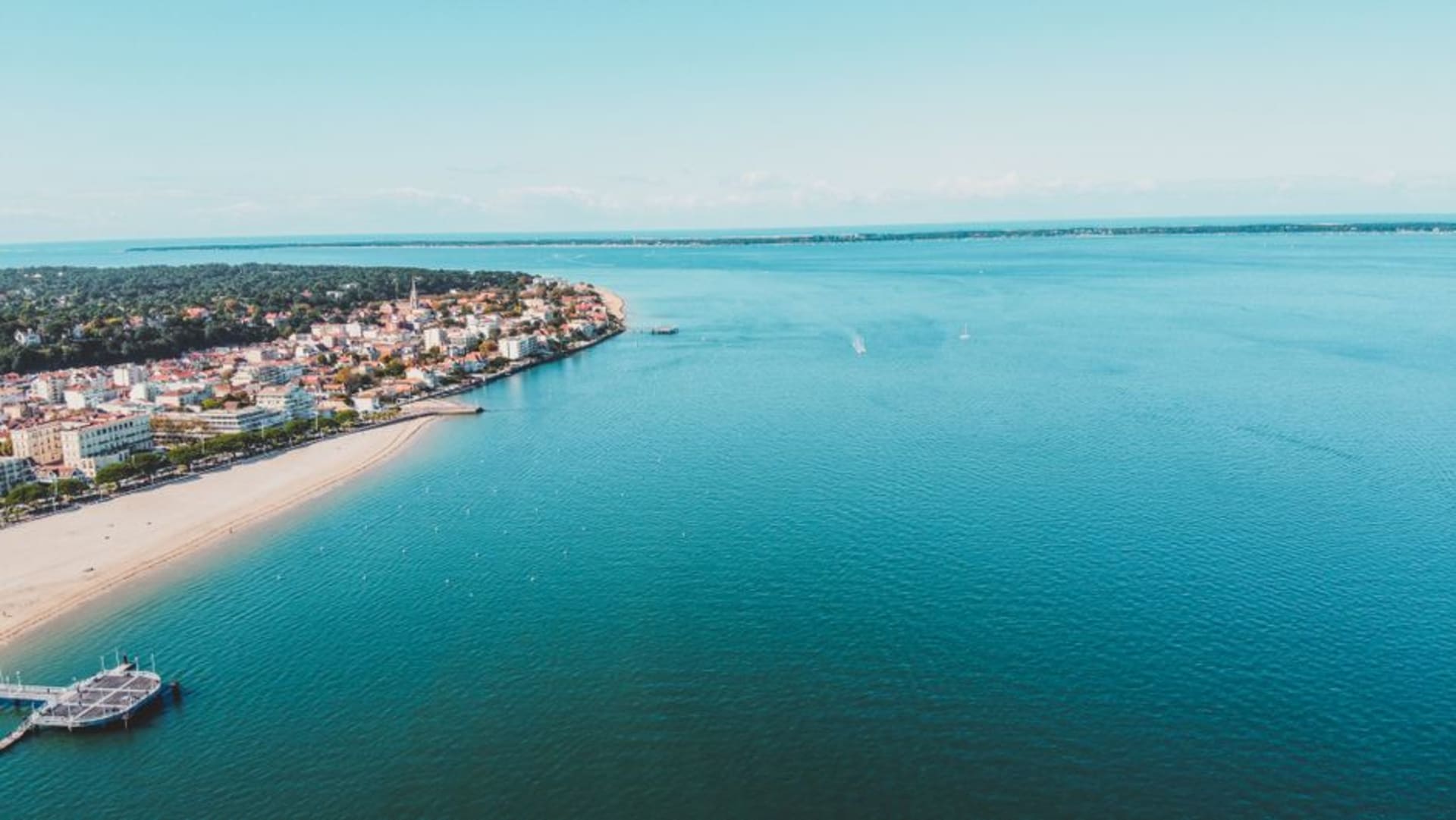
Arcachon
"Arcachon is the only place I know where you can eat oysters at noon and stand on top of a desert by three."
A Belle Époque resort town built around an oyster bay, where villas dripping with wooden lace sit a short boat ride from the tallest dune in Europe.
Arcachon sits on the Atlantic coast an hour west of Bordeaux, wrapped around a shallow, sheltered bay that has made it an oyster town for centuries and a resort town since the 19th century, when the railway arrived and Bordeaux’s wealthy started building winter villas on the hillside above the beach. Lia and I came expecting a straightforward seaside stop and left having spent most of our time somewhere else entirely — a district built specifically for people who were supposedly too sick to enjoy themselves.
A neighbourhood built for invalids that ended up beautiful
The Ville d’Hiver, the Winter Town, was developed from the 1860s onward as a health resort for tuberculosis patients, on the theory that the pine-sheltered microclimate on the hill above the bay was gentler on weak lungs than the exposed seafront below. What resulted, oddly, is one of the most charming residential districts in France: villas in eclectic Second Empire style, wooden balconies, turrets, gingerbread trim, each one different, laid out along curving streets shaded by parasol pines, connected to the beachfront by a public elevator, the Observatoire Sainte-Cécile, built into the dune itself. We spent a whole morning just walking the Ville d’Hiver with no destination, reading the small plaques naming each villa, most still privately owned and lived in rather than turned into hotels.

Oysters from the bay, a dune from another planet
The Bassin d’Arcachon is one of France’s most productive oyster-farming basins, and the oyster huts along the shore at nearby Cap Ferret and the Île aux Oiseaux side of the bay sell them straight off the boat, shucked to order, eaten standing at a plastic table with a squeeze of lemon and, if you’re doing it properly, a glass of the crisp white wine everyone seems to order alongside them. We took the short ferry across the bay and back mainly to see the oyster huts on stilts from the water. Then, in the other direction entirely, we drove twenty minutes south to the Dune du Pilat, the tallest sand dune in Europe, over a hundred metres high, a genuinely disorienting sight rising out of pine forest right beside the ocean — we climbed it barefoot in the early evening, sand still warm, and watched the sun go down over the Atlantic from what felt, for a moment, like the edge of a different country entirely.

When to go: Late spring or September for warm weather without the peak-August crowds that fill both the beach and the dune; oyster season runs strongest from September through April, so shoulder season gets you both good weather and the best of the bay’s harvest.
Keep exploring
More of Dordogne & Bordelais