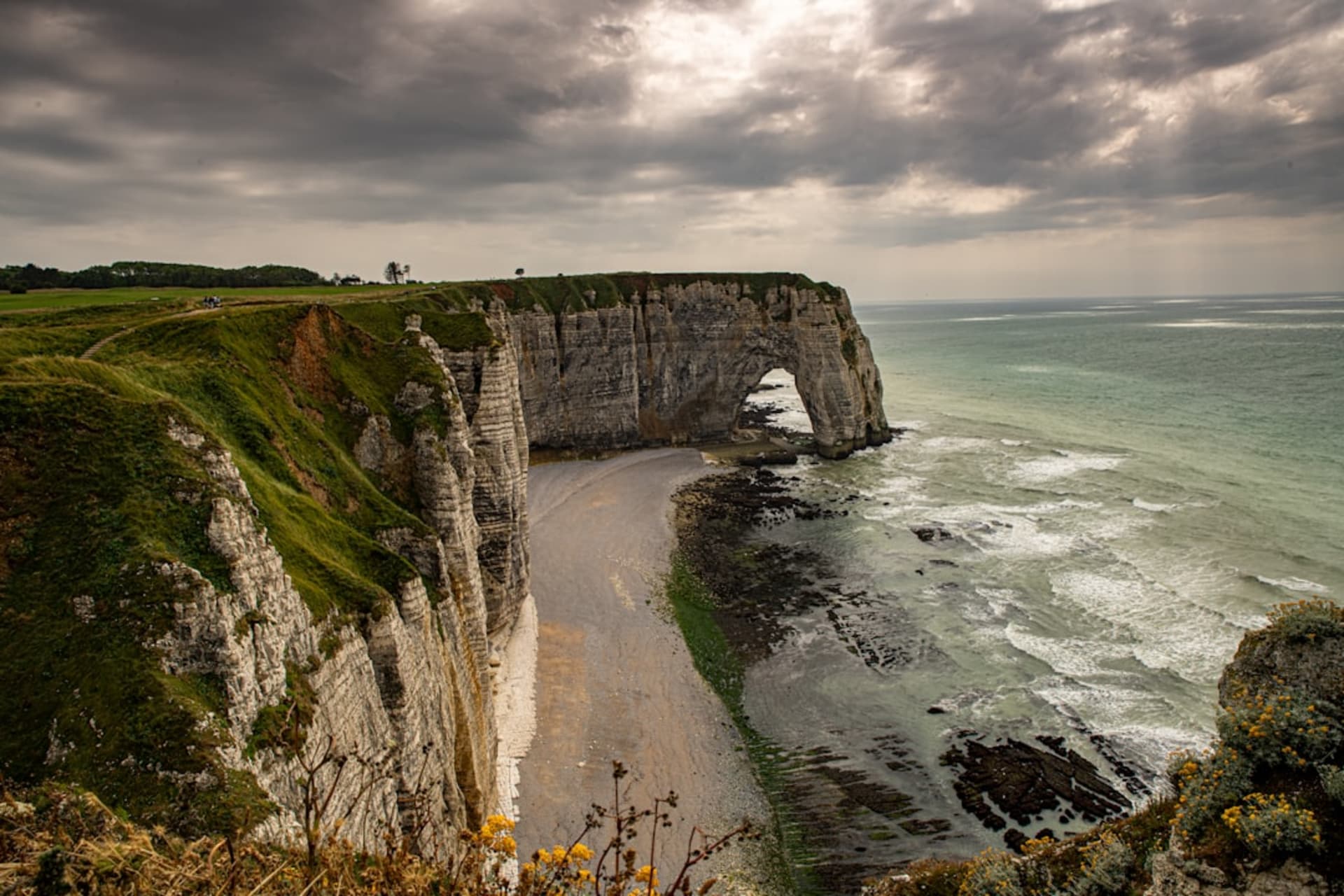
Vence
"I've seen a lot of chapels. I've never had one make me stop talking mid-sentence the way this one did."
A hilltop old town that drew Matisse when he was too sick to paint standing up, and where his chapel still does more with white tile and colored glass than most museums manage with entire collections.
Vence sits up in the hills behind the coast, close enough to Nice to feel the same light but far enough inland to have kept its own rhythm, a walled medieval town wrapped around a warren of narrow streets that has been drawing painters north out of the resort towns for a century now. Renoir lived his last years just down the hill in Cagnes, Chagall settled nearby, and Matisse — old, ill, largely confined to a wheelchair by the 1940s — ended up here almost by accident, cared for by a former nurse who had become a Dominican nun, and it’s because of that relationship that Vence has the single strangest, most moving thing I’ve seen on this whole coast.
The chapel Matisse built to say thank you
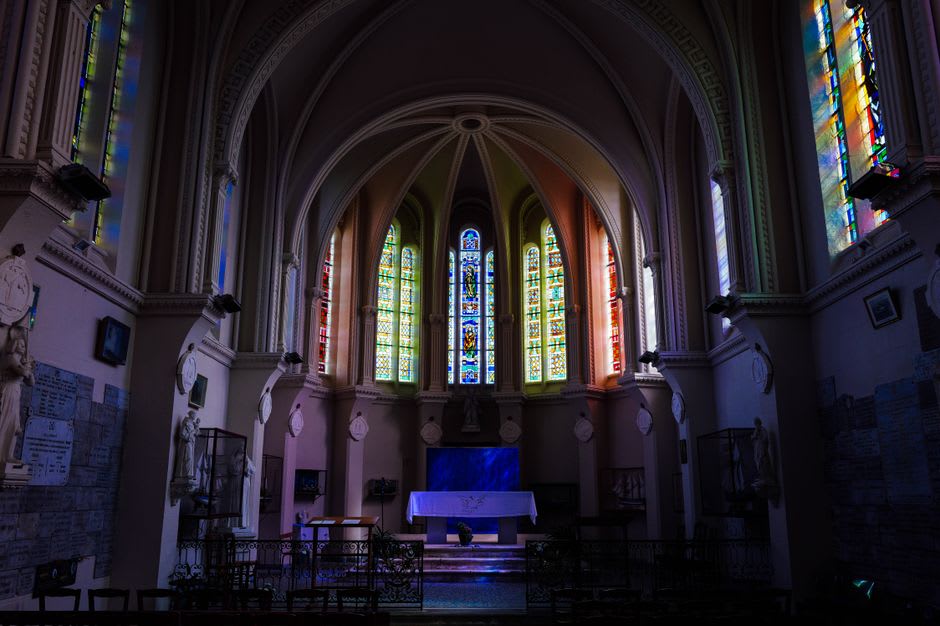
The Chapelle du Rosaire sits on a quiet street on the edge of town, small and plain from outside, and Matisse considered it, in his own words, his masterpiece — designed in his eighties, working from a wheelchair with a long bamboo stick to sketch directly onto the walls because he could no longer stand at an easel. Inside it’s almost entirely white tile and black line drawing, until the sun comes through the deep blue, green, and yellow stained glass and floods the whole white interior with color that shifts as the day moves. Lia and I sat on the plain wooden pews for a long time and neither of us said much, which for us is unusual.
An old town that still works for a living
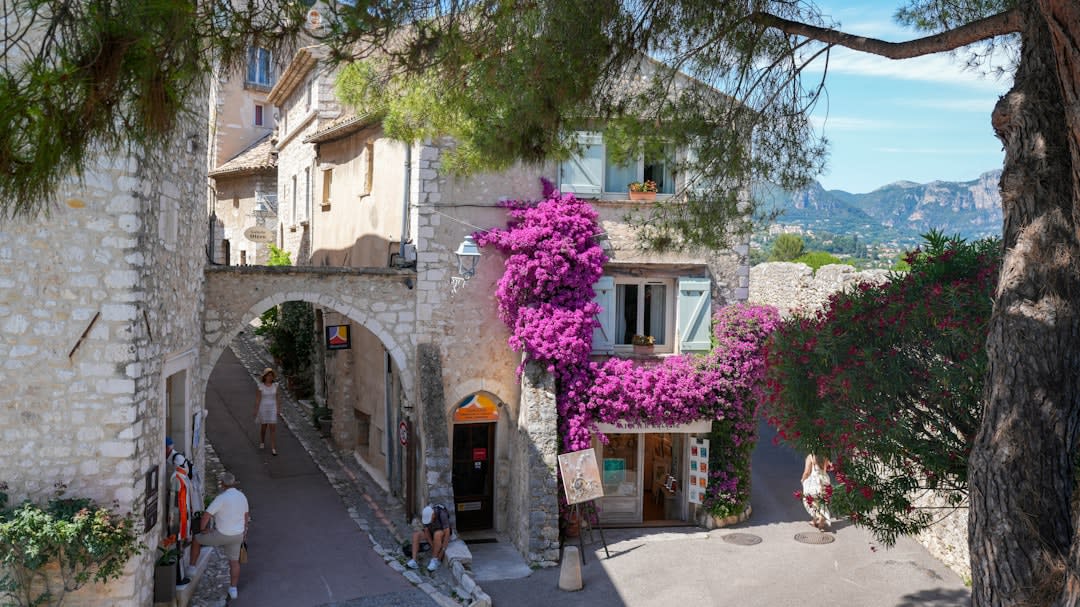
Back inside the ramparts, Vence’s old town is compact enough to cover in an hour but rewards slowing down: a Romanesque cathedral built over a Roman temple, a fountain-fed square where old men still play pétanque most afternoons, and enough galleries and ateliers tucked into the alleys that the artist-colony reputation clearly never entirely left. We ate at a tiny place just inside the Porte du Peyra, at a table wedged into what used to be someone’s ground-floor kitchen, and the woman running it told us her family had lived on that street for four generations — the kind of continuity you don’t often get in towns this close to the tourist coast.
When to go: Spring or early autumn, when the light through the chapel windows is soft and the old town’s cafés still have their outdoor tables without the summer crush from the coast.
Keep exploring
More of Côte d'Azur