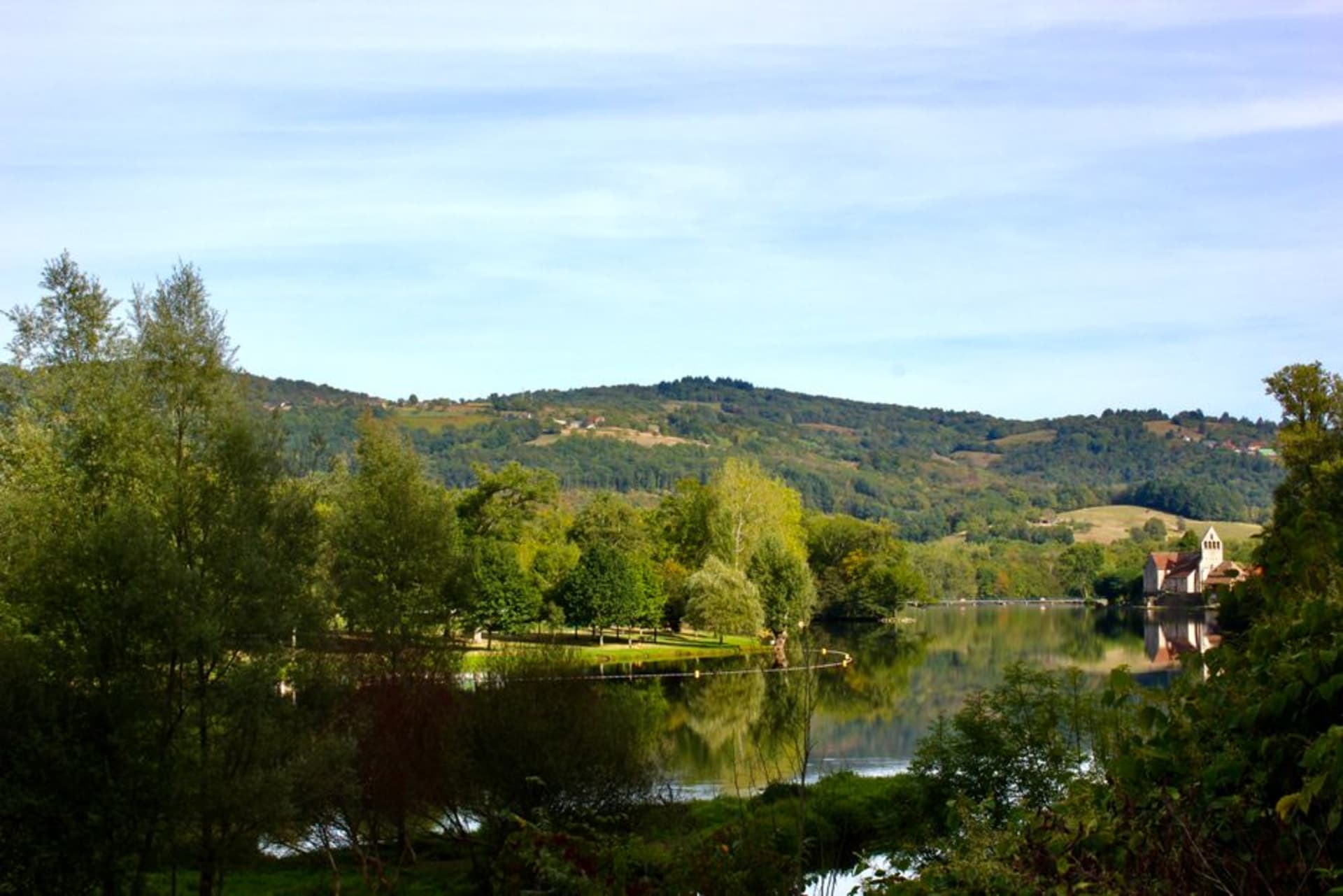
Beaulieu-sur-Mer
"Every other town on this coast tells you it has a microclimate. Beaulieu is the one where I actually believed it."
A pocket of coast so sheltered the Belle Époque crowd nicknamed it 'little Africa,' where a Greek villa built by a Rothschild-era archaeologist still looks like it washed up from another century entirely.
Beaulieu-sur-Mer sits in a fold of the coast between Nice and Villefranche where the hills curve just right to block the mistral and trap the heat, and the town has been trading on that fact since the nineteenth century, when doctors started sending fragile Parisians here to winter among palm trees and banana plants instead of Riviera pine. Lia and I came in February, expecting a gray coastal town like anywhere else at that time of year, and instead found people in shirtsleeves on the seafront while Nice, twenty minutes up the coast, was buttoned into coats. Locals still call it “la petite Afrique” — little Africa — and it’s not just marketing. Something about the bay’s geometry genuinely traps a warmer pocket of air, and you feel the difference the moment you step off the train.
The Greek house that shouldn’t exist here
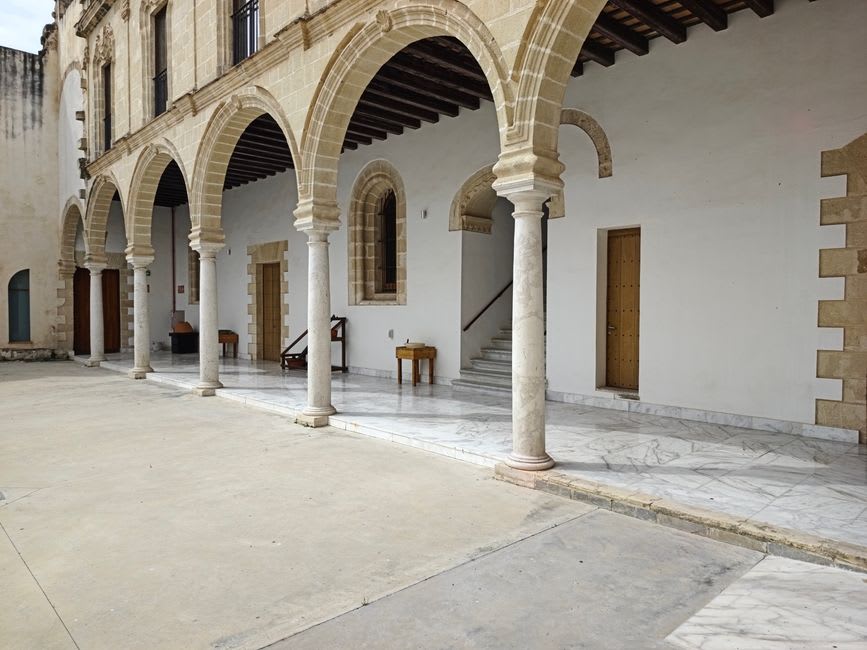
The reason most people stop in Beaulieu is Villa Kérylos, and it is a genuinely strange building to find on the French Riviera: a full-scale reconstruction of an ancient Greek noble’s house, built between 1902 and 1908 by archaeologist Théodore Reinach, who wanted to live, quite literally, inside his own scholarship. Marble floors quarried to match Aegean originals, bronze-and-ivory furniture copied from vase paintings, a bathroom with a sunken tub straight out of Delos — Reinach ate dinner reclining on couches and made his household wear Greek robes on high days. It reads as eccentric until you walk the peristyle courtyard at midday, sun hammering down on white stone with the sea glittering just beyond the columns, and the whole fantasy suddenly makes total sense as a place to actually inhabit.
A harbor still dressed for 1910
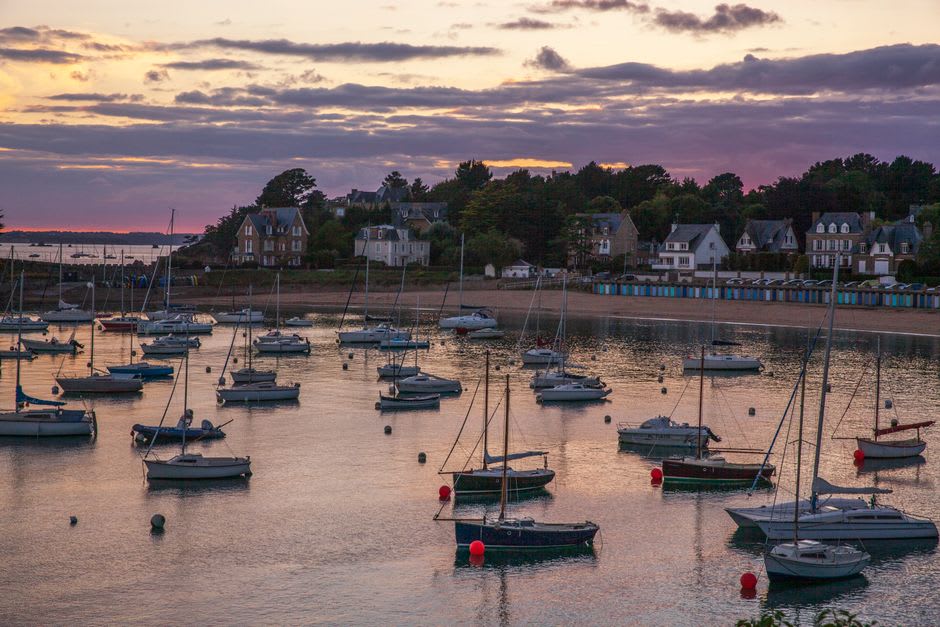
Below the villa, Beaulieu’s Belle Époque harbor curves around a marina where old fishing quays gave way, a century ago, to grand hotels and a casino built for the same winter crowd that wanted Reinach’s mild air without the archaeology. The Rotonde, the town’s covered market hall, still anchors the little grid of streets behind the port, and we spent a slow morning there picking up socca and niçoise olives before walking the Baie des Fourmis seafront path, which is barely a kilometer long and somehow enough to make you feel like you’ve had a full outing. The buildings along it — striped awnings, wrought-iron balconies, a general air of having been maintained rather than renovated — give the harbor a lived-in Belle Époque feel that Cannes and Nice have mostly polished away.
When to go: Winter and early spring are when Beaulieu actually earns its nickname — you’ll get noticeably milder days than Nice or Menton at the same latitude. Villa Kérylos is closed on some Mondays outside summer, so check before making the trip a single-purpose one.
Keep exploring
More of Côte d'Azur