
Zonza
"I came to Zonza for one afternoon and ended up rearranging four days of a trip around it."
A mountain village in the Alta Rocca that exists mainly as the gateway to the Aiguilles de Bavella, and does that one job better than almost anywhere I've been in Corsica.
I hadn’t planned to spend real time in Zonza. It was meant to be a lunch stop on the drive between Porto-Vecchio and Corte, a village to pass through on the way to somewhere else. Then the road climbed out of the coastal heat into pine forest, the temperature dropped ten degrees in twenty minutes, and the Aiguilles de Bavella appeared through a gap in the trees — a row of pale granite needles clawing straight up out of the ridgeline, genuinely startling in a way that no photo I’d seen beforehand had prepared me for — and I pulled over, cancelled the rest of the day’s plan, and stayed.
Needles that don’t look like the rest of the island
The Aiguilles de Bavella sit at around 1,200 meters, a jagged spine of granite spires that feels geologically unrelated to the rounded coastal cliffs and cork oak hills lower down, more like something transplanted from the Dolomites than the Mediterranean. The Col de Bavella, the pass just below the needles, has a small chapel — Notre-Dame des Neiges — and a scattering of parking areas that function as trailheads. I stood at the col in the early evening with the light going long and gold across the rock, and understood immediately why this single stretch of mountain shows up on the cover of so much Corsican tourism material. It earns it.
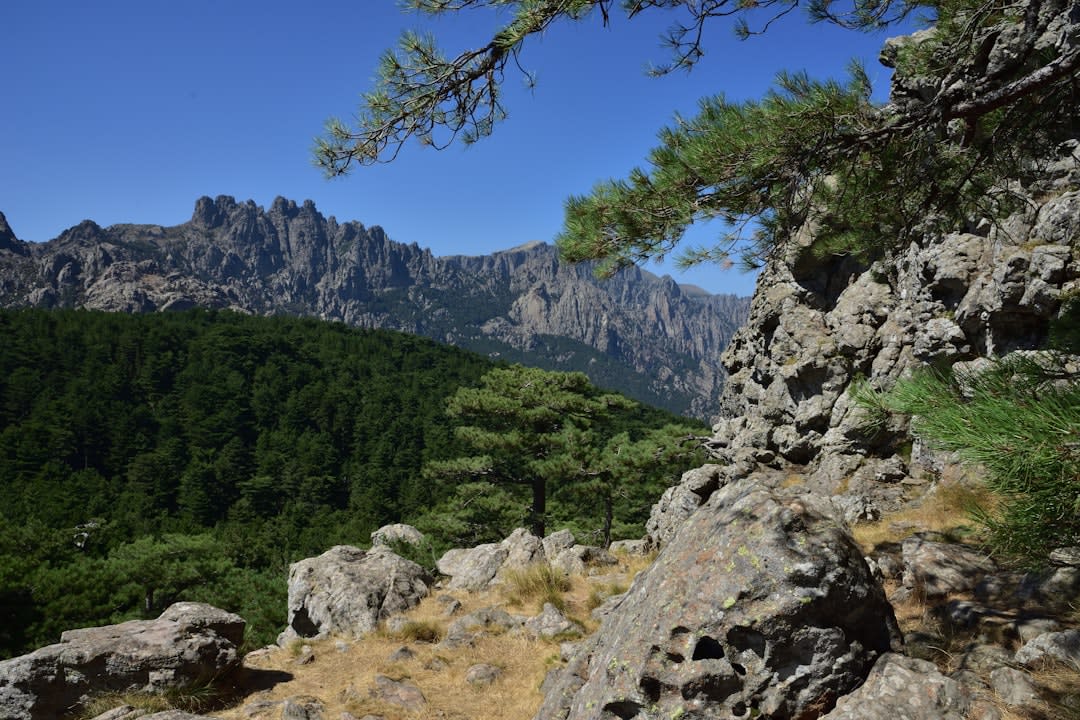
Zonza itself, a scattering of stone houses a short drive below the col, makes an unglamorous but genuinely useful base — a handful of auberges, a boulangerie that opens absurdly early, and a general sense of a village that’s used to hikers passing through rather than a place performing rusticity for visitors. I stayed at a small guesthouse where the owner drew me a hand-marked map of trail options over breakfast, entirely unprompted, the way people do when they’ve clearly had this same conversation a hundred times and still enjoy it.
Walking into the Alta Rocca properly
The trails out of Zonza range from an easy loop around the Col de Bavella suitable for anyone with decent shoes, to the genuinely demanding GR20 — Corsica’s famously brutal long-distance trail, which passes directly through this section and dumps exhausted, sun-scorched hikers into the village on their way toward the finish at Conca. I did a half-day out-and-back toward the Trou de la Bombe, a natural rock arch punched clean through a granite outcrop with a view straight down toward the coast, and passed three separate GR20 hikers who looked, without exception, like they had opinions about their life choices they intended to share with someone eventually.
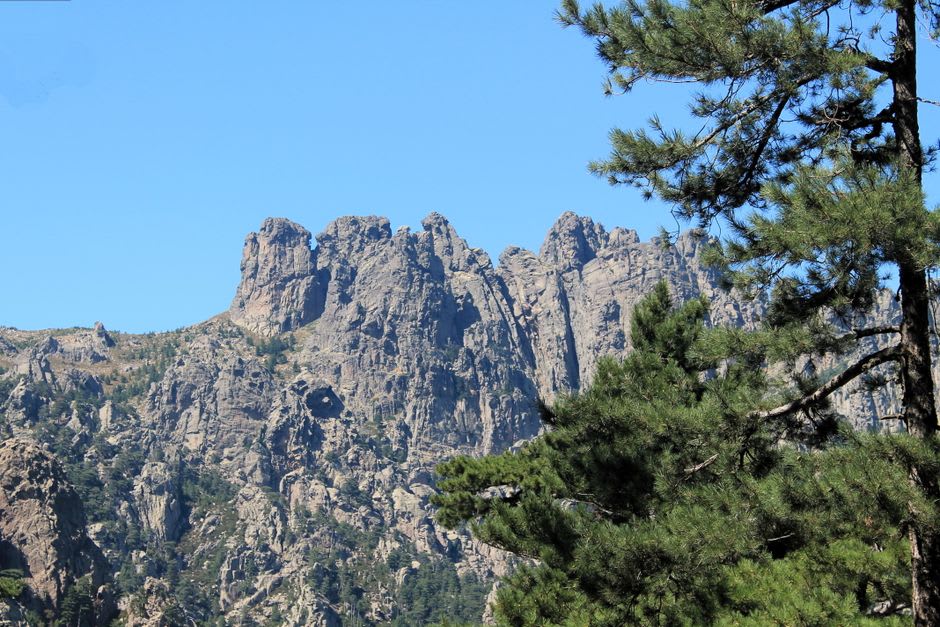
The broader Alta Rocca region around Zonza — chestnut forests, granite hamlets, cooler air than the coast — is Corsica’s mountain interior at its most approachable, close enough to the beaches of Porto-Vecchio for a day trip but different enough in character that it feels like a separate country.
When to go: June and September for hiking — cooler air, wildflowers or turning chestnut leaves depending on the month, and the GR20 crowd thinner than peak July-August. Snow can linger at the col into May in a heavy winter, so check conditions before an early-season visit.
Keep exploring
More of Corsica