
Speloncato
"Speloncato is a village built out of the same rock that's about to fall on it, and somehow that's been fine for six hundred years."
A granite village stacked into a Balagne hillside with a natural rock arch above it and a cardinal's old mansion below, both of which I found more interesting than they had any right to be.
Balagne gets called Corsica’s “garden” so often it’s practically a slogan, all olive groves and citrus and gentle light, and Speloncato is the reminder that the same region can also be granite and grit and switchbacks that make your ears pop. It sits at close to six hundred meters, stacked up a slope so steep the streets need stairs instead of sidewalks in places, and I arrived sweating from the drive up and stayed sweating from the walk once I parked, which tells you something about the gradient.
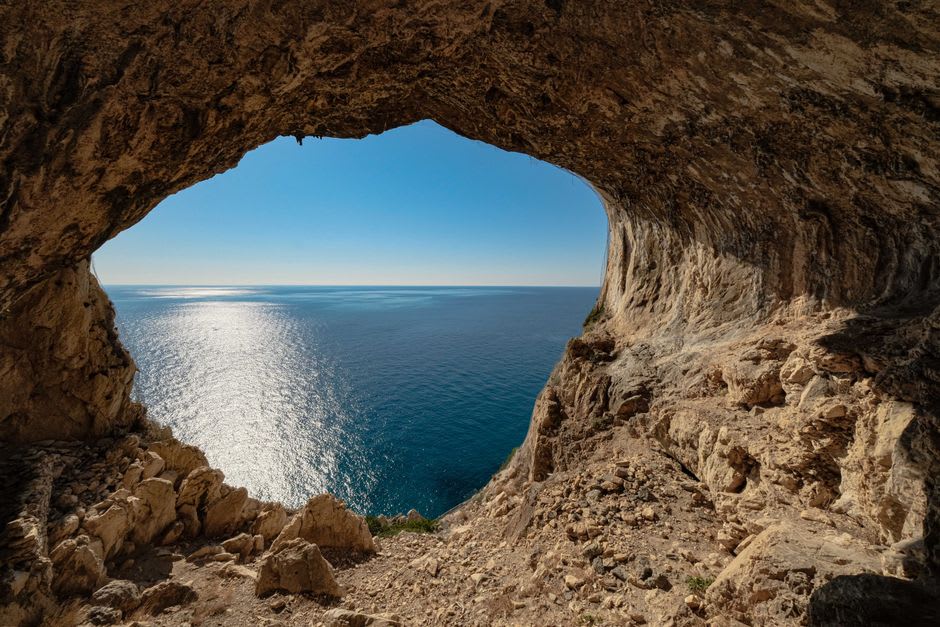
The arch that gives the village its name
The name comes from spelunca, cave, and it’s not a metaphor — above the village, reachable by a short scramble up a marked path, is a genuine natural rock arch worn into the granite ridge, a hole punched clean through the mountain that you can walk under and, if you’re patient, frame the sunset through. I went up in the late afternoon with Lia, both of us underestimating the climb the way we always do, and arrived out of breath to a view over the whole Balagne coast — the sea a hard blue line past a wrinkle of hills, Île-Rousse a pale smudge on the shore. It’s the kind of geological accident that would have a proper name and a gift shop if it were almost anywhere else in Europe. Here it’s just the thing behind the village, unmarked and mostly unbothered.
A cardinal’s mansion and a village too steep to hurry through
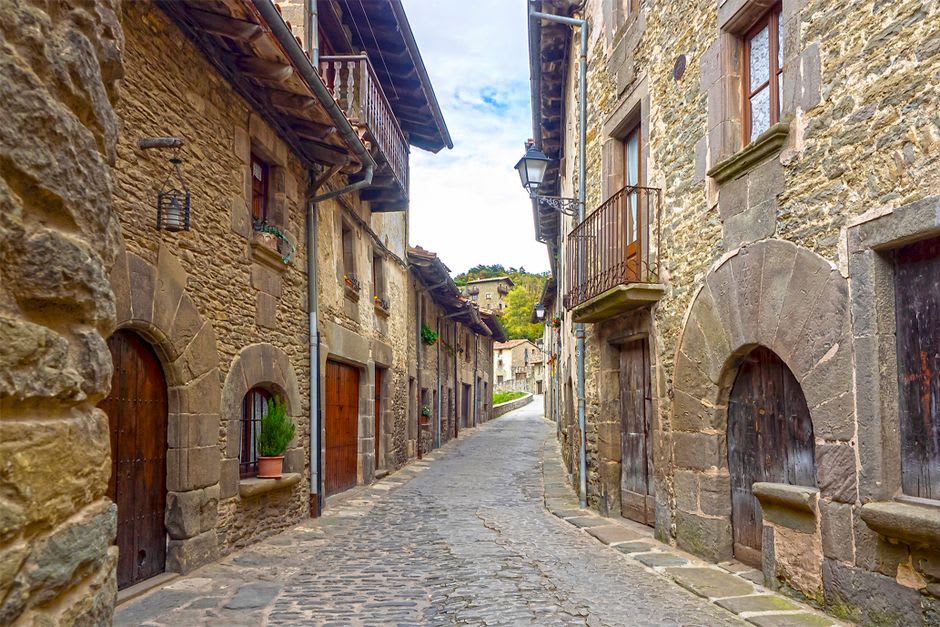
Down in the village itself, the streets are granite-paved and narrow enough that two people have to negotiate who steps aside, lined with tall grey houses that seem to grow directly out of the bedrock. The Palais Savelli sits at the center, a grand eighteenth-century mansion built for Cardinal Savelli, a Corsican who nearly became Pope in a conclave that came down to a single vote — the kind of near-miss history that Corsica specializes in, glorious almost-outcomes instead of glorious outcomes. The palace now hosts occasional exhibitions and concerts, and even shuttered, its scale against the modest houses around it tells you everything about how far one local family’s ambitions once reached.
There’s a church, San Michele, with a slightly absurd neoclassical facade for a village this size, and a small central square where an old man sold us water from a cooler on his porch and refused to overcharge us for it, which after a summer of tourist Corsica felt almost radical. We didn’t stay long — there isn’t much to stay for in the sense of things to do — but I think about that arch more than most monuments I’ve paid to see.
When to go: June and September for cooler air on the climb to the arch and clear coastal views. Midsummer afternoons are brutally hot on the exposed rock path, so go early morning or just before sunset instead. Spring brings wildflowers on the lower slopes and a village still mostly to yourself.
Keep exploring
More of Corsica