
Porto-Vecchio
"By day it's salt pans and pine-shaded beaches. By eleven at night it's a completely different town, and both versions are true."
A citadel town above a shimmering gulf that turns, after dark in August, into the loudest party on the island — and I mean that as a warning and a recommendation in the same breath.
Everyone who’s spent a summer on the French Riviera warns you, half-joking, that Porto-Vecchio is what Saint-Tropez would be if it had better beaches and worse manners. I arrived skeptical of the comparison and left mostly agreeing with it, though not in the way I expected. The town splits cleanly into two lives that barely acknowledge each other: the old citadel and the salt marshes by day, and the bar terraces and beach clubs by night, and the seam between them is the most Corsican thing about the place — a town that clearly resents what tourism has made of its summers while cashing every check that tourism writes.
Salt, cork oak, and a town that used to be poorer
I came in from the north on the road through the cork oak forests, trunks stripped orange-red where the bark had been harvested, the whole corridor smelling faintly of resin in the heat. Before the money arrived, Porto-Vecchio’s economy ran on salt — the marshes just south of the citadel were worked for centuries, and you can still walk the shallow lagoons in early morning when they’re pink-white and mirror-still, a few flamingos wading through indifferent to the town waking up behind them. I went at seven, alone except for a dog walker, and it was hard to square that quiet with what I knew was coming after dark.
The haute ville sits above all this on its promontory, a genuine Genoese fortification with narrow lanes, a proper gate, and — improbably — some of the best-preserved old-town texture in southern Corsica, largely because the money that transformed the beaches never really bothered rebuilding the ramparts. I had a glass of Nielluccio at a terrace table near the main square, listened to a trio of languages overlapping at neighboring tables, and understood that the old town operates on its own unhurried schedule regardless of what’s happening at Palombaggia twenty minutes away.
Two beaches, one night out
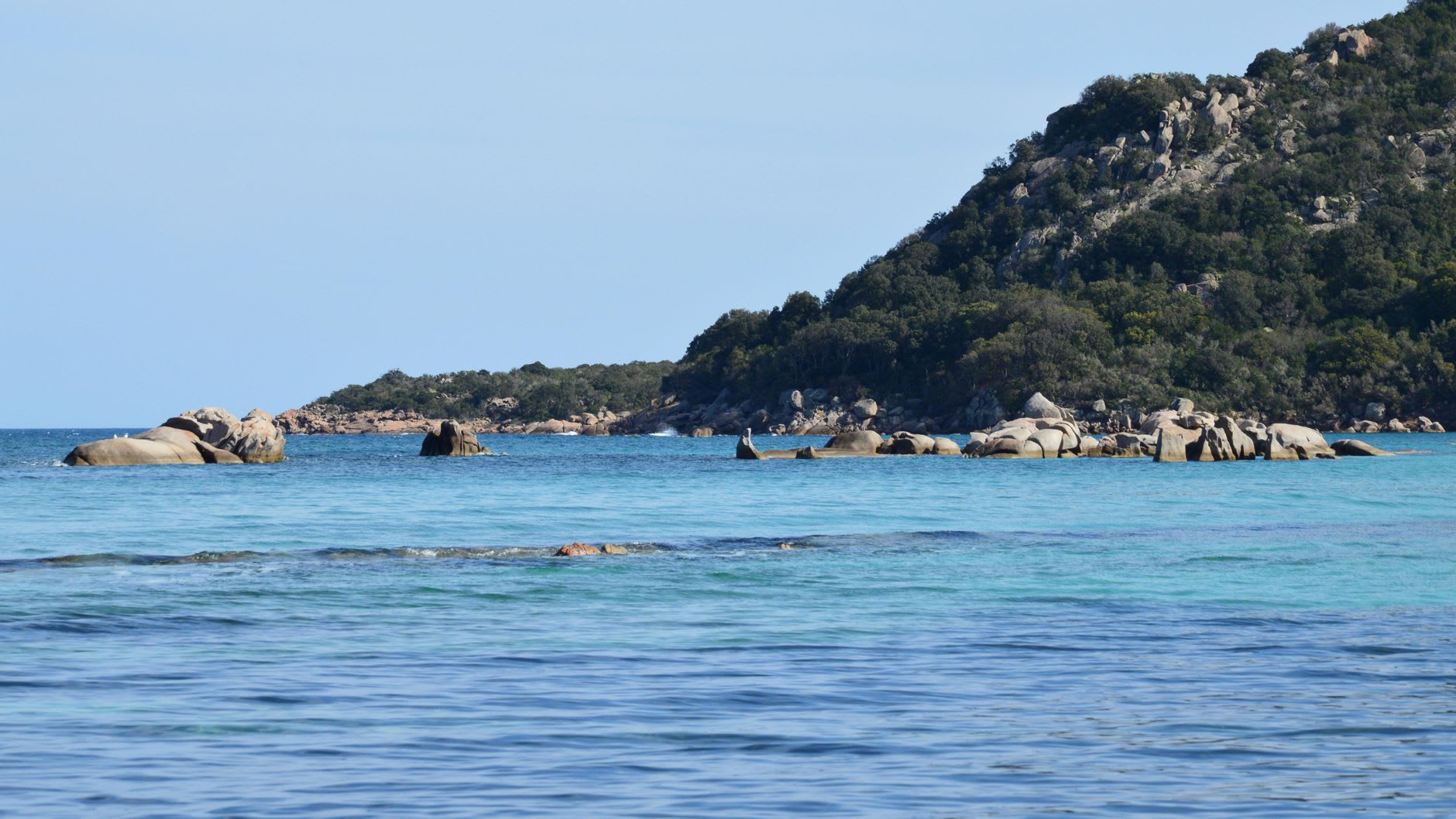
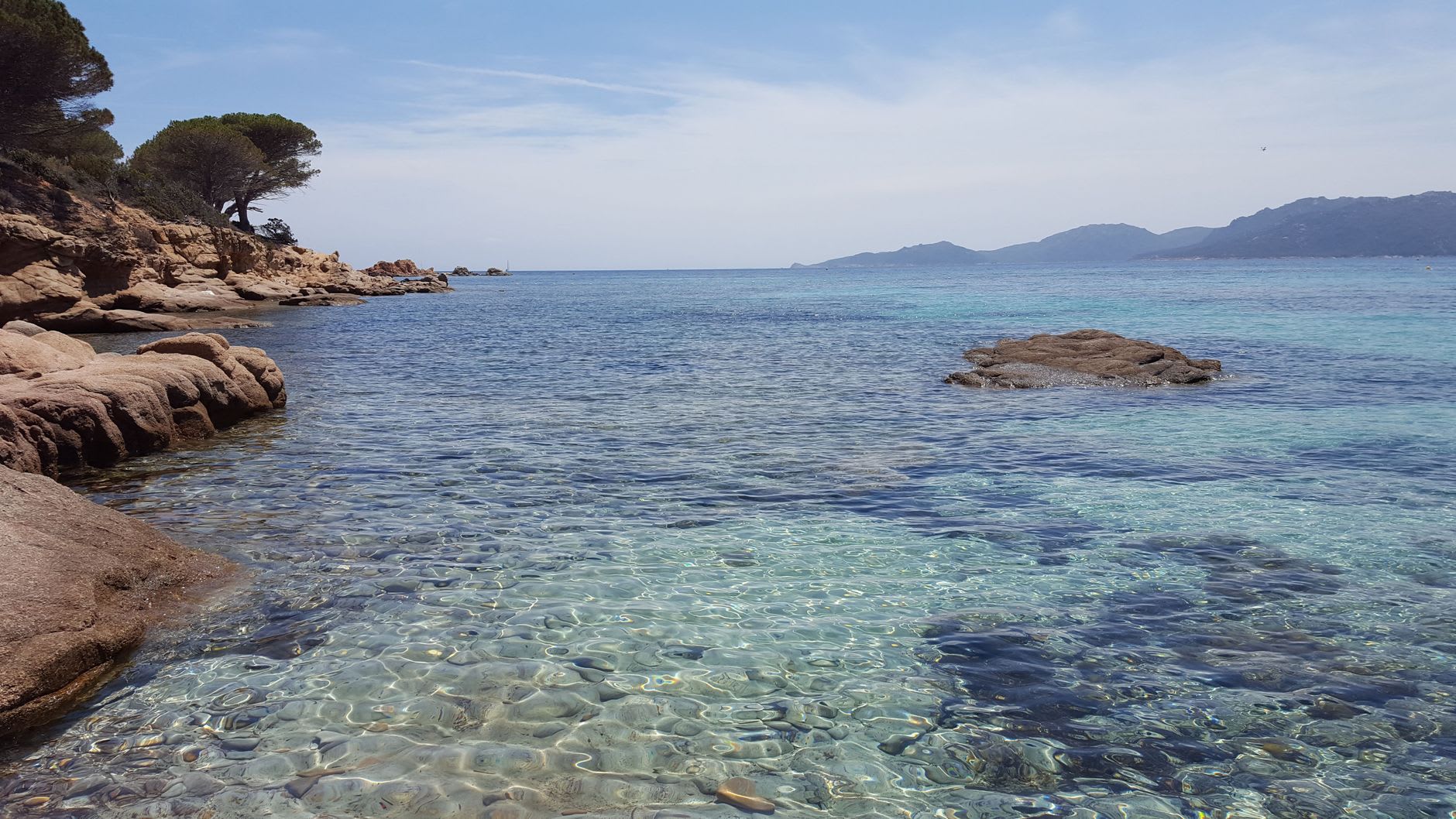
Palombaggia and Santa Giulia are, deservedly, on every list of Corsica’s best beaches — pale pink-tinged sand, parasol pines leaning over the shoreline, water that goes turquoise then navy in bands as it deepens. Lia and I went to Santa Giulia in early June before the sunbeds multiply and the prices follow, and it was, without exaggeration, one of the most beautiful stretches of coast I’ve stood on anywhere in the Mediterranean.
Then there’s the other Porto-Vecchio, the one that starts around ten at night in July and August, when the marina bars fill with a mix of Corsican, French, and Italian summer money and the clubs on the outskirts run until dawn. I am, by disposition, more of a wine-on-a-terrace person than a nightclub person, but I went out once with some Corsican friends of a friend, mostly out of curiosity, and came home at four in the morning having danced more than I had in a decade. It’s not subtle. It’s not trying to be. But if you want to understand why some Corsicans roll their eyes at the mention of this town, spend one August night here and you’ll get it immediately.
When to go: June for beaches without the crowd, September for the same beaches with warmer water and a town exhaling after August. If the nightlife is actually the draw, July and August are non-negotiable — just book the citadel hotel, not one near the beach clubs, if you want to sleep before 3am.
Keep exploring
More of Corsica