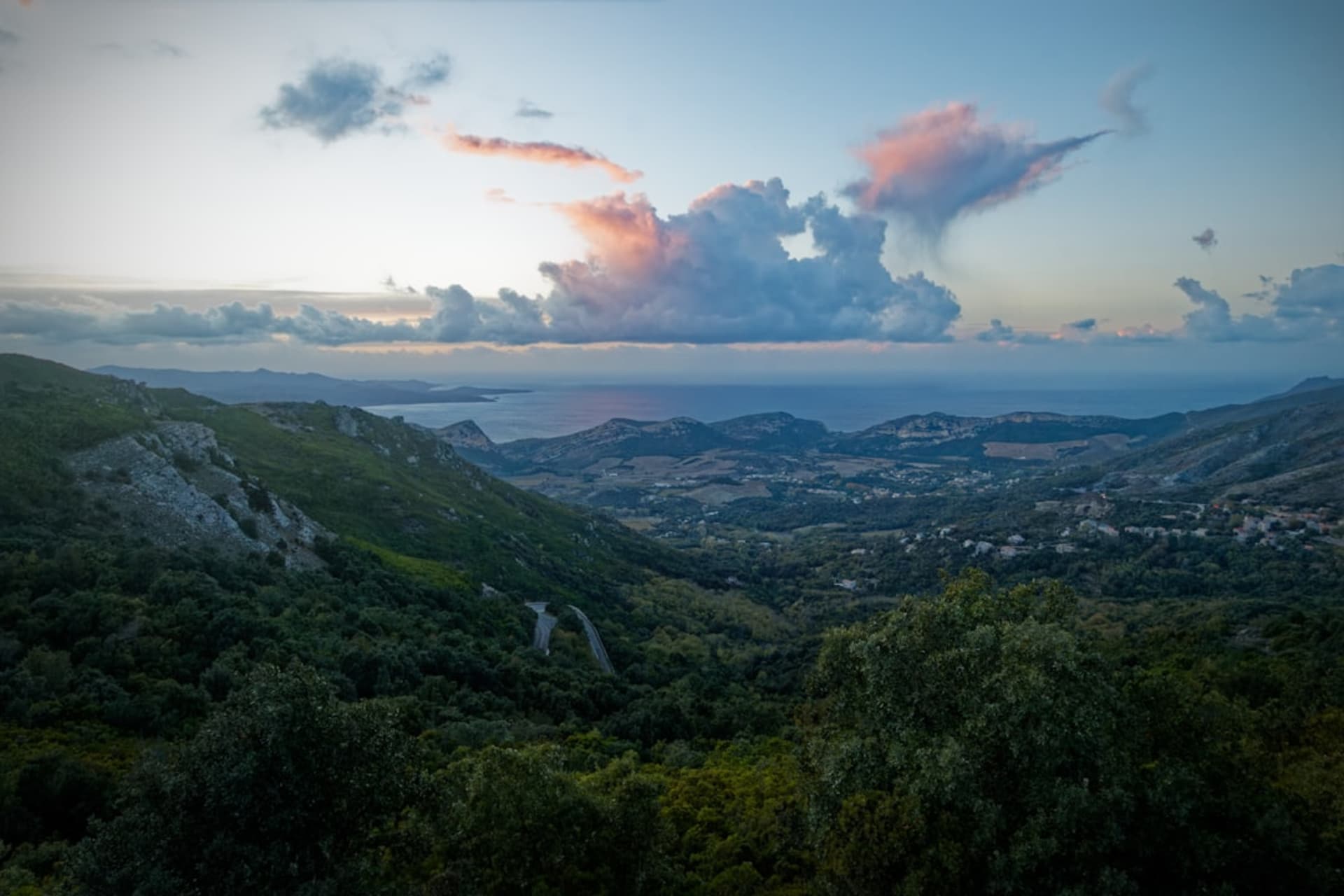
Piana
"I've watched a lot of sunsets professionally, so to speak, and this is the first one that made me stop narrating it to myself."
A cliff-edge village overlooking red granite formations that go from rust to blood-orange to violet in the space of one sunset, and made me put my phone down without meaning to.
I say “professionally” because writing about places for a living has a way of turning even genuine wonder into material — I’m often composing the sentence about a view while I’m still looking at it, which I’m not proud of but I’ve stopped fighting. The Calanques de Piana broke that habit for about twenty minutes, which for me is a significant data point.
Granite that doesn’t look like it should exist
The calanques are a stretch of red granite cliffs and pinnacles plunging straight into the Golfe de Porto, carved by wind and water into shapes that locals and guidebooks alike reach for animal names to describe — a bear here, an eagle’s head there, a dog reclining on its side — because the rock genuinely does seem to arrange itself into recognizable forms if you look long enough, or maybe if you want to badly enough. I drove the coastal road from Piana village down toward Porto in the late afternoon, and the light did something to the stone I hadn’t seen anywhere else: it started rust-orange at four, deepened to something closer to blood by six, and by the time the sun actually touched the horizon the whole formation had gone a bruised violet-grey against a sky doing its own separate performance in pink and gold.
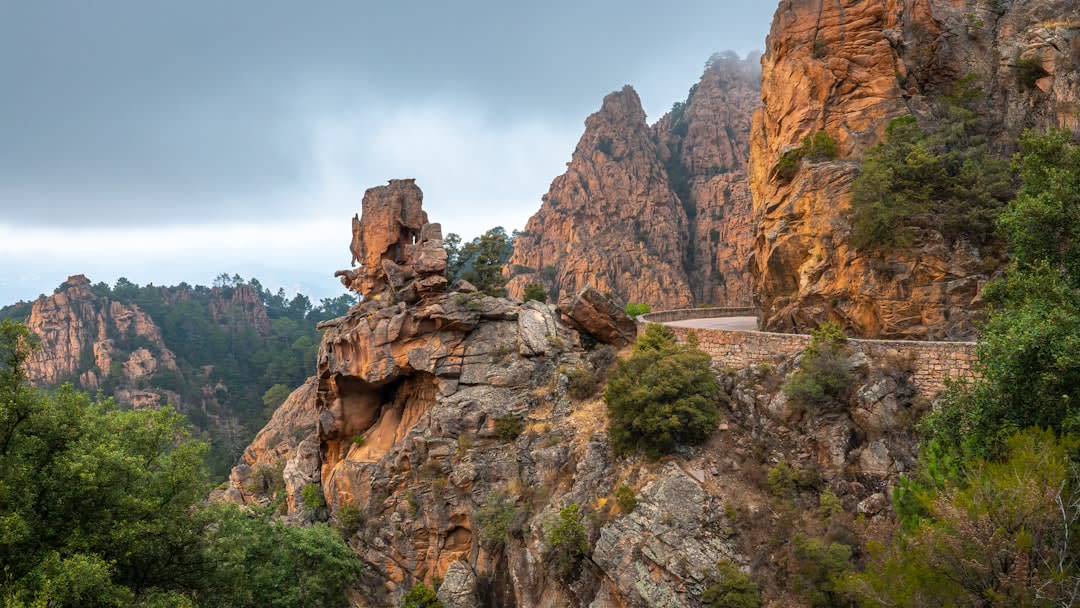
Lia and I pulled off at one of the small parking areas along the D81 — there are several, informally marked by the number of cars already stopped — and walked out onto the rock itself, which is smoother and more scrambleable than it looks from the road. We sat with our legs over a drop that probably wasn’t as sheer as it felt and watched three separate groups of tourists arrive, take exactly the same photo, and leave within ten minutes, while we stayed for the whole show, slightly smug about it.
Hiking into the maze, not just past it
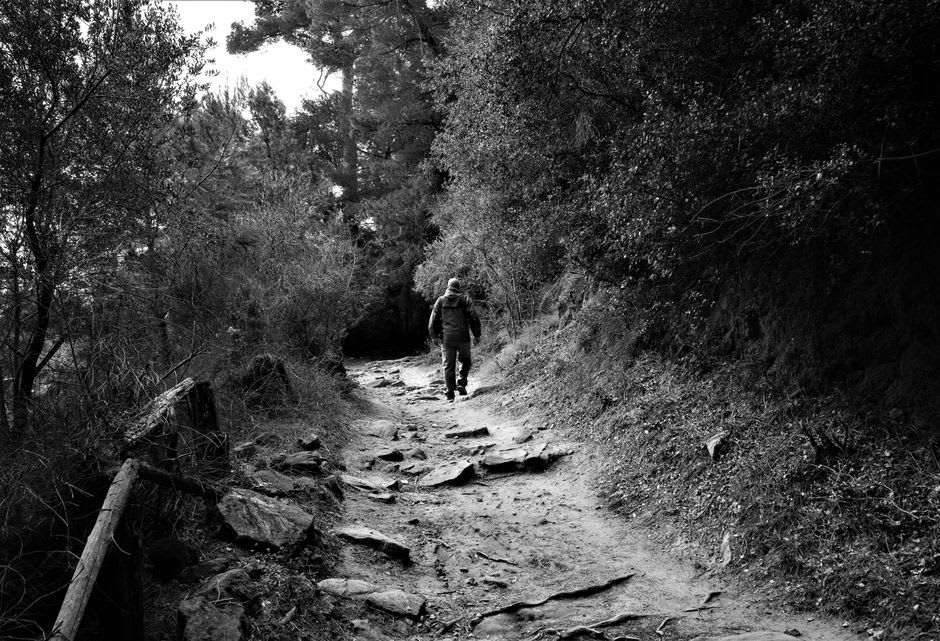
The village of Piana itself, a cluster of white houses on the clifftop above the formations, is worth more than a photo stop. There’s a proper network of marked trails that drop down into the calanques themselves rather than just admiring them from the road — the Sentier des Muletiers, an old mule path, threads down through the rock spires to a small chapel and eventually toward the sea, and hiking it puts you inside the geology rather than opposite it. The scale only becomes obvious once you’re standing at the base of a formation that looked, from the road above, like a single manageable boulder.
We stayed at a small guesthouse in the village with a terrace that faced directly down the gulf, and I understood, by the second evening, why photographers and painters have been returning to this exact stretch of coast for over a century — it’s not one good view, it’s the same view changing completely every twenty minutes as the light moves.
When to go: Late afternoon into sunset is non-negotiable regardless of season — this is a golden-hour destination first and a daytime one second. May, June, and September give you clear roads and manageable crowds at the pull-offs; July and August mean queuing for parking spots at the best viewpoints as the light peaks.
Keep exploring
More of Corsica