Bastia
"Everyone sprints south from Bastia the moment they get off the boat. I've never understood the hurry."
The port city that most visitors only see from a ferry railing on their way somewhere prettier, which is exactly why I ended up staying three extra days.
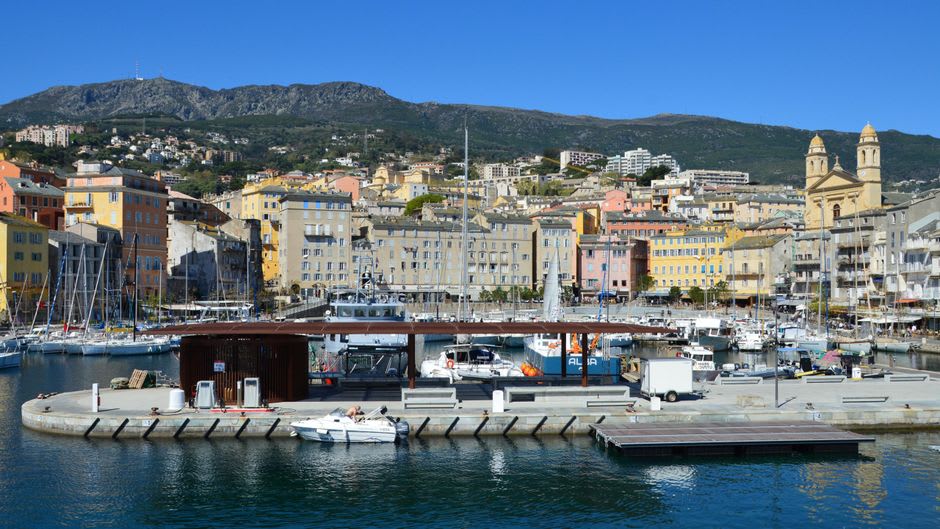
I’ve now arrived in Corsica by ferry from Nice, Marseille, and Livorno, and every single time I’ve stood on deck watching Bastia rise out of the water — that dense, ochre-and-rust stack of buildings climbing from the Vieux Port toward the citadel — and every single time I’ve watched most of the other passengers walk straight to their rental cars and drive south without a second look. I get it. Bonifacio has better marketing. But Bastia is the Corsica that exists when nobody’s performing for a tourist, and I’ve come to think that’s worth more than a postcard beach.
A port that still smells like a port
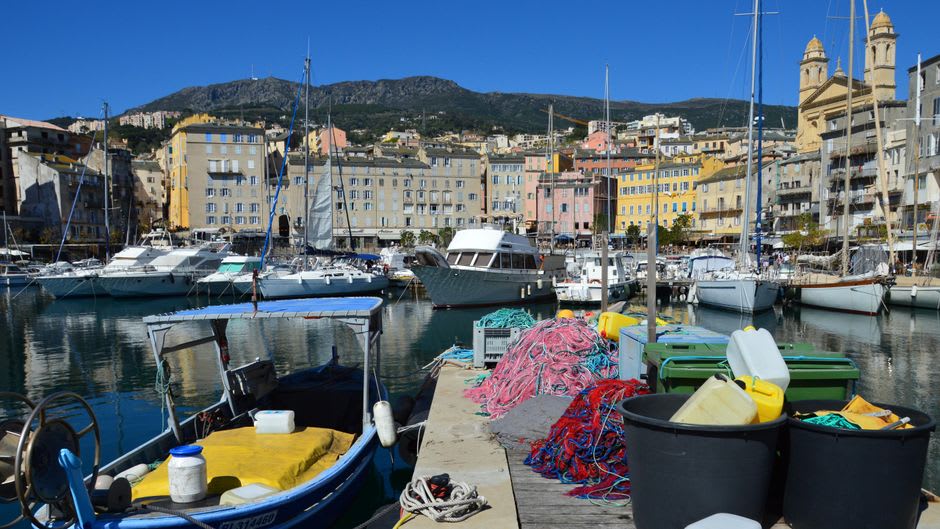
The Vieux Port is the heart of it — a working harbor, not a marina dressed up for photographs, ringed by tall Genoese-era buildings in shades of ochre, salmon, and weathered grey, their shutters faded by decades of salt air. Fishing boats still tie up here alongside the pleasure craft, and in the early morning you can watch the day’s catch get unloaded onto the quay while cafés set out their first chairs. I sat with a coffee at seven-thirty one morning and watched an old man in rubber boots argue amiably with a restaurant owner over the price of a crate of sea urchins, a negotiation that seemed to be more about ritual than actual disagreement.
Above the port, the Terra Vecchia quarter is a tangle of tall narrow buildings and steep stairways that feels closer to Genoa or Naples than to mainland France, which makes sense — the Genoese ran this coast for nearly five centuries and Bastia was their administrative capital, not Ajaccio. The Église Saint-Jean-Baptiste, its twin towers visible from the water, anchors the quarter with a baroque interior that’s dark, gilded, and a little overwhelming after the plain stone streets outside.
Less touristy, more itself
What struck Lia and me most was the ordinariness of it — in the good sense. Bastia has a functioning citadel neighborhood, Terra Nova, with government buildings and a cathedral rather than a curated historic center; it has a produce market at Place du Marché that serves locals doing their actual weekly shopping rather than selling lavender sachets to cruise passengers; it has bars around Place Saint-Nicolas, the long plane-tree-lined square facing the sea, where the crowd on a Tuesday night is overwhelmingly Bastiais rather than visiting. We ordered a bottle of Vermentino at one of them and stayed two hours longer than planned, mostly because nobody was trying to turn the table.
As the island’s main ferry gateway, Bastia is also just logistically useful — it’s where you’ll likely land if you’re coming from mainland France or Italy, and where you might glance at your watch and think you should get moving toward the coast everyone told you about. My advice, after several ferries and several years of visiting Corsica: don’t rush. Give the city one full day before you drive anywhere else.
When to go: Any month works for the city itself since it’s not primarily a beach destination, but May, June, and September give you the best café-terrace weather without the August crush at the ferry terminal. If you’re arriving by boat in peak summer, book your onward car rental well in advance — the port gets genuinely chaotic in August.
Keep exploring
More of Corsica