
Tonnerre
"I stood at the edge of the Fosse Dionne convinced someone had dyed it for a photo, until I remembered nobody dyes a spring."
A Yonne wine town with a spring so improbably blue it looks photoshopped, and a medieval hospital hall bigger than most cathedrals I've been in.
Tonnerre sits on the Armançon river at the edge of Burgundy’s wine country, close enough to Chablis that its own whites get unfairly overshadowed, and it’s a town I’d have driven straight past on the way to somewhere more famous if I hadn’t stopped for the spring. That’s genuinely the reason to detour here — a natural karst resurgence called the Fosse Dionne, and once you’ve seen the colour of the water, you understand why.
A spring the colour of nothing I could explain
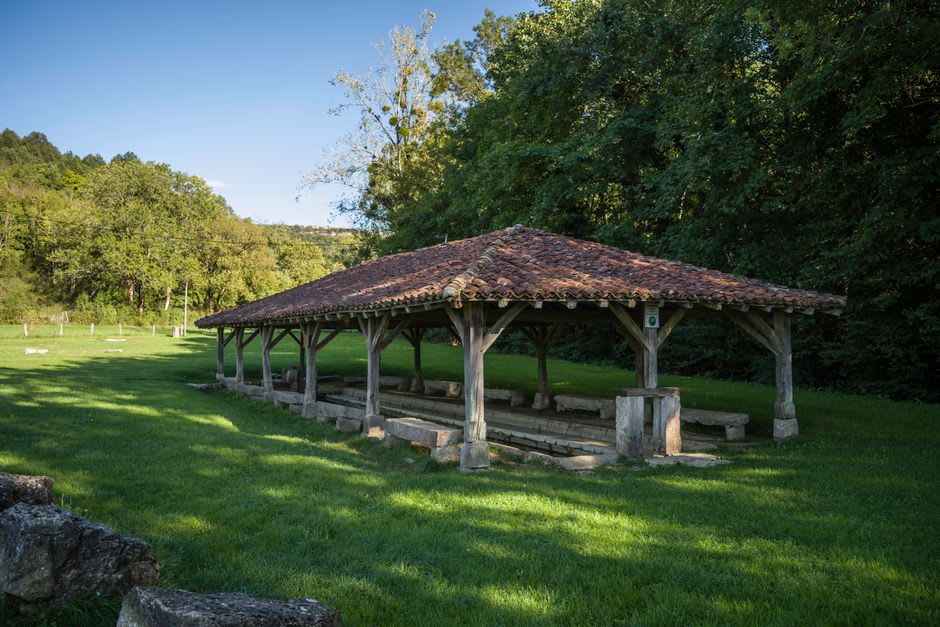
The Fosse Dionne sits at the base of the old town, a roughly circular pool ringed by a 18th-century covered washhouse, arcaded on all sides, where women washed laundry well into the 20th century kneeling at stone slabs around the water’s edge. The water itself is a saturated turquoise-blue, fed by an underground karst system that’s never been fully mapped — divers who’ve tried have died attempting to trace it, which the town mentions with a certain grim local pride — and the colour comes from the mineral content and depth rather than anything ornamental. I stood there for a long while, genuinely unable to decide whether it looked more like a swimming pool advert or a special effect, before settling on the fact that it’s just water doing something water doesn’t usually do.
A hospital hall built like a cathedral
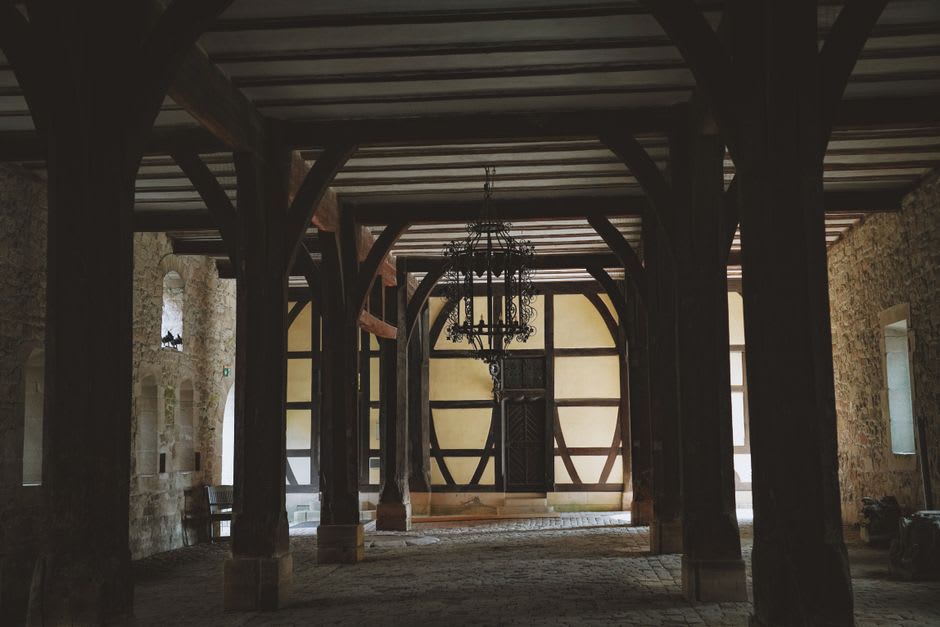
Above the spring, the old town holds the Hôtel-Dieu, a medieval hospital founded in 1293 by Marguerite of Burgundy, sister of Saint Louis, and its central hall — the Grande Salle des Malades — is a single vaulted timber-roofed space nearly ninety metres long, one of the largest hospital halls to survive from the period anywhere in Europe. Walking into it cold, without having read anything about it first, I genuinely mistook the scale for a church nave; it’s that imposing. Lia pointed out that this was, functionally, the entire hospital — one enormous room where the sick were laid out along the walls under a single soaring roof, which says something both about medieval medicine and medieval ambition.
When to go: Any season works for the spring itself, though summer lets you linger longest in the old town’s cafés afterward. Pair it with a stop in nearby Chablis or Noyers-sur-Serein if you’re building out a day along the Serein and Armançon valleys.
Keep exploring
More of Burgundy