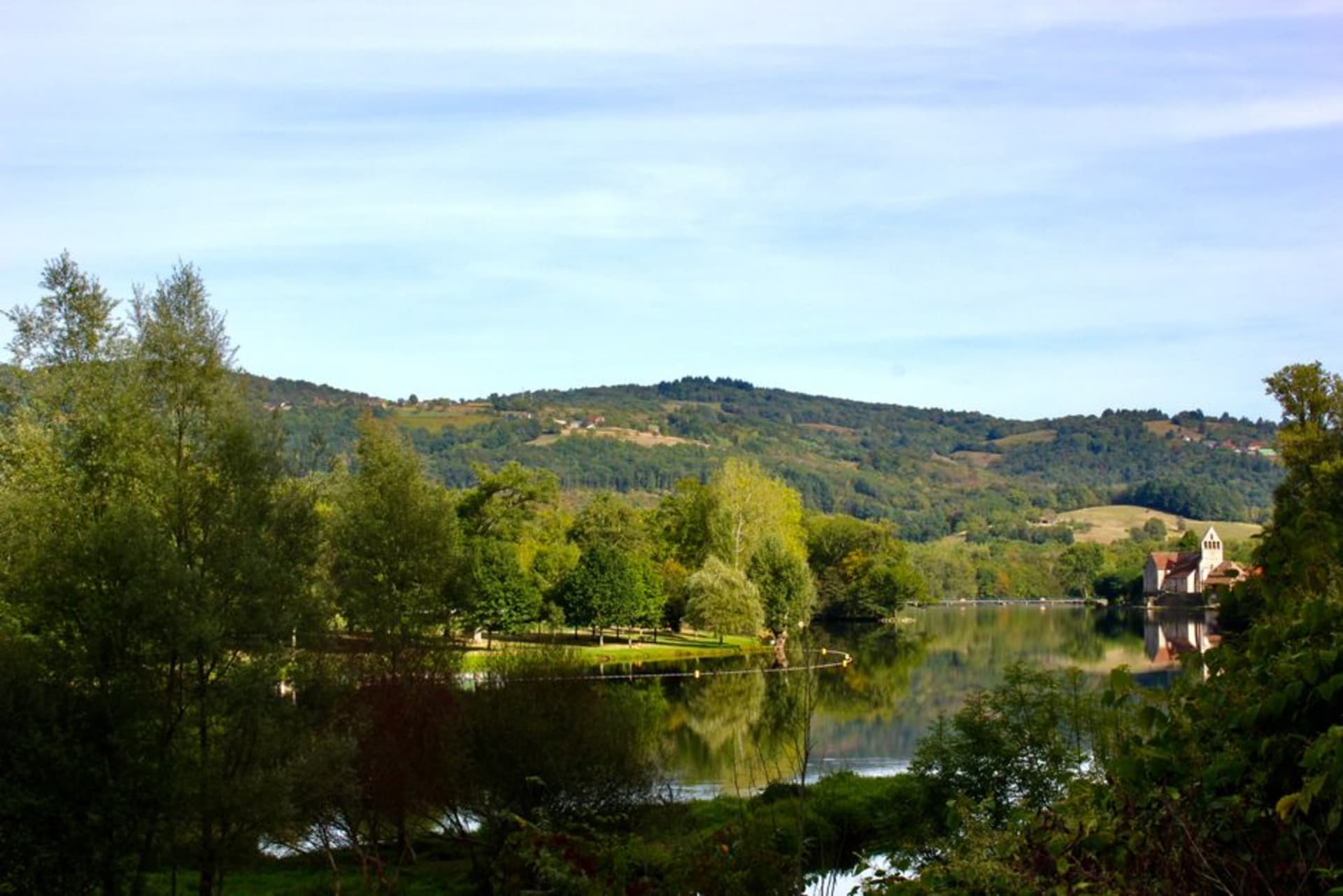
Noyers-sur-Serein
"I've walked plenty of medieval towns. I've never walked one that the river tried this hard to surround."
A half-timbered village folded almost entirely inside a loop of the Serein river, official 'most beautiful village of France,' where I spent an hour just looking up at carved beams.
Noyers-sur-Serein is small enough that you can circle the whole old town on foot in twenty unhurried minutes, and yet it took me most of an afternoon, because I kept stopping. The village sits inside a near-complete loop of the Serein river in northern Burgundy, close enough to Chablis that you can taste the same limestone in the local white wines, and it’s carried the official “plus beaux villages de France” label for good reason: the medieval core survived almost entirely intact, right down to the fortified gates at either end of the single main street.
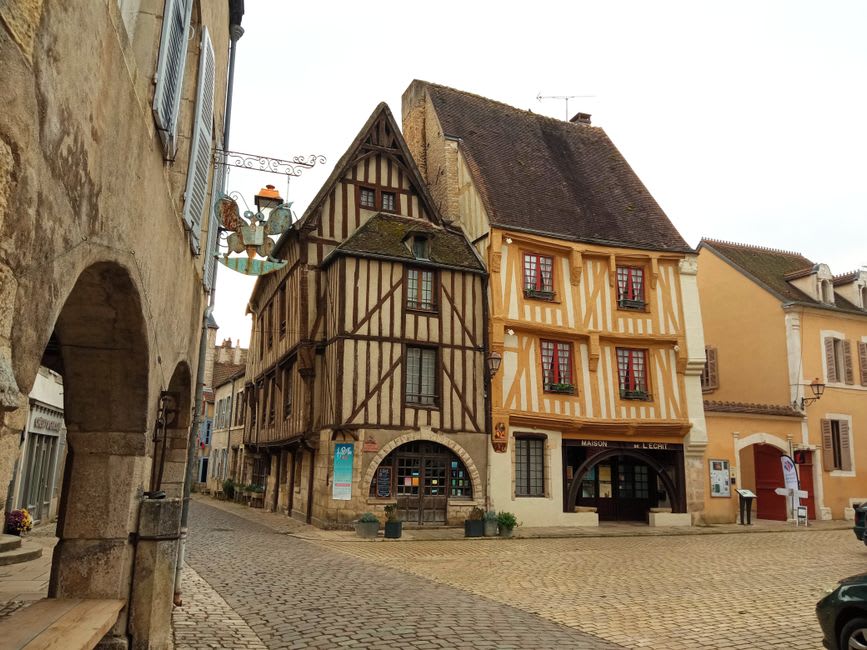
Arcades, crooked beams, and a square built for market day
The heart of the village is the Place de l’Hôtel de Ville, ringed by stone arcades — covered walkways under the upper floors of the houses — that were built so merchants could set up stalls out of the rain, a detail that tells you this was a working commercial town, not a decorative one. Above the arcades, the half-timbered facades lean at genuinely alarming angles, colombage frames blackened with age, some houses carved with grotesque or comic faces at the corner posts where the timbers meet, a habit of medieval Burgundian carpenters that I’ve come to actively look for now in every village we pass through. Lia and I sat at a café table under the arcades with coffee we didn’t really need, just to keep looking up.
Following the river around the walls
Walking the path along the Serein, you get the full sense of why this site was chosen: the river practically closes the loop on its own, leaving only a narrow neck of land the medieval builders had to wall off, which is why the surviving fortifications feel almost token compared to the natural defence the water already provided. There’s a small beach of sorts by the old washhouse where locals still swim on hot days, and from across the water the whole silhouette of towers, gates, and crooked rooftops sits reflected cleanly enough that I took the same photo three times trying to get the reflection right.
When to go: Late spring or early autumn, when the light is soft and the village isn’t overwhelmed by the day-trip crowds that summer weekends bring in from Chablis and Avallon. It pairs naturally with a wine-tasting stop in Chablis itself, twenty minutes away.
Keep exploring
More of Burgundy