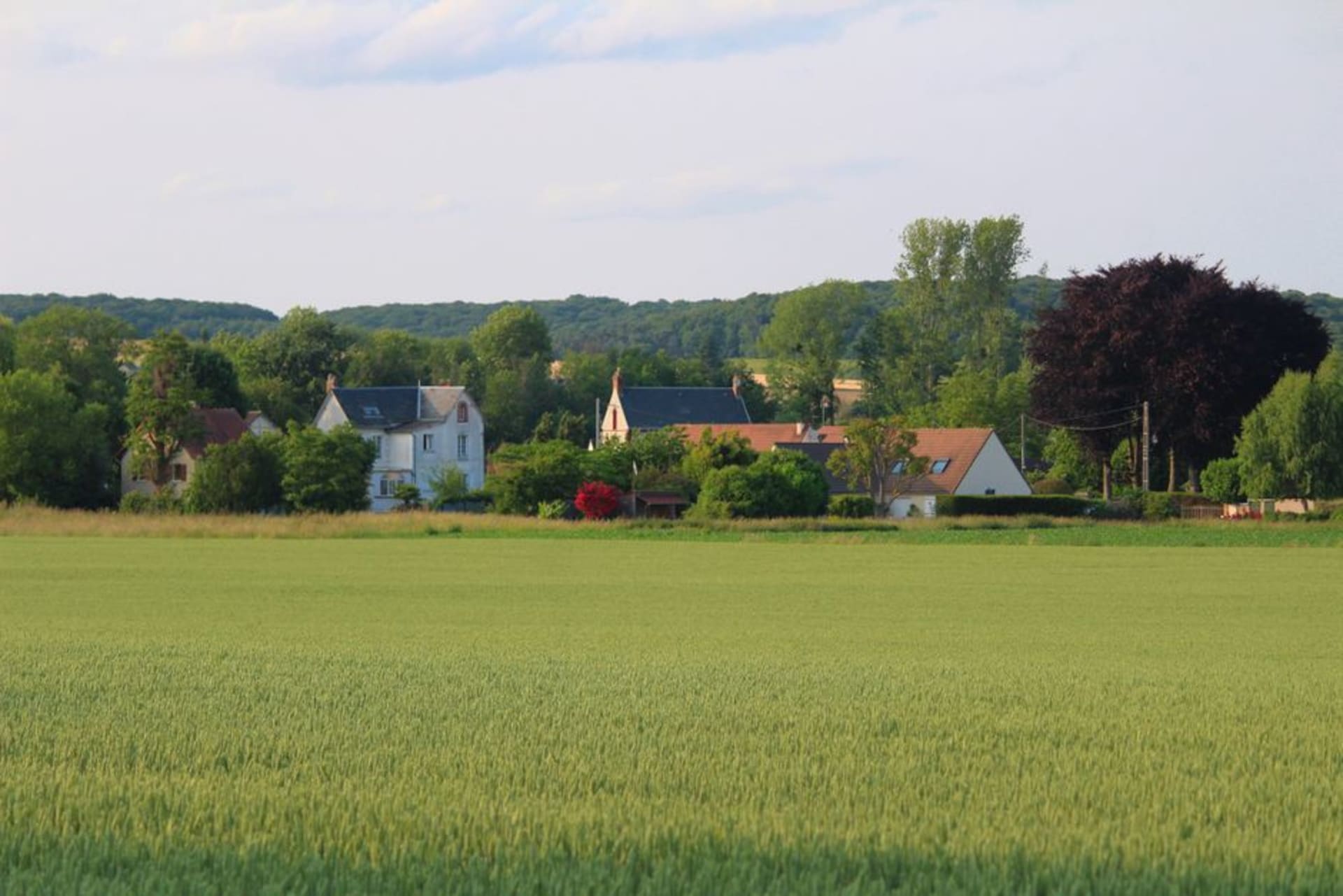
Hautvillers
"Dom Pérignon didn't invent Champagne, but he's buried here anyway, and the village has made peace with keeping the legend alive."
The hilltop village where the monk who supposedly invented Champagne is buried, and where I finally got the vineyard view that every Champagne label is trying to sell you.
Hautvillers sits on a ridge above the Marne valley just north of Épernay, and it’s known, fairly or not, as the “cradle of Champagne” — the village where the Benedictine monk Dom Pierre Pérignon spent most of his working life as cellarmaster at the abbey, refining blending techniques and bottle-ageing methods that shaped how Champagne is made, even if the popular story that he personally “invented” sparkling wine is mostly 19th-century marketing myth. I knew the myth was overstated before I arrived, and I still found myself standing at his grave slab in the abbey church a little longer than the historical accuracy really justified.
A grave slab, an abbey, and a story everyone half-believes
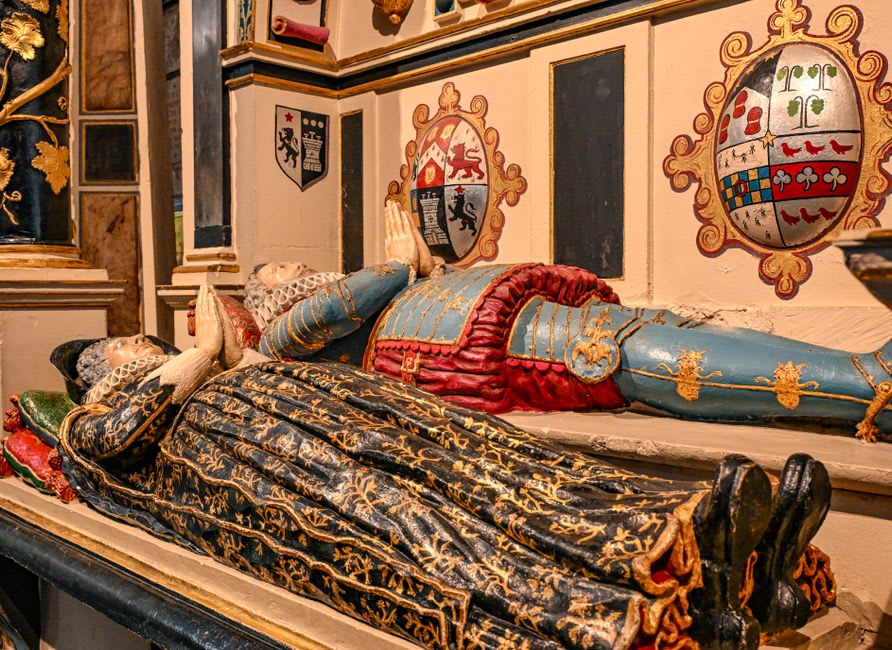
The Abbaye Saint-Pierre d’Hautvillers, now owned by the Moët & Chandon house, keeps Dom Pérignon’s tomb marked with a simple black slab in front of the altar, and even knowing the legend has been polished well past the historical record, there’s something quietly moving about standing where the actual monk worked and is actually buried, surrounded by a village that’s built its entire identity around defending his memory. The abbey buildings themselves aren’t generally open beyond the church, but that’s almost enough — the rest of the story, you get from the vineyards around it.
The view every Champagne label is trying to sell you
Walking the edge of the village, past half-timbered houses with old hand-painted iron shop signs advertising long-closed trades, you reach a viewpoint over the Marne valley where the vineyards fall away in tight, disciplined rows toward the river, villages scattered along the opposite slope, all of it under the particular flat, silvery light that shows up on so many Champagne bottle labels. Lia and I picked a bench near the church and just sat with a bottle we’d bought that morning from a small grower in the village — not one of the big houses, someone working four or five hectares — and it was, without question, one of the better ways I’ve spent an hour in France.
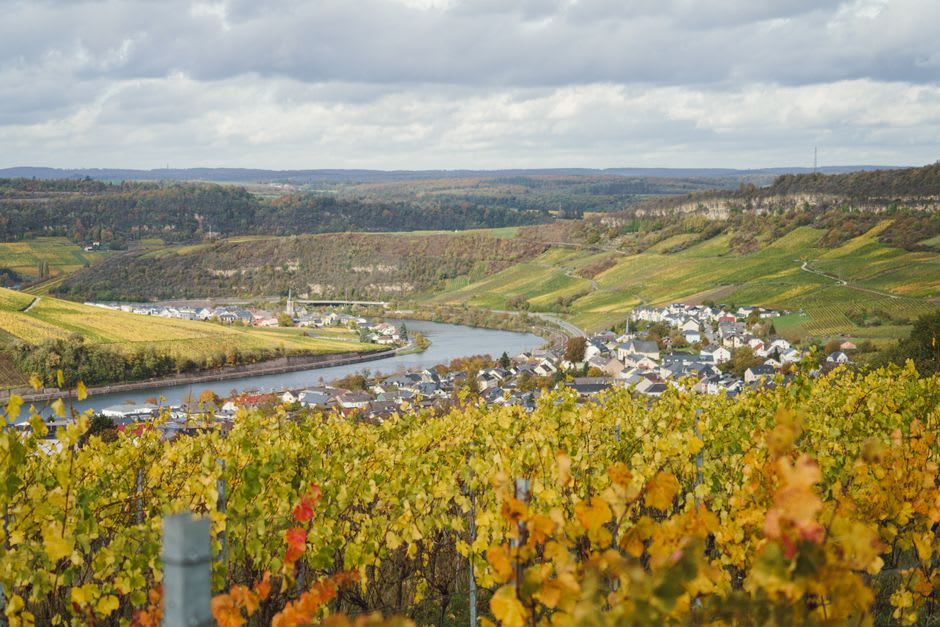
When to go: September and early October, during the Champagne harvest, when the slopes are full of pickers and the village feels genuinely busy with its own purpose rather than tourism. Spring is quieter and the vines are a fresh, vivid green if you’d rather have the viewpoint to yourself.
Keep exploring
More of Burgundy