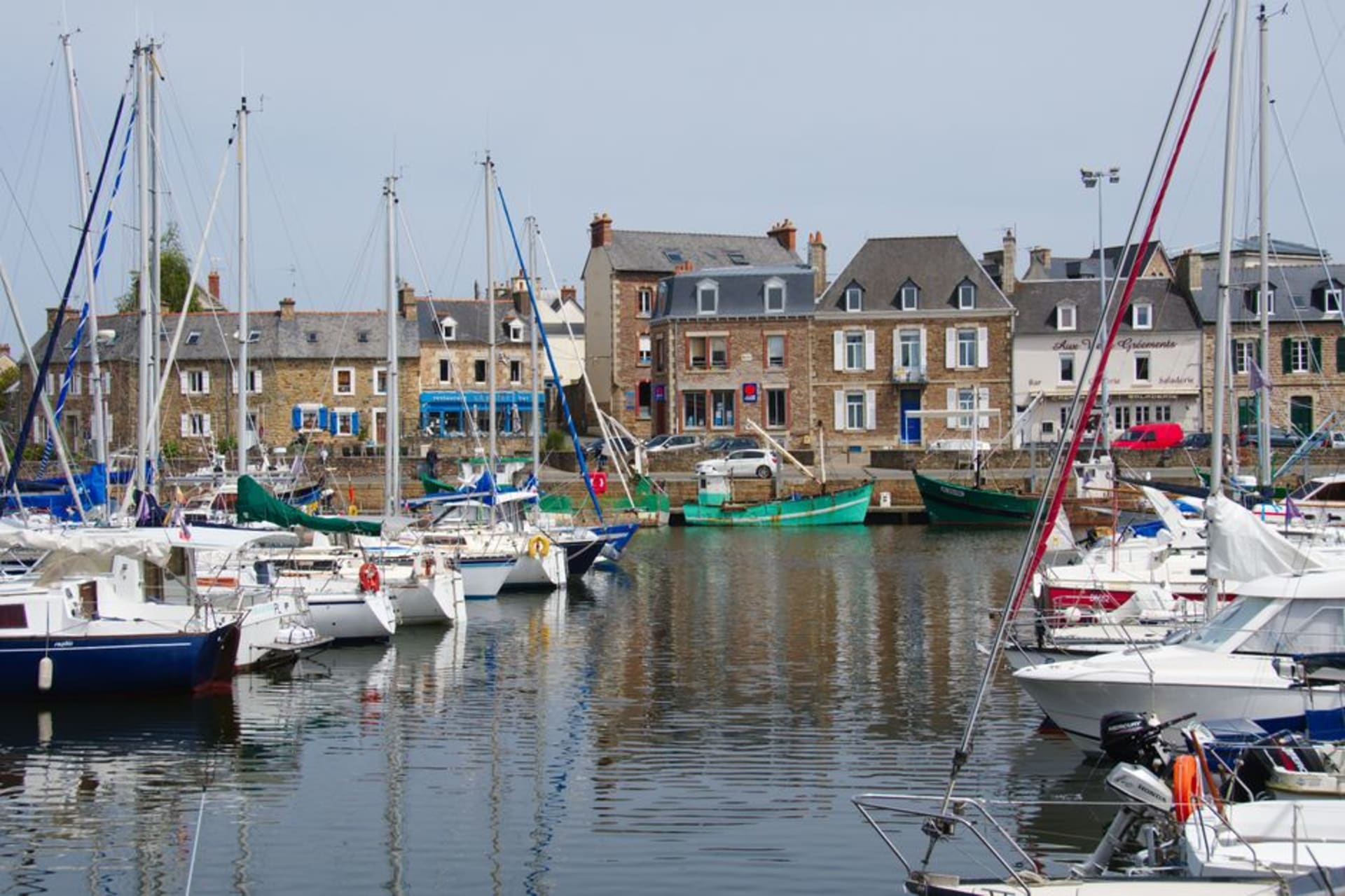
Paimpol
"There's a song everyone here still half-knows about the Icelandic fishermen, and it's sadder than anything I expected from a harbor town."
A fishing port that used to send its men to Iceland for months at a time, and now sends day-trippers to Bréhat instead — a gentler kind of departure, but the same harbor.
Paimpol doesn’t announce itself the way some Breton ports do — no dramatic ramparts, no château on a hill — but it took about one evening sitting at the harbor with a plate of oysters for me to understand why sailors kept coming back to it for a century and a half even when the fishing they were doing from here was some of the most dangerous work in France.
The Icelanders who never quite came home
From the 1850s until the First World War, Paimpol was the home port for hundreds of Breton fishing boats that sailed each spring for the cod grounds off Iceland, a round trip that kept crews away from home for six months at a stretch, working in brutal North Atlantic conditions for a catch that was salted on board and sold back in France as morue. It’s a hard history to romanticize honestly — shipwrecks were common enough that Paimpol has a monument to the “Islandais” who never returned, and the novelist Pierre Loti wrote his famous “Pêcheur d’Islande” about exactly this trade, based partly on time he spent here. The Musée de la Mer, housed in an old net-drying loft, walks through the whole story with model ships and sailors’ logbooks, and I came out of it with a much heavier sense of what this quiet harbor used to demand of the men who worked out of it.
Oysters, tides, and a ferry to somewhere pink
The fishing that sustains Paimpol now is gentler — the town sits at the edge of a coastline lined with oyster beds, and you can walk the tidal flats near Pointe de Guilben at low water and watch the parcs à huîtres emerge from the retreating sea, neat wooden frames stacked with the flat, briny oysters this stretch of coast is known for. We ate a dozen at a stall by the harbor for less than the price of a coffee back home in Mexico City, which is the kind of math that never stops feeling absurd. Paimpol is also the mainland gateway to the Île de Bréhat, with ferries running from the nearby port of Arcouest out to the pink granite island in about ten minutes, and enough people make the trip as a day excursion from Paimpol that the harbor takes on a different, lighter energy in summer than the one its Icelandic monument suggests — fishing families waiting on a departure that used to mean half a year away now waiting on one that means an afternoon.

When to go: July brings the Fêtes des Terre-Neuvas et Islandais, a weekend of maritime festivities that directly commemorates the cod-fishing history, and it’s worth timing a visit around it if you want the town at its most alive. For oysters and the tidal flats, aim for a period around low tide regardless of season — spring and autumn keep the crowds down and the seafood just as good.
Keep exploring
More of Brittany