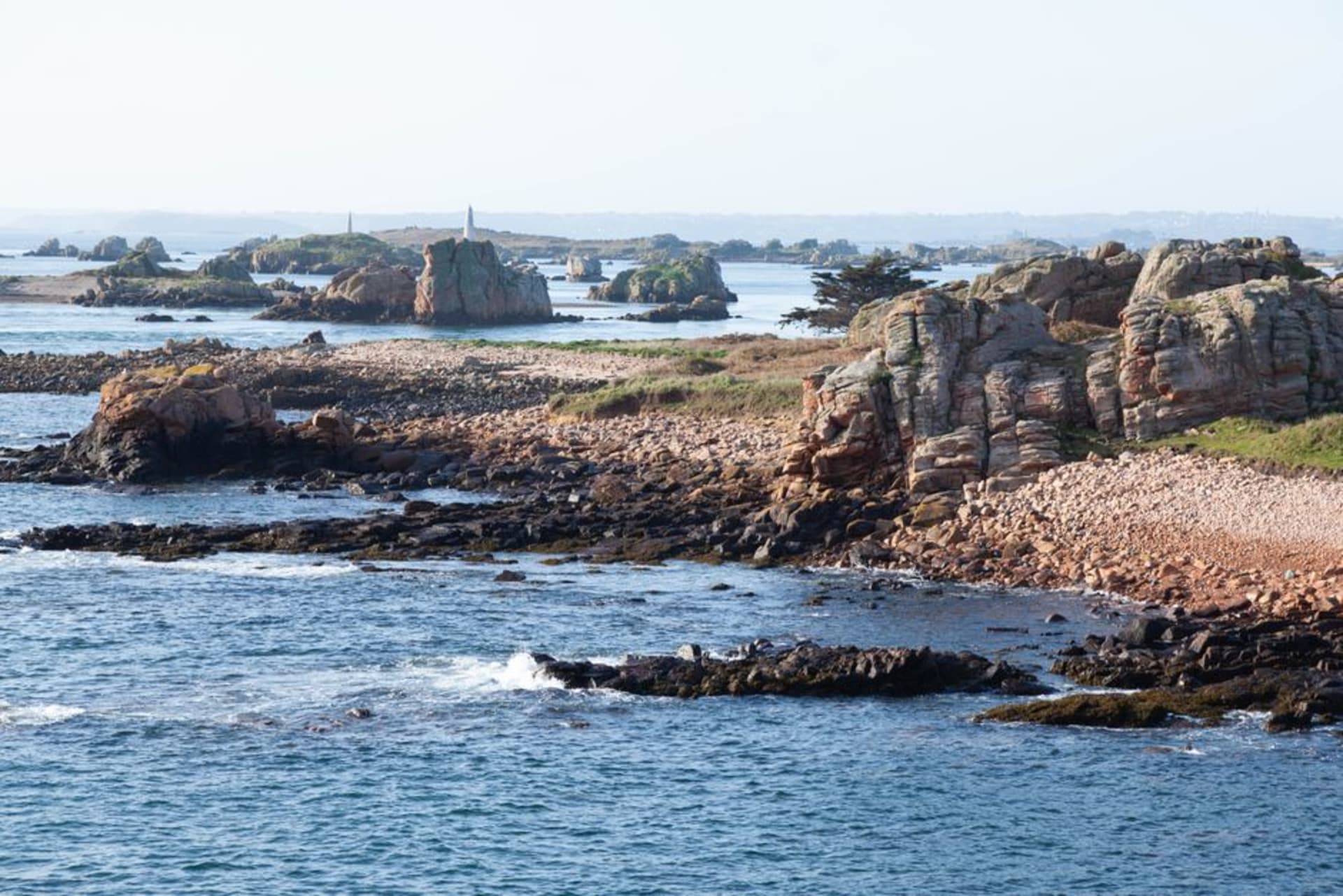
Île de Bréhat
"Ten minutes on the ferry and the light turns a different color. I still don't fully understand how."
An island with no cars, pink rocks that look lit from within at sunset, and gardens growing mimosa and eucalyptus like it forgot which coast of France it's on.
The ferry from the mainland port of Arcouest to Bréhat takes about ten minutes, which is barely enough time to finish reading a text message, and yet you step off onto an island that feels like it belongs to a different, gentler version of Brittany entirely. No cars are allowed — a handful of tractors and the odd emergency vehicle aside — and the silence that settles once the ferry engine cuts out behind you is the first thing that tells you this place runs on a different rhythm than the mainland you just left.
Rocks the color of something warmer
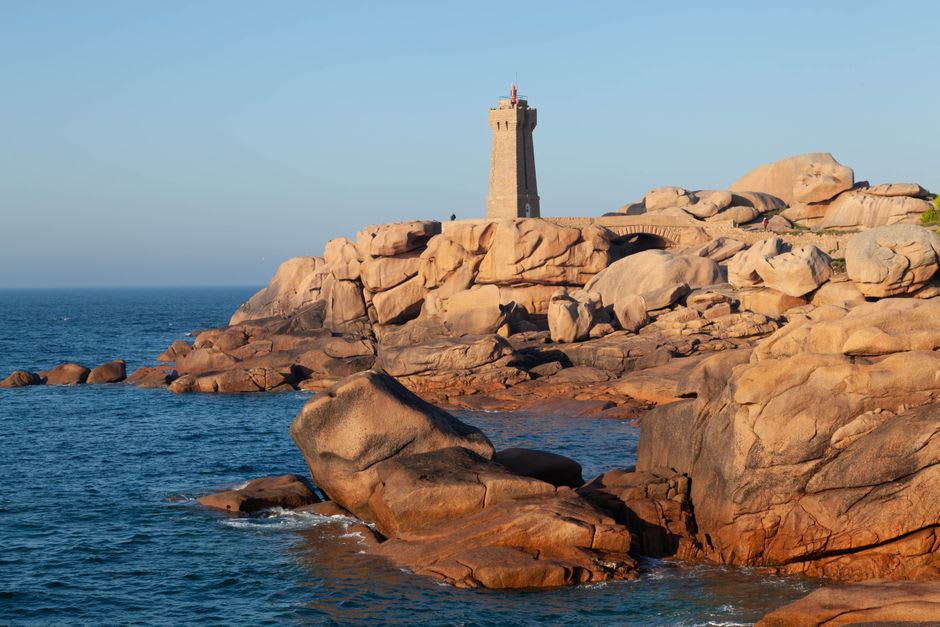
Bréhat is built almost entirely from pink granite, the same rock that gives the nearby Côte de Granit Rose its name, and here the color feels even more pronounced, maybe because there’s so little else competing with it — no traffic, no big buildings, just low whitewashed houses, gorse, and these enormous rounded boulders scattered along the shore like something dropped from a great height. Late in the day, especially toward the northern end of the island near the lighthouse at Paon, the rocks pick up the low sun and turn a color that photographs never quite capture — somewhere between salmon and rust, glowing rather than simply reflecting light. Lia spent a good twenty minutes trying to get a photo that did it justice and eventually gave up, deciding some things are meant to just be looked at.
A microclimate that grows the wrong plants on purpose
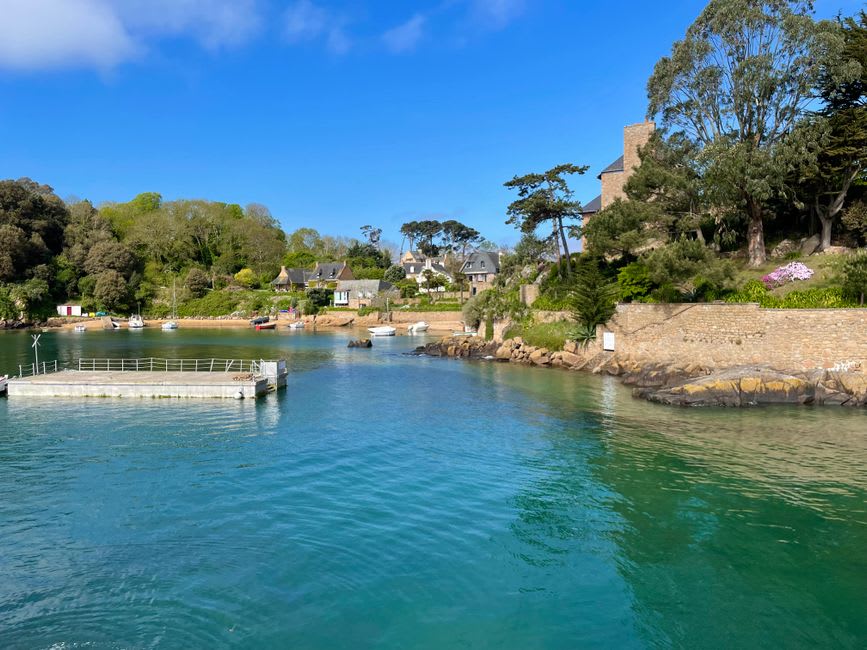
The other surprise is botanical — Bréhat sits in a pocket of unusually mild, sheltered climate, warmed by the Gulf Stream and protected from harsh winds, mild enough that gardeners here have spent generations growing mimosa, eucalyptus, fig trees, and even some palm species that have no business surviving this far north in France. Walking the lanes between the island’s two halves, connected by the Pont ar Prat bridge, you pass gardens with subtropical plantings pressed right up against classic Breton stone cottages, an odd but genuinely charming mismatch. We rented bikes for the afternoon — there’s little point walking the whole island in a day, it’s larger than it looks on the ferry schedule map — and stopped for a while at the small 12th-century Chapelle Saint-Michel on its hill, the highest point on Bréhat, for a view that takes in most of the island’s coastline and the scattered islets around it at once.
When to go: Visit between April and June if you want the mimosa and garden plantings at their best, or September for warm water and thinner crowds — July and August bring day-trippers in numbers that can make the narrow lanes feel less like an escape. Whatever the season, catch the last ferry back deliberately late rather than early; the light on the pink granite in the final hour before sunset is the best reason to be here at all.
Keep exploring
More of Brittany