Huelgoat
"Everyone drives to Brittany for the coast. This forest made me forget the sea existed for an entire afternoon."
A forest of house-sized granite boulders in Brittany's forgotten interior where local legend insists the devil himself is trapped under a slab, and where I genuinely lost the trail for twenty minutes.
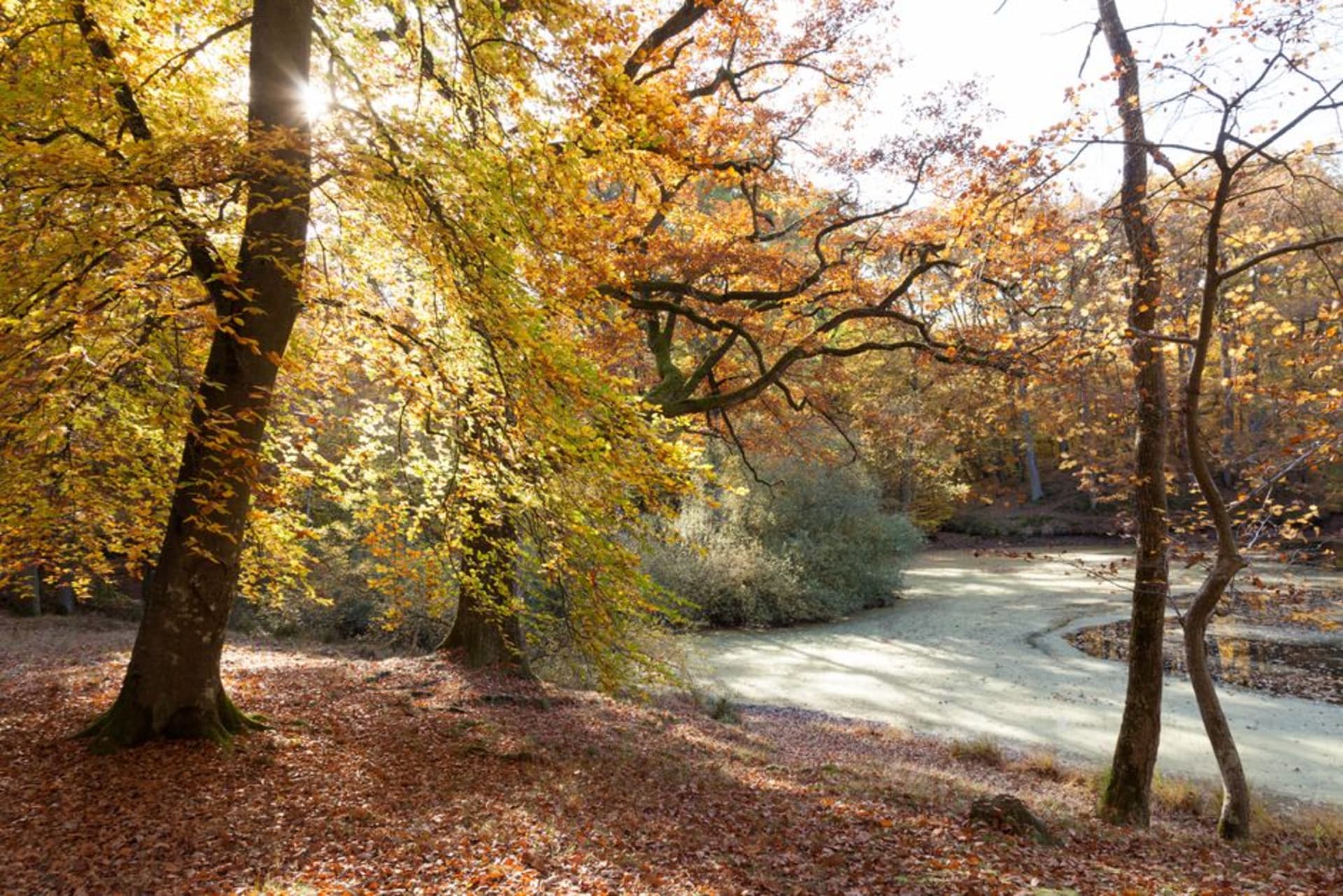
Most people picture Brittany as coastline — granite ports, tidal islands, wind off the Channel — and mostly they’re right to. But drive inland far enough, into the Argoat, the “land of woods” that the Bretons distinguish from the Armor, the “land of the sea,” and you find something that feels like an entirely different region wearing the same name. Huelgoat sits right at the heart of that interior, a small lakeside town that would be unremarkable on its own if it weren’t for the forest pressed right up against it, which is one of the strangest landscapes I’ve walked through anywhere in France.
A river running through a field of granite
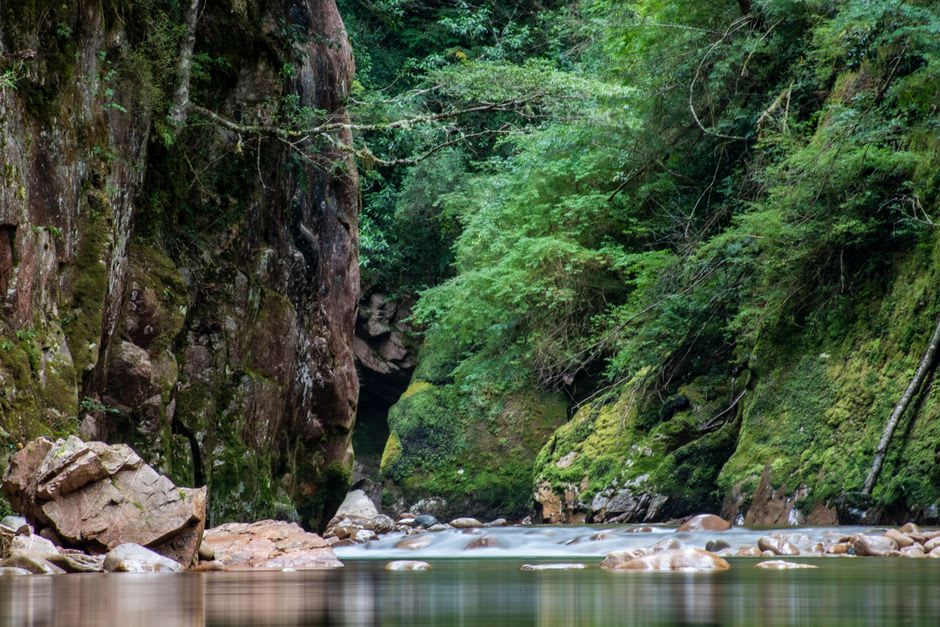
The Huelgoat forest is famous, locally and increasingly beyond, for its chaos de rochers — a stretch where the river Argent tumbles through a gorge choked with enormous granite boulders, some the size of small houses, stacked and wedged against each other as if a giant had abandoned a construction project mid-build. Geologists will tell you it’s the result of differential erosion working on granite over millions of years, the softer rock washed away and the harder blocks left piled where they fell, and that’s clearly the honest answer. But walking the path through it, ducking under overhangs and scrambling over slick moss-covered rock with the river roaring somewhere below or beside you, the scientific explanation felt beside the point. We lost the marked trail for a good twenty minutes trying to find a way around one particular jumble of boulders, and came out the other side both laughing and a little rattled.
Arthur, the devil, and a grotto that lives up to its name
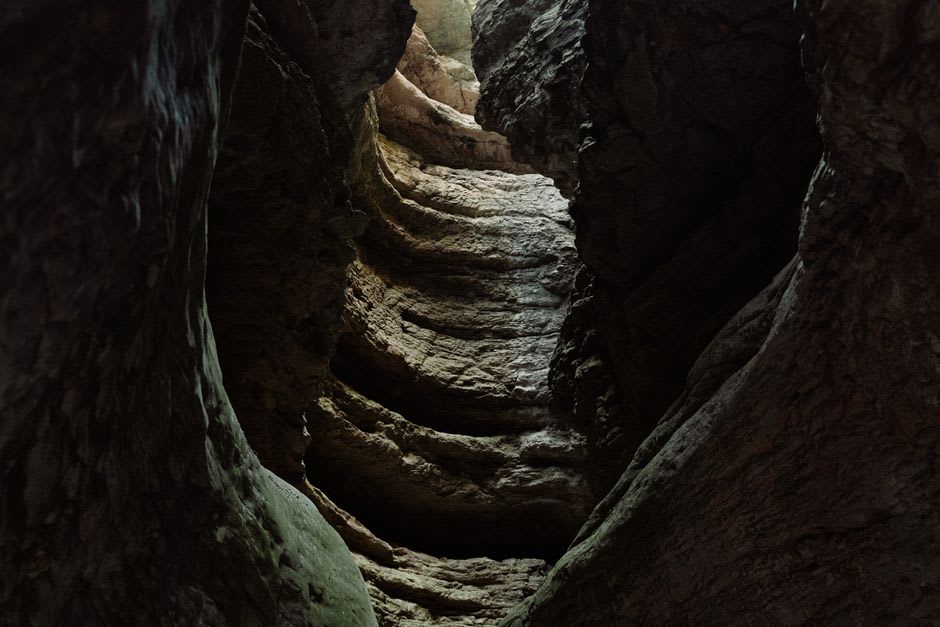
The forest is thick with legend, most of it tied loosely to the Arthurian cycle that Brittany claims as much as Britain does, and the place names lean fully into it — the Camp d’Artus, said to be one of Arthur’s forest strongholds, sits on a wooded rise nearby, ringed by earthworks that are real archaeology even if the Arthurian label is folklore. Closer to the boulder field itself is the Grotte du Diable, the Devil’s Grotto, a narrow chasm you descend by iron ladder to a dark chamber where the river disappears underground, and where local tradition holds that the devil himself was once trapped by a clever local outsmarting him — accounts of exactly how vary depending on who’s telling it. Climbing back up that ladder into daylight, blinking after the wet dark of the grotto, I understood completely why generations of people living beside this river decided ordinary geology wasn’t a good enough story for what they’d built their town around.
When to go: Visit between April and October for drier trails and manageable river levels — the paths through the chaos de rochers get slick and genuinely risky after heavy rain or in winter. Weekday mornings are quietest if you want the gorge without other hikers scrambling over the same boulders.
Keep exploring
More of Brittany