
A market town at the foot of Mont Sainte-Odile that Lia picked almost at random off a map, and which turned out to be one of the least touristy stops on the whole Alsace wine road.

We’d been driving the wine road for four days and everything had started to blur into the same pattern of geraniums and gables, so when Lia suggested we skip the famous names for an afternoon and just pick a town off the map, we landed on Obernai more or less by chance. It turned out to be a proper working town rather than a preserved postcard — a real Monday market, real traffic, a school letting out — and that ordinariness, after four days of curated prettiness, felt like a relief.
The Place du Marché and its six-hundred-year-old well
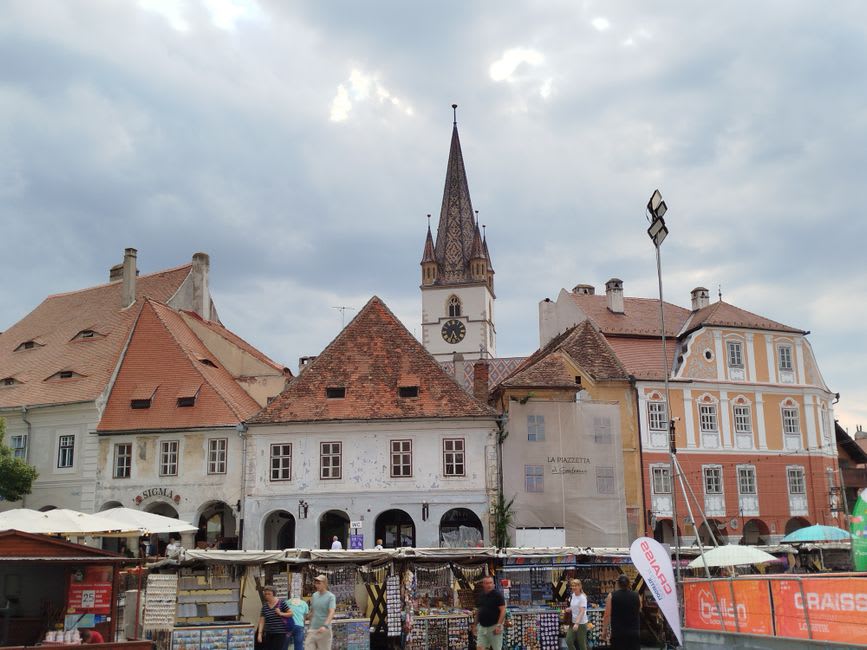
The market square is anchored by the Puits aux Six Seaux, a Renaissance well from 1579 with an elaborate wrought-iron canopy and six buckets that once served the whole neighbourhood’s water needs, and it still functions as the town’s social centre the way it must have five hundred years ago. We got there on a Thursday morning and found stalls of Munster cheese, wild boar terrine, and jars of mirabelle jam set up in its shadow, and an elderly man selling snails from a folding table who insisted, cheerfully, that Alsace does them better than Burgundy. The Beffroi, a fourteenth-century belfry tower topped with a much later Baroque dome, watches over the whole square and still rings the hours the way it has for centuries.
Mont Sainte-Odile, above the vines
Above Obernai rises Mont Sainte-Odile, a forested ridge topped by a convent founded in the seventh century by Odile, the patron saint of Alsace, and a pilgrimage site that draws visitors quietly all year without ever feeling like a tourist attraction. We drove up one evening for the view rather than the religion — the terrace looks out over the entire Alsace plain toward the Rhine and, on a clear day, the black outline of the Black Forest across the German border. Along the ridge below the convent runs the Mur Païen, a mysterious dry-stone wall over ten kilometres long whose builders and purpose are still debated by archaeologists; we walked a short stretch of it in near-silence as the light dropped, which felt like the right way to end an accidental afternoon.
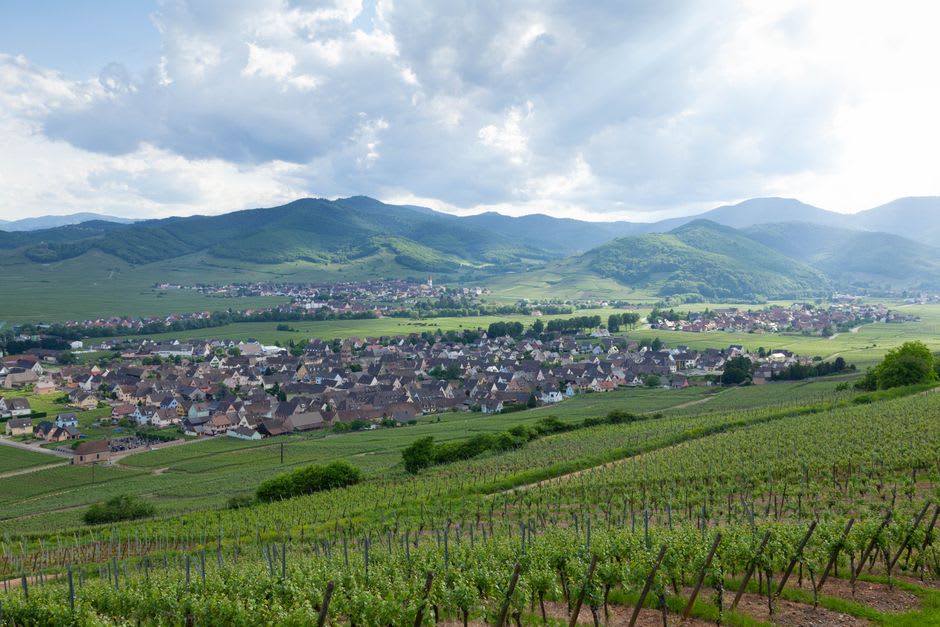
When to go: May and June, before the summer heat settles over the plain, when the market square is at its liveliest and the drive up to Mont Sainte-Odile rewards you with clear views rather than haze.
Keep exploring
More of Alsace
Keep exploring
More from Alsace
 france
 Andlau
A wine-route village built around an abbey with a carved stone bear on its facade, and two ruined castles in the hills above it that Lia made me hike up to in the rain.
Explore france
 Sélestat
A modest Alsace town between Colmar and Strasbourg holding one of the world's great Renaissance libraries and, less grandly, the first recorded Christmas tree.
Explore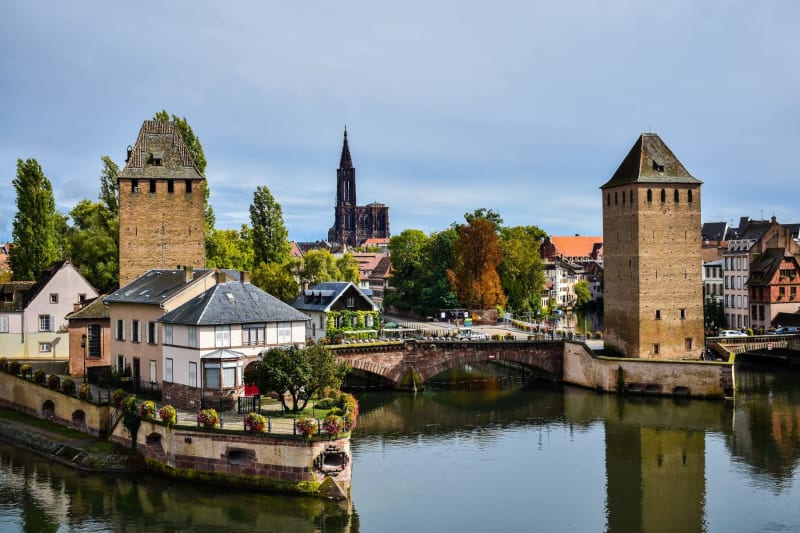 france
 Strasbourg
The capital of Alsace straddles France and Germany culturally, its pink sandstone cathedral towering over canals and the world's oldest Christmas market.
Explore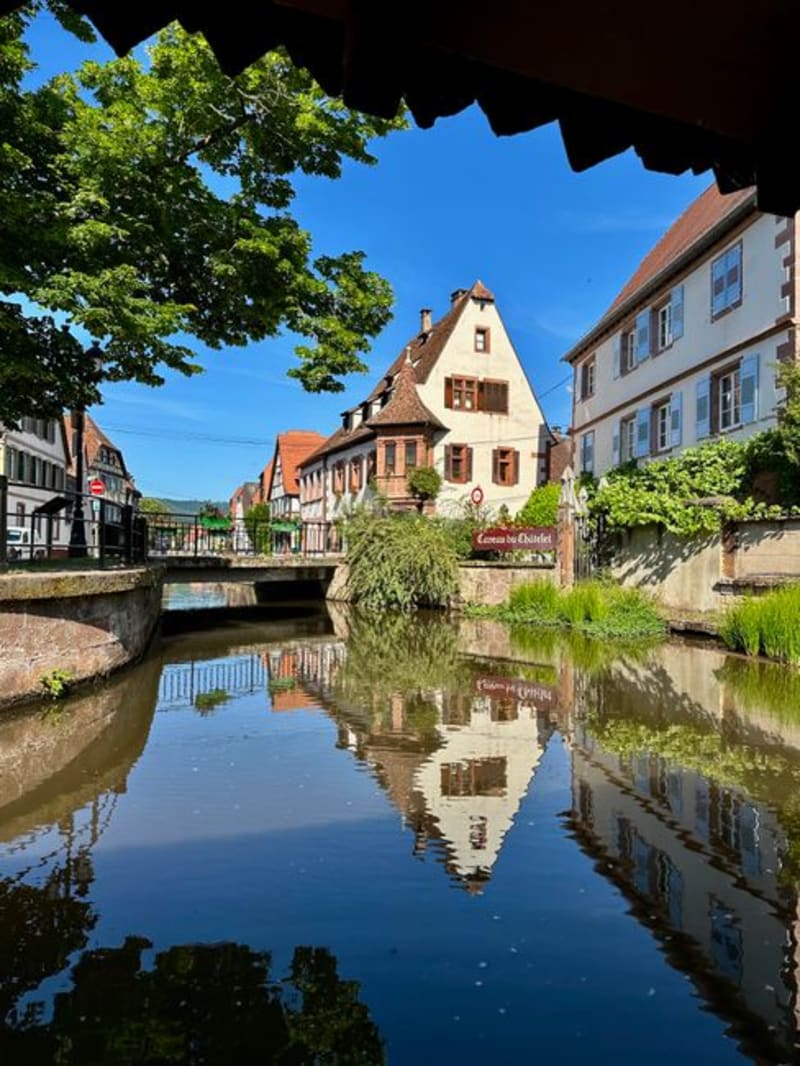 france
 Saverne
The town where the Vosges finally give way to a proper gap, guarded by a pink sandstone château the Rohan cardinals built to remind everyone exactly how rich they were.
Explore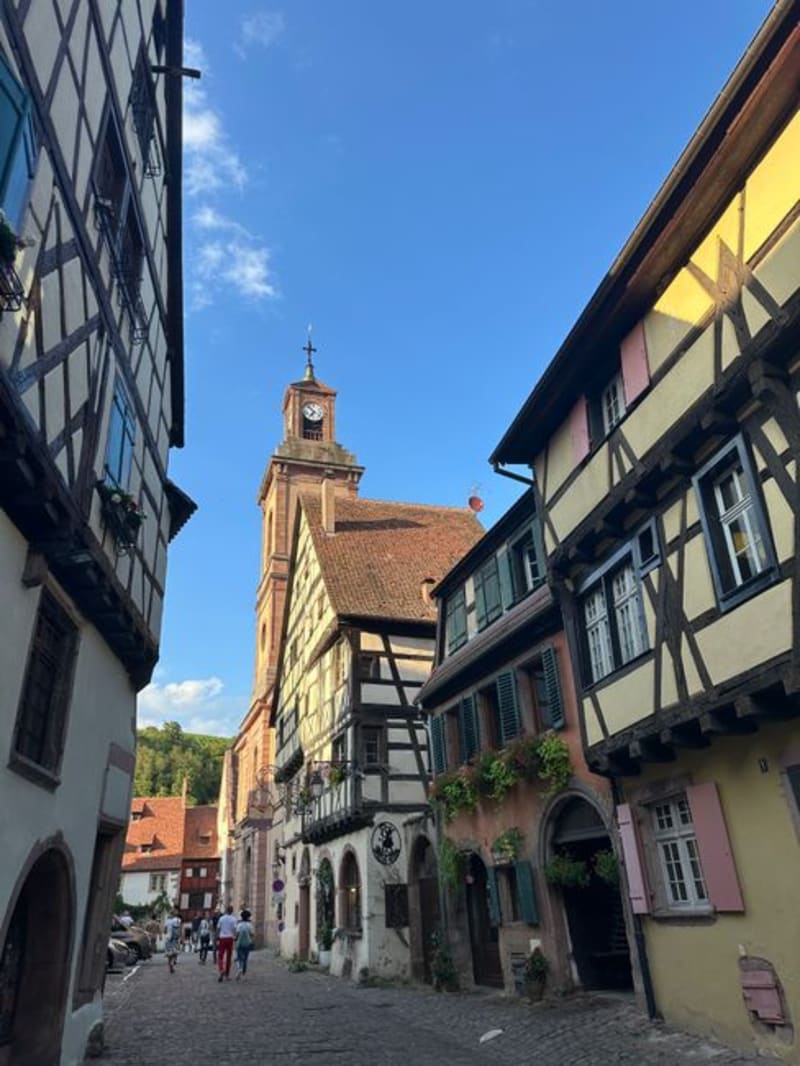 france
 Ribeauvillé
A wine town below three ruined castles on a single ridge, home to a stork colony and a pretzel festival I stumbled into completely by accident.
Explore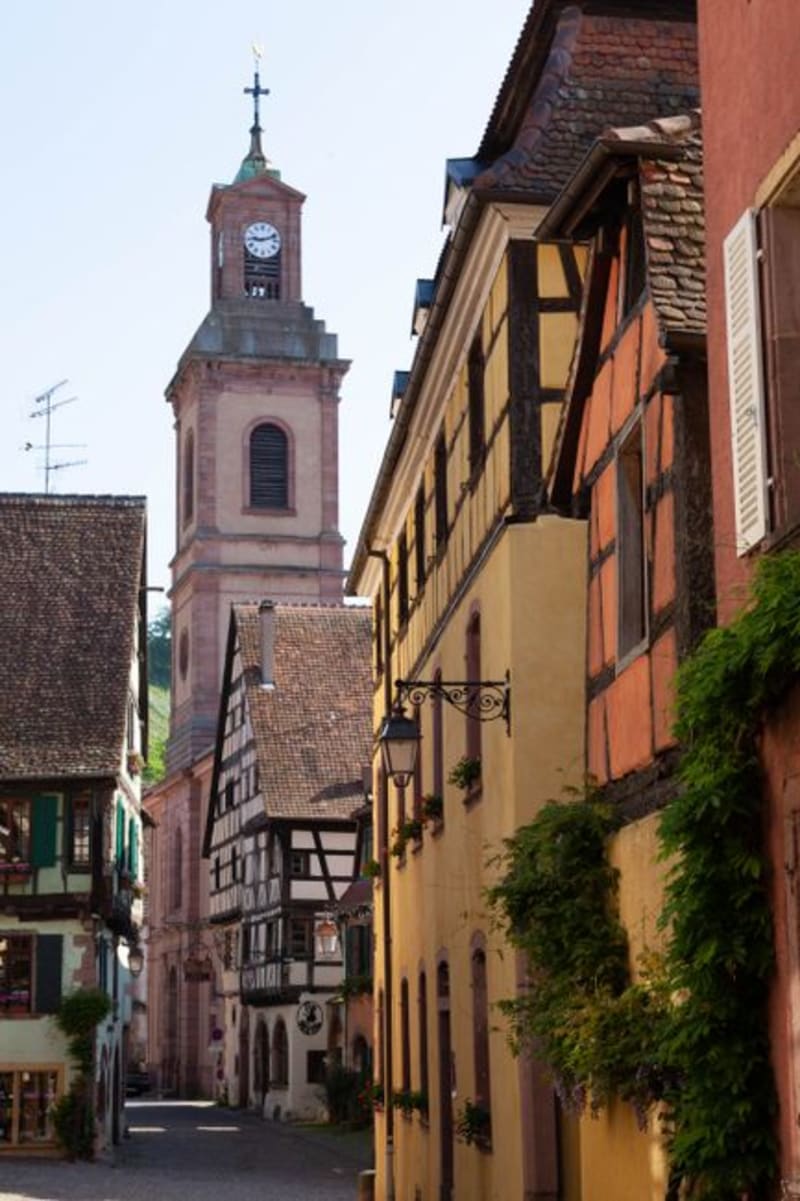 france
 Riquewihr
A walled wine town on the Alsace route des vins so intact it feels frozen in the sixteenth century, ringed by vineyards that climb straight up into the Vosges.
Explore