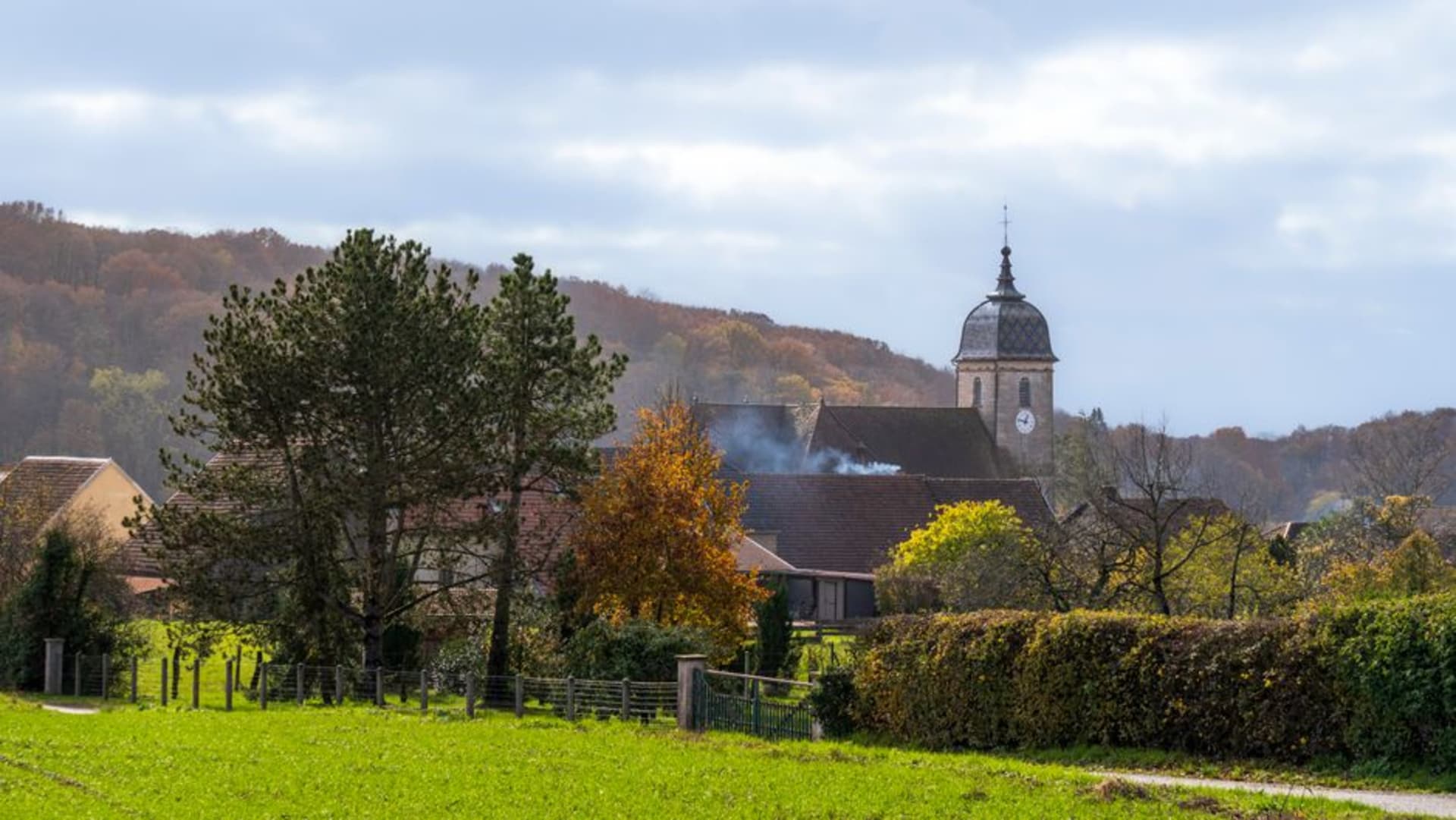
Hunspach
"I grew up two hours from here and had never heard of it. That's Hunspach's whole secret, really."
A village so uniformly whitewashed and half-timbered it's been officially voted one of the most beautiful in France, tucked into a corner of Alsace most of my French friends have never heard of.
Hunspach is in the Outre-Forêt, the strip of northern Alsace above Wissembourg that most people — including plenty of French people — skip entirely on the way to somewhere more famous. That’s precisely what makes it worth the detour. In 2020 the village was voted “le village préféré des Français” on the national television show that does that sort of thing every year, and locals I talked to still seemed faintly bewildered by the attention, in the way of a place that had been quietly maintaining itself for centuries and suddenly found a camera crew in the town square. I came because a friend from Strasbourg mentioned it almost as an aside, and I’ve been telling other people about it ever since with the same mild embarrassment that I’d never gone before.
A different kind of half-timbering
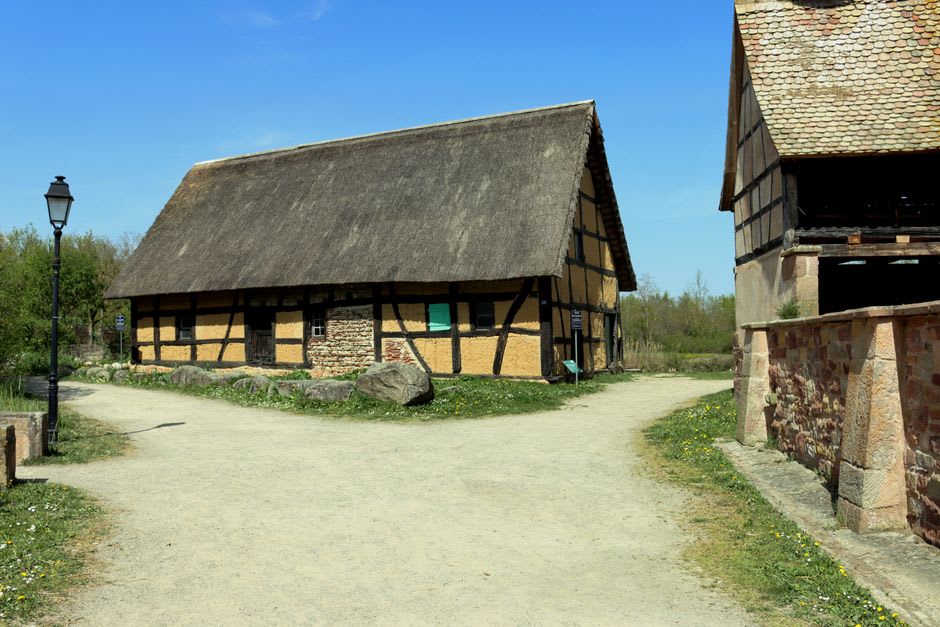
What sets Hunspach apart from the wine-road villages further south — Riquewihr, Eguisheim, that whole postcard circuit — is the architecture itself. This is Outre-Forêt style: houses built low and long, timber frames left exposed or painted a soft ochre, but the infill between the beams is whitewashed rather than left as bare stone or brick, giving the whole village a bright, almost Scandinavian cleanliness that I hadn’t seen anywhere else in Alsace. Add to that the fact that Hunspach has almost no commercial clutter — no strip of souvenir shops, barely any restaurants lining the main street — and you get something closer to a lived-in village that happens to be beautiful than a village that’s been arranged to look that way for visitors. We walked the length of the main street twice, slowly, mostly because there was nothing pulling our attention away from just looking at the houses.
The farms are still farms
A handful of the old farmhouses along the main road are still working agricultural properties, with the same deep courtyards and barn doors built for carts that opened straight onto the street. One family runs a small museum out of a restored farmhouse, showing the domestic life of an Outre-Forêt household a century or two back — low ceilings, a single shared room heated by a tiled stove, tools that hadn’t changed in generations before they were replaced wholesale in the twentieth century. It’s a modest place, no more than a few rooms, but it did more to explain the region’s rural history to me than any plaque I’d read on the wine road. We finished the visit sitting on a low wall across from the church, eating a kougelhopf we’d bought from the one bakery in town, watching almost nobody else walk past.
When to go: Late spring, when the geraniums are freshly planted in the window boxes and the Outre-Forêt countryside around the village is still green rather than the flattened gold of high summer.
Keep exploring
More of Alsace