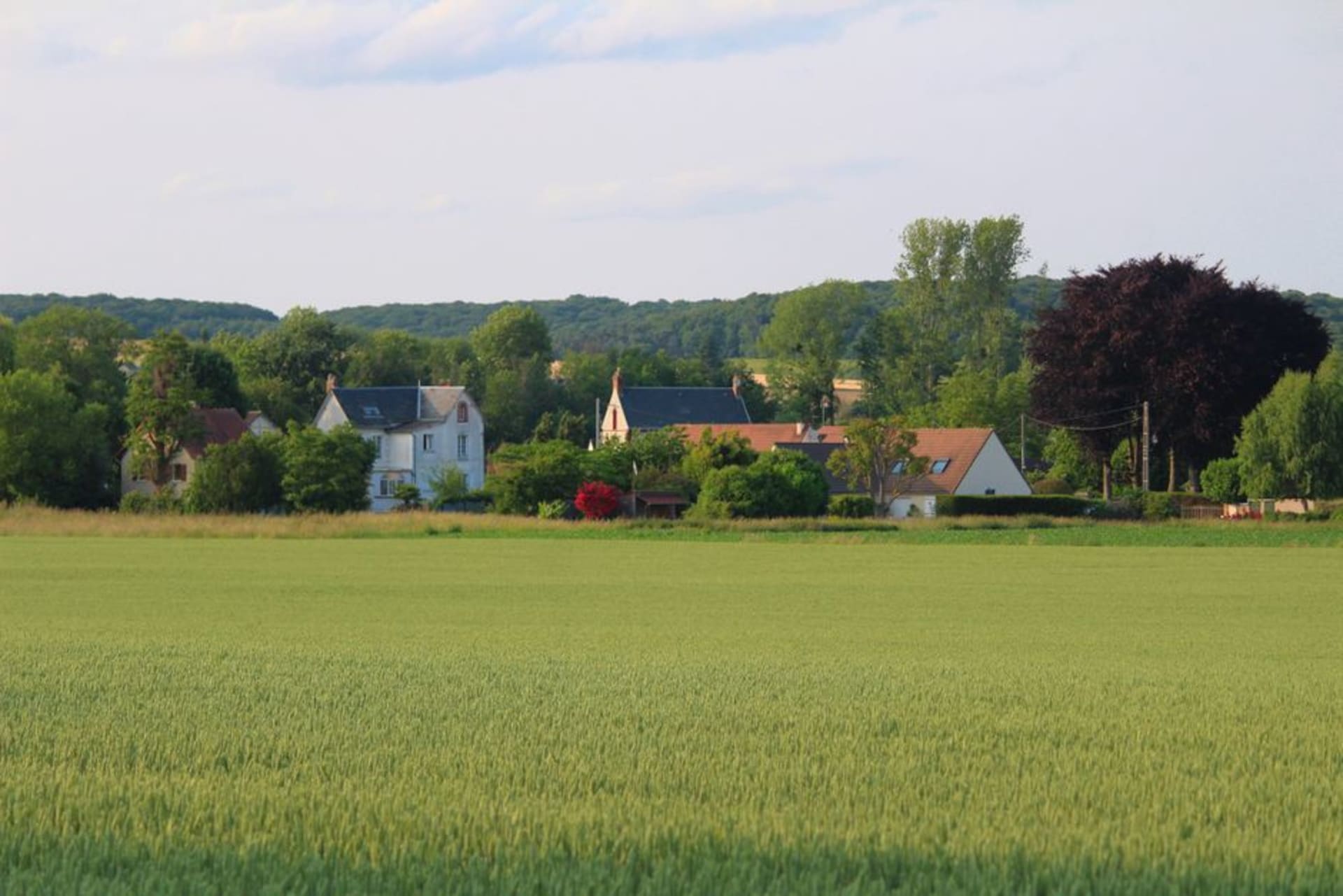
Andlau
"There's a bear carved into the wall of a thousand-year-old abbey, and somehow that's not even the strangest thing about Andlau."
A wine-route village built around an abbey with a carved stone bear on its facade, and two ruined castles in the hills above it that Lia made me hike up to in the rain.
Andlau sits tucked into a fold of the Vosges foothills west of Barr, on a stretch of the wine road that gets a fraction of the traffic Riquewihr or Kaysersberg pull in, which is more or less the whole reason I like it. The village grew up around an abbey founded in 880 by Richardis, the wife of Emperor Charles the Fat, after — according to the legend that every local guide repeats with a completely straight face — she was guided to the site by a bear. Whatever actually happened, the bear stuck. It shows up carved into the abbey’s stonework, painted on shop signs, even set loose in a small pit near the church for a stretch of the twentieth century, which felt to me like exactly the kind of civic commitment to a myth that I respect.
The frieze that took three centuries to carve
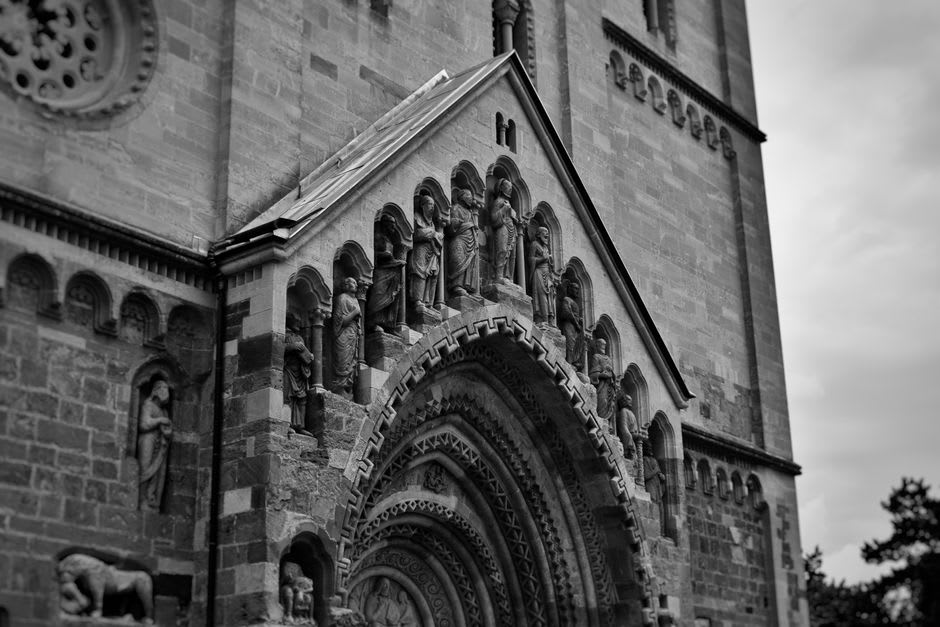
The real reason to stop in Andlau is the abbey church itself, specifically the west facade, where a Romanesque frieze runs along the front of the building depicting a chaotic, crowded scene of animals, hunters, biblical figures, and — yes — bears, all carved in relief sometime in the eleventh or twelfth century. Art historians still argue over how much of it is original versus later restoration, but standing in front of it with the low afternoon light raking across the stone, you don’t need the argument settled to feel its strangeness: it’s cluttered, almost folkloric, closer to the margin illustrations of a medieval manuscript than to the tidy hierarchies of most church facades I’d seen elsewhere in France. Inside, down in the crypt, is meant to be one of the oldest surviving crypts in Alsace, dim and low-ceilinged, with none of the polish of the nave above it.
Up to the ruins in the rain
Above the village, on a forested ridge, sit the ruins of two castles — Haut-Andlau and Spesbourg — reachable by a marked trail that starts more or less at the edge of town. We went up on a day when the forecast had promised sun and delivered a fine, persistent drizzle instead, which Lia treated as an improvement rather than a setback. The two ruins are different enough to justify seeing both: Haut-Andlau, still partly inhabited by the same family whose ancestors built it in the fourteenth century, has a slightly forbidding, private quality even from outside its walls; Spesbourg, further along, is a proper roofless ruin you can wander into, its stones slick and its window openings framing nothing but wet forest. We ate a soggy sandwich in what used to be someone’s great hall and agreed it beat sightseeing in the rain almost everywhere else we’d tried it.
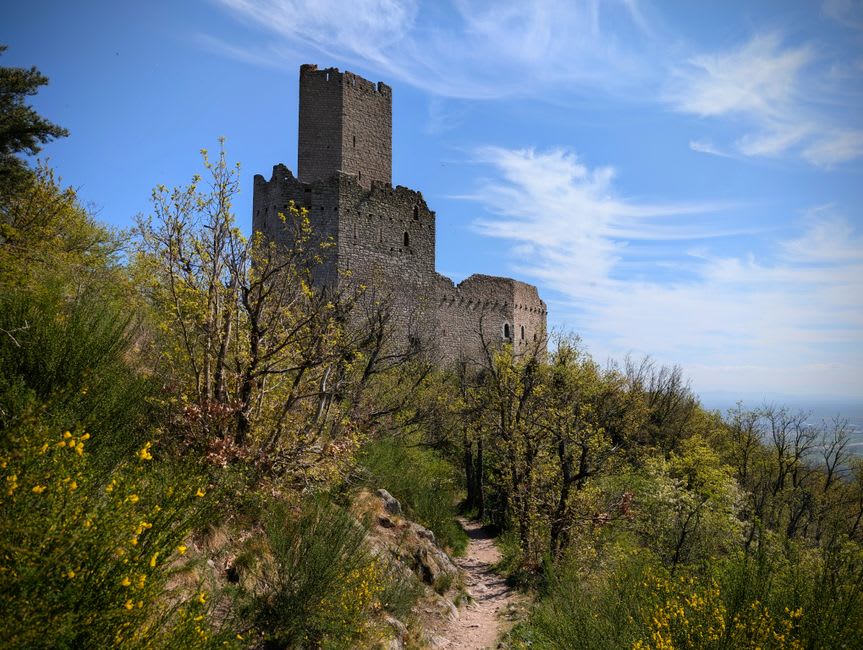
When to go: May and June, when the forest trail up to the castles is green and not yet baked dry, and the vineyards below town — Andlau makes some of the region’s better Rieslings and Pinot Gris — are freshly leafed out.
Keep exploring
More of Alsace