Pacific Harbour
"The gorge walls were so close and so high that I couldn't see the sky — just a strip of it, somewhere far above, going fast."
Pacific Harbour is a strange place in a way that grows on you. It was developed in the 1970s as a planned resort town, and the grid of wide streets and low-slung buildings gives it an uncanny suburban calm that sits oddly against the surrounding wildness — the dense forest climbing the mountains to the north, the reef-broken shoreline to the south, and the Navua River cutting its dark channel through both. I arrived by bus from Suva, an hour on the coastal road, and checked into a guesthouse run by a former raft guide named Jone who had taken early retirement on grounds he summarised as “the land owns itself here.”
The Upper Navua gorge is the reason most people come to Pacific Harbour. The Navua River, coming off the highlands through a series of waterfalls and narrow volcanic gorges, offers white-water rafting unlike anything else in the South Pacific — not the sanitised Grade II float-along but long sections of proper technical water through walls of dark basalt draped in fern and moss that come close enough on both sides that the raft guide has to adjust the angle with each stroke. I went on a full-day trip with a small company that Jone had recommended, sharing a raft with a couple from New Zealand and an Australian woman who had been rafting rivers for twenty years and treated every rapid with a focused attention that I found both reassuring and humbling.

The river calms into deep pools between the gorge sections, and in one of them the guide pulled us over to the bank and we swam in water the colour of strong tea, stained by the tannins of the upstream forest. Above us the cliff rose maybe forty metres and a waterfall came off the top in a thin white thread. The sound in the gorge — the river and the falls and the birds that I couldn’t see but could hear everywhere — was so complete that stopping felt like being held somewhere.
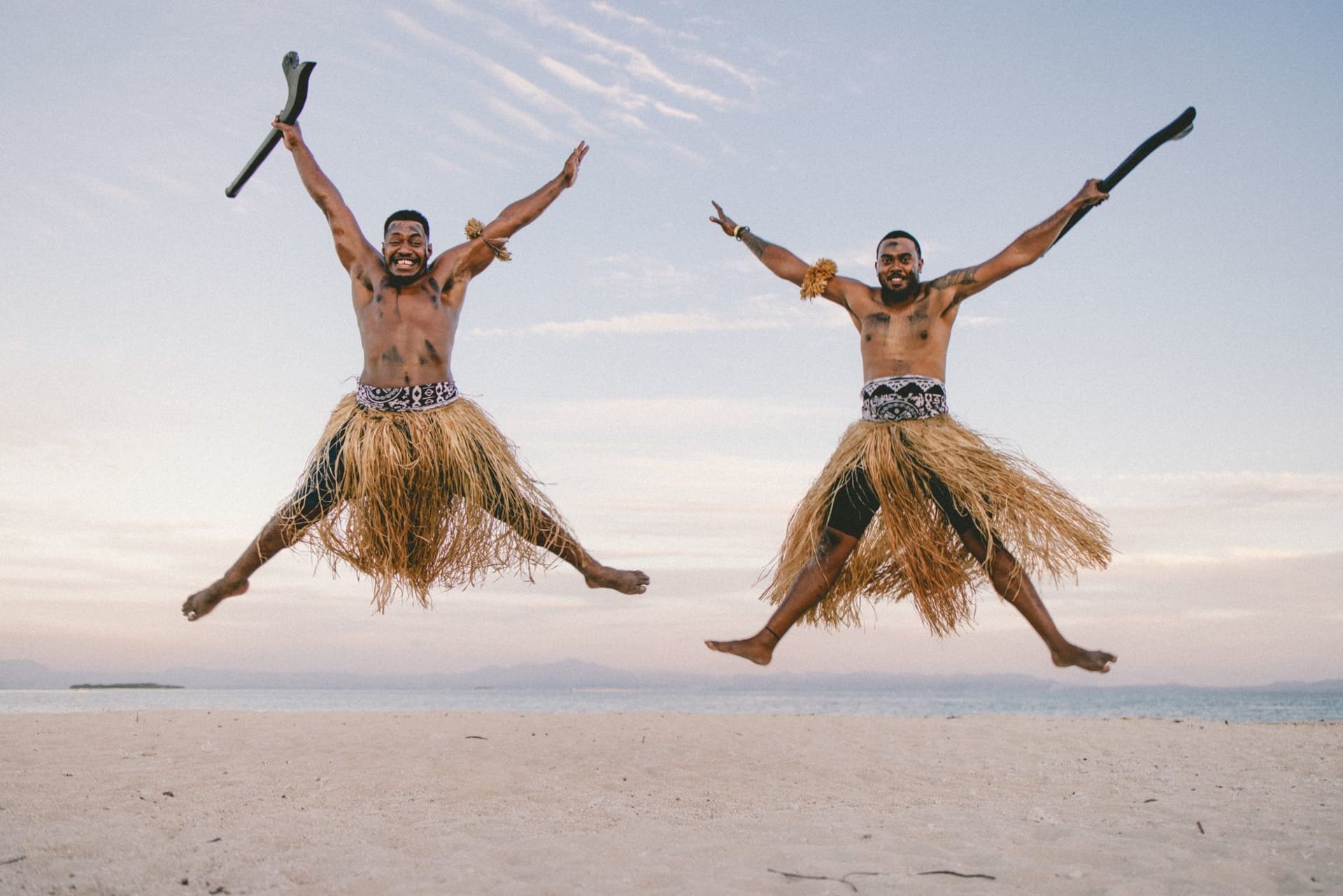
The Arts Village in Pacific Harbour is one of those cultural centres that could so easily be a failure and somehow isn’t. It offers firewalking performances, traditional crafts, and cultural demonstrations that operate in a register of genuine community engagement rather than spectacle — the village that participates in the centre is an actual village with a history, and the performers are its members rather than hired entertainers. I attended a meke, the traditional dance performance combining percussion and movement, and sat in the outdoor arena as the light went and the drumming started, and found myself thinking about the way that rhythm moves through an audience before anyone has consciously decided to be moved.

The shark dive at Beqa Lagoon operates from Pacific Harbour, and most of the operator boats leave from the small marina at the edge of town. I had already done the dive from Beqa Island itself, but the Pacific Harbour departure gives you a longer crossing that passes over open reef on the way out, and I spent the forty-minute ride watching the reef pass beneath the boat’s hull through water so clear it looked like the fish were hanging in air.
When to go: May through October for the most reliable conditions on the Navua — the river can flood in the wet season, cancelling trips. The Arts Village operates year-round and the shark dive is available twelve months, though conditions are best in the dry season. Book the Navua raft trip at least a day in advance; full-day groups are small and fill quickly.