Ono Island
"Someone told me Ono has more marine biologists visit than tourists in an average year. I believed it within the hour."
Kadavu's quieter neighbor, ringed by its own arm of the Great Astrolabe Reef and home to a handful of villages that see more researchers than tourists.
Ono is separated from Kadavu proper by a narrow channel, close enough that you can see it clearly from the hills above Vunisea, but the crossing changes everything. Fewer boats come here, the road network is closer to nonexistent, and the reef that wraps around Ono’s southern flank is considered by more than one marine biologist I met on my trip to be among the healthiest sections of the entire Great Astrolabe system — which is a real claim, given how much of the reef qualifies as pristine in the first place.
I came over on a supply boat that also carried bags of rice, a new outboard motor still in its box, and a schoolteacher returning from a training session in Vunisea, and the crossing took just over an hour with the wind against us. Ono’s main village, Naqara, sits on a sheltered bay and functions as something like the island’s capital, with a school, a clinic that serves several surrounding villages, and a church whose Sunday singing — I stayed over a weekend without quite planning to — carried clearly across the water at seven in the morning.
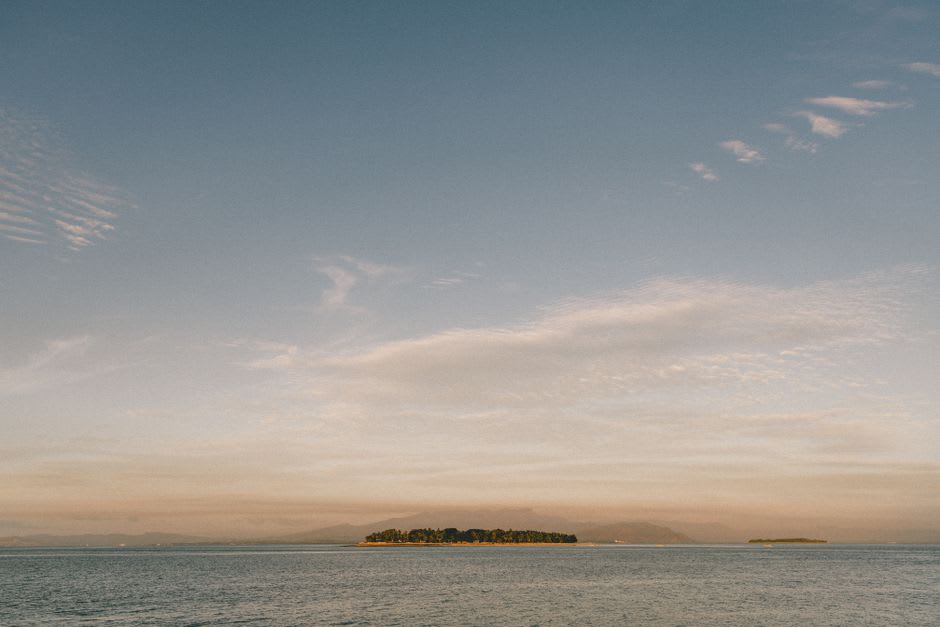
The diving off Ono’s outer reef is done from a small number of lodges rather than any dedicated dive shop on the island itself, and what struck me most was the density of soft coral on the walls — purple and orange fans in configurations so thick in places that the underlying reef structure disappeared entirely beneath them. A local dive guide named Peni, who grew up in Naqara and had been diving these waters since he was a teenager working as a boat boy, took me to a site he called simply “the garden,” a shallow plateau at eight to twelve meters covered edge to edge in table coral and anemone clusters with resident clownfish that had clearly never developed any fear of divers.
Ono’s interior is steep and largely forested, and a guide from the village walked me up a ridge trail to a lookout that gave a full view of both the Ono lagoon and, on the clear day we had, the distant hills of Kadavu across the channel. He pointed out a series of old fortified village sites along the ridge — pre-conversion defensive positions from a time when interisland raiding was a real concern — now marked by nothing more than terracing in the ground and a few scattered foundation stones that most visitors would walk straight past without noticing.
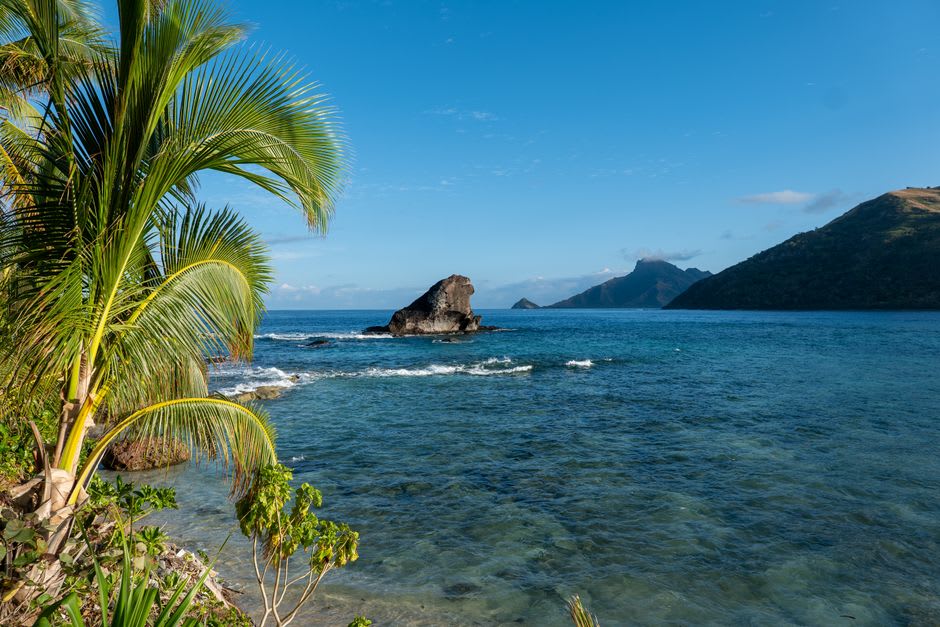
What makes Ono worth the extra crossing, beyond the reef itself, is the sense of a place that has not yet organized itself around visitors at all. There is no gift shop, no scheduled cultural show, no menu translated into three languages. There is a village going about its week, and if you show up with the right manners and a bundle of kava for the chief, you get folded into that week rather than sold a version of it.
When to go: May through October for calm channel crossings and the clearest diving conditions on the outer reef. Facilities are minimal — bring cash, a headlamp, and patience for boat schedules that run on tide and weather rather than a printed timetable.
Keep exploring
More from Fiji
 fiji
fiji Ovalau Island
A sleepy volcanic island in the Lomaiviti group where Levuka, Fiji's UNESCO-listed former colonial capital, sits frozen somewhere in the 1880s.
Explore fiji
fiji Pacific Harbour
Fiji's self-styled adventure capital where you can white-water raft a volcanic gorge in the morning and sit in a village kava circle by nightfall.
Explore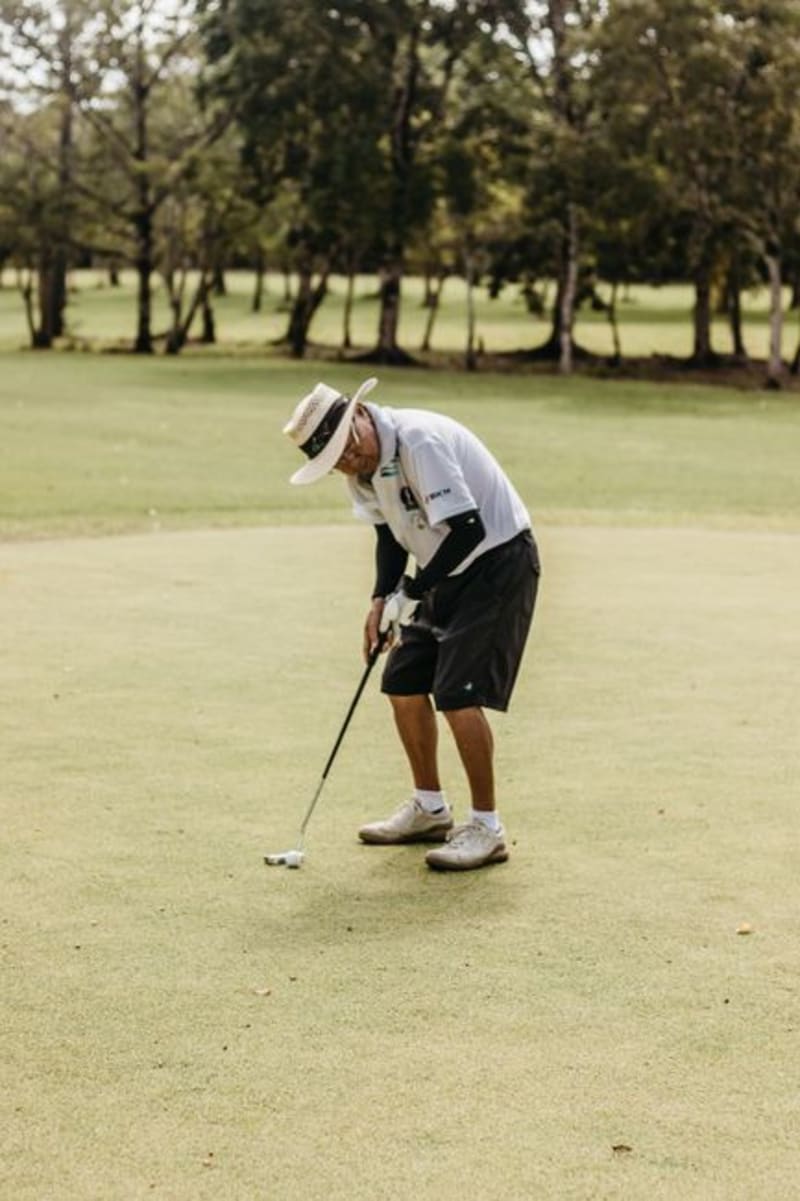 fiji
fiji Pacific Harbour Golf & Country Club
An unexpectedly good eighteen-hole course carved into Pacific Harbour's original 1970s resort plan, where mongooses cross the fairways and the ninth hole runs along the river.
Explore fiji
fiji Qamea Island
A quiet, jungle-covered island off Taveuni's east coast with a string of near-empty beaches and barely a road to speak of.
Explore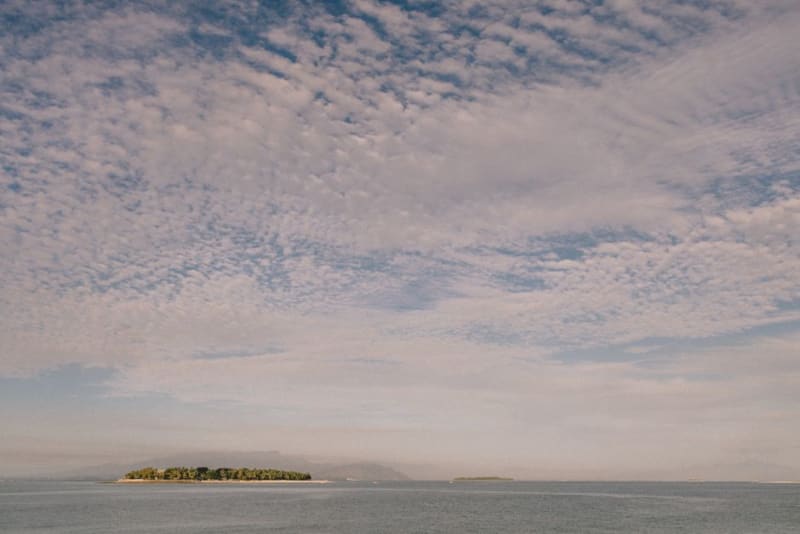 fiji
fiji Rabi Island
The island Fiji gave to the displaced Banaban people of Kiribati after phosphate mining destroyed their home — a place carrying one of the Pacific's least-known relocation stories.
Explore fiji
fiji Rakiraki
A sugarcane and fishing district on Viti Levu's northern tip, gateway to the outer islands and home to a chiefly burial site tangled in legend.
Explore