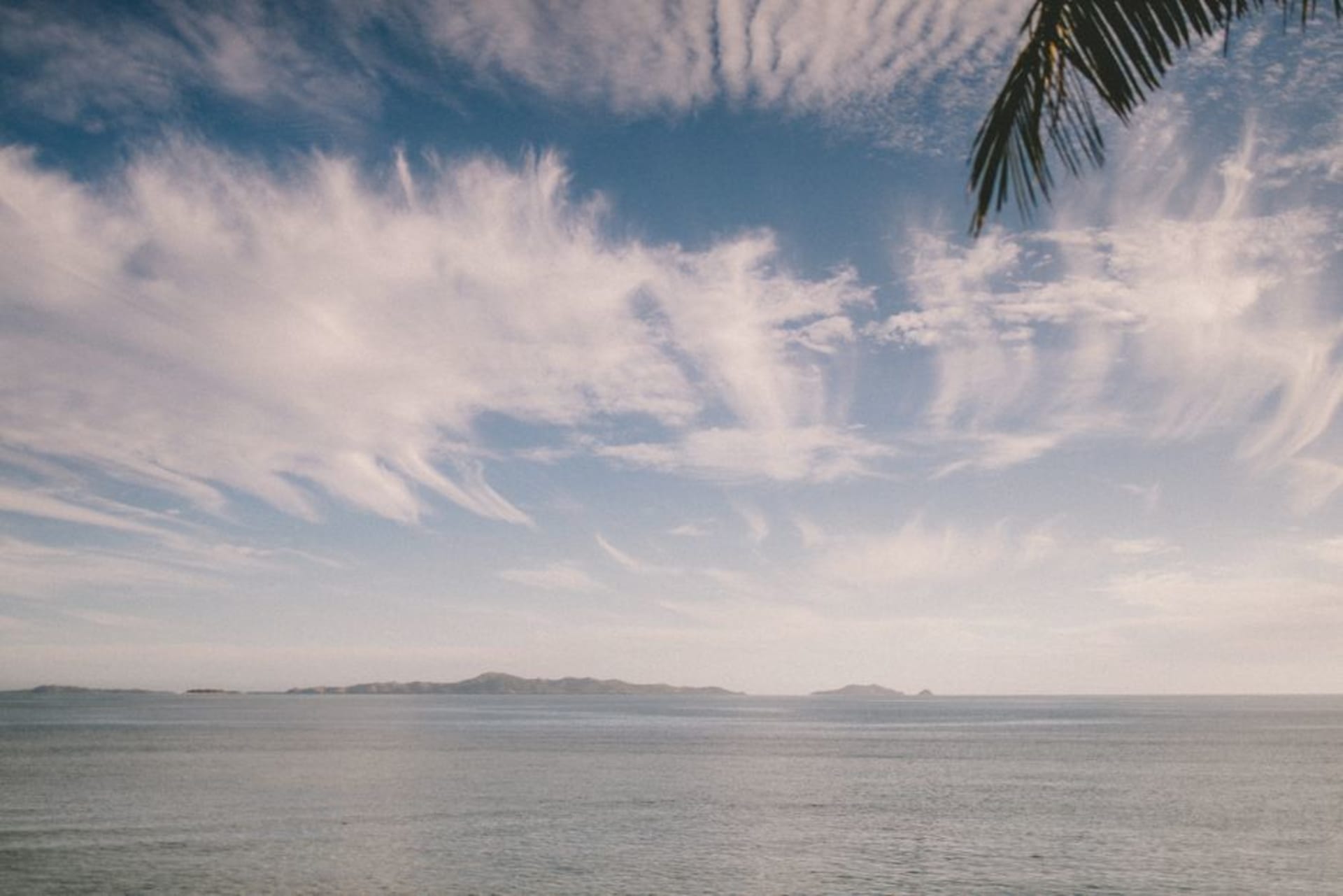
Qamea Island
"We had an entire crescent of white sand to ourselves for three hours and only left because we ran out of things to say about how quiet it was."
A quiet, jungle-covered island off Taveuni's east coast with a string of near-empty beaches and barely a road to speak of.

Qamea is a fifteen-minute boat ride from Taveuni’s northeast coast, and the gap between the two islands functions almost like a decompression chamber — by the time you land, the relative bustle of Waiyevo already feels like a memory. The island is small, entirely undeveloped beyond a couple of low-key resorts and a scatter of villages, and its interior is steep enough that most movement happens by boat around the coastline rather than by any road across it. We stayed three nights at a small family-run guesthouse on the southern shore, in a bure with a mosquito net, a rainwater shower, and absolutely nothing electronic beyond a single ceiling fan that ran off a generator for four hours each evening.
The beaches are the headline, and they earn it — a series of white sand crescents separated by outcrops of jungle-draped rock, most of them accessible only by boat or by a scramble over the headlands at low tide. We found one, a twenty-minute walk from the guesthouse over a rocky point, that had clearly never seen a beach chair or a sign of any kind, just sand, palms, and a reef close enough offshore to snorkel to without a boat. Lia found a giant clam in about a metre of water, its mantle a startling electric blue, and we spent longer than was reasonable just watching it slowly close whenever a shadow crossed it.

The village near the guesthouse, Naqumu, follows the same rhythms as most Fijian villages we’d visited, but with a stillness that felt specific to the island’s isolation — the school has one teacher for all grades, the church bell doubles as the general alarm system for anything from a funeral to a football match, and the one shop sells kerosene, tinned fish, and phone credit from behind a counter that’s really just a window cut into someone’s front room. We were invited to a sevusevu on our second evening and sat through it with a small crowd of village men who spent the second half of the evening trying, with great patience, to teach me the correct clapping rhythm that follows the chief’s acceptance of the kava.

We left Qamea without having done anything that would make for an exciting itinerary bullet point — no dive certification, no waterfall hike, no marked attraction — and it was one of the best three days of the whole trip.
When to go: May through October for the driest, calmest conditions and the easiest boat transfers from Taveuni. Book accommodation ahead, as the handful of guesthouses and resorts have very limited capacity.
Keep exploring
More from Fiji
 fiji
fiji Rabi Island
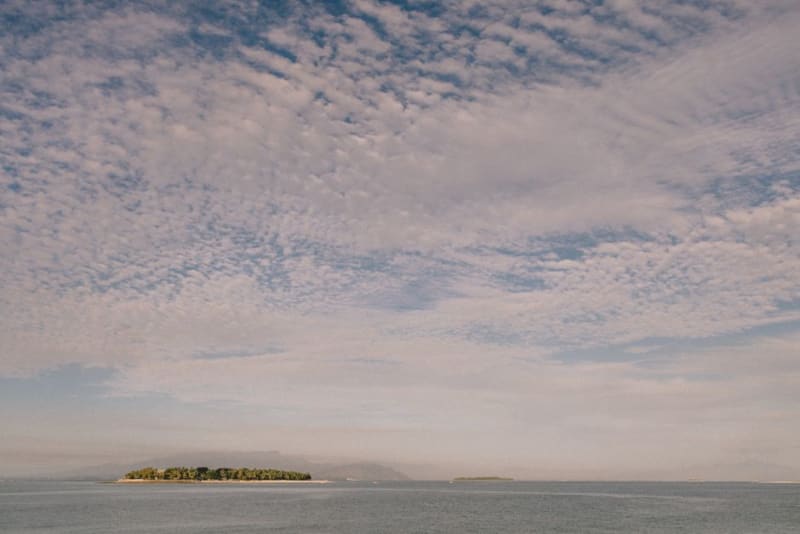
The island Fiji gave to the displaced Banaban people of Kiribati after phosphate mining destroyed their home — a place carrying one of the Pacific's least-known relocation stories.
Explore fiji
fiji Rakiraki
A sugarcane and fishing district on Viti Levu's northern tip, gateway to the outer islands and home to a chiefly burial site tangled in legend.
Explore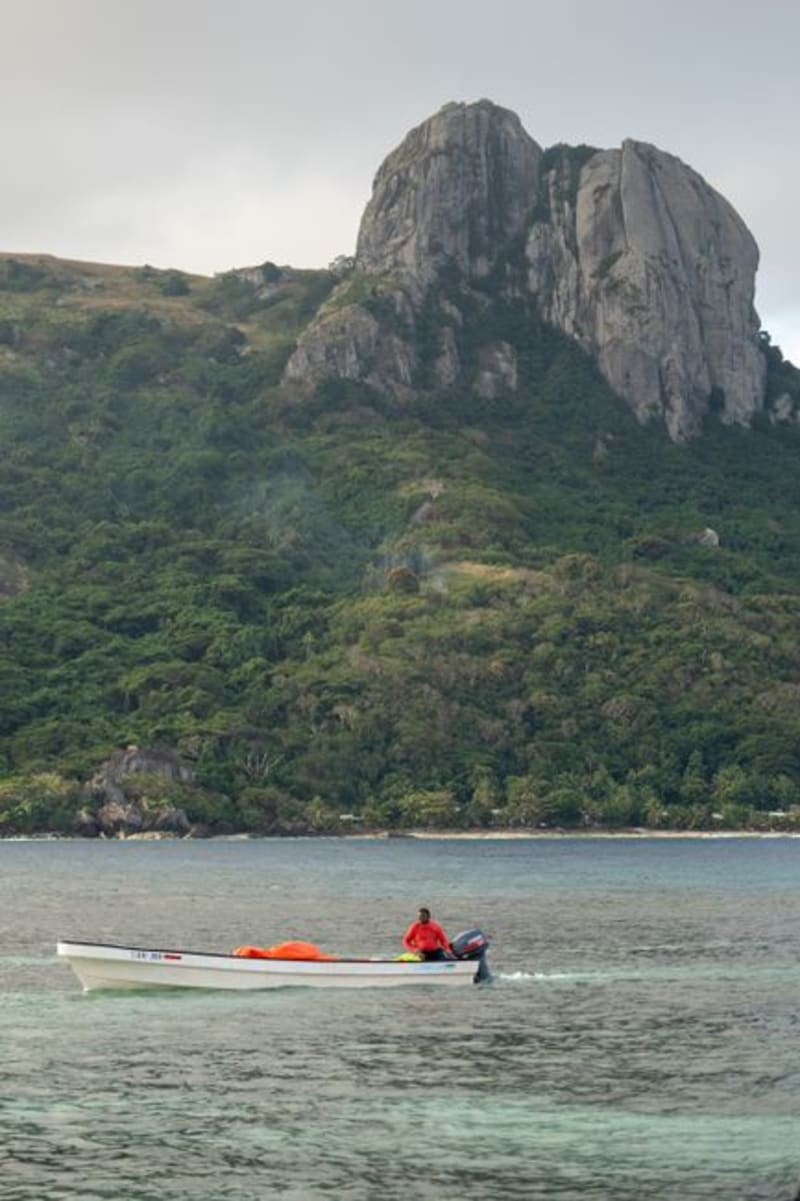 fiji
fiji Rewa Delta
A maze of mangrove channels and stilted villages at the mouth of Fiji's largest river, reached by longboat and best understood through the rhythm of tides rather than a map.
Explore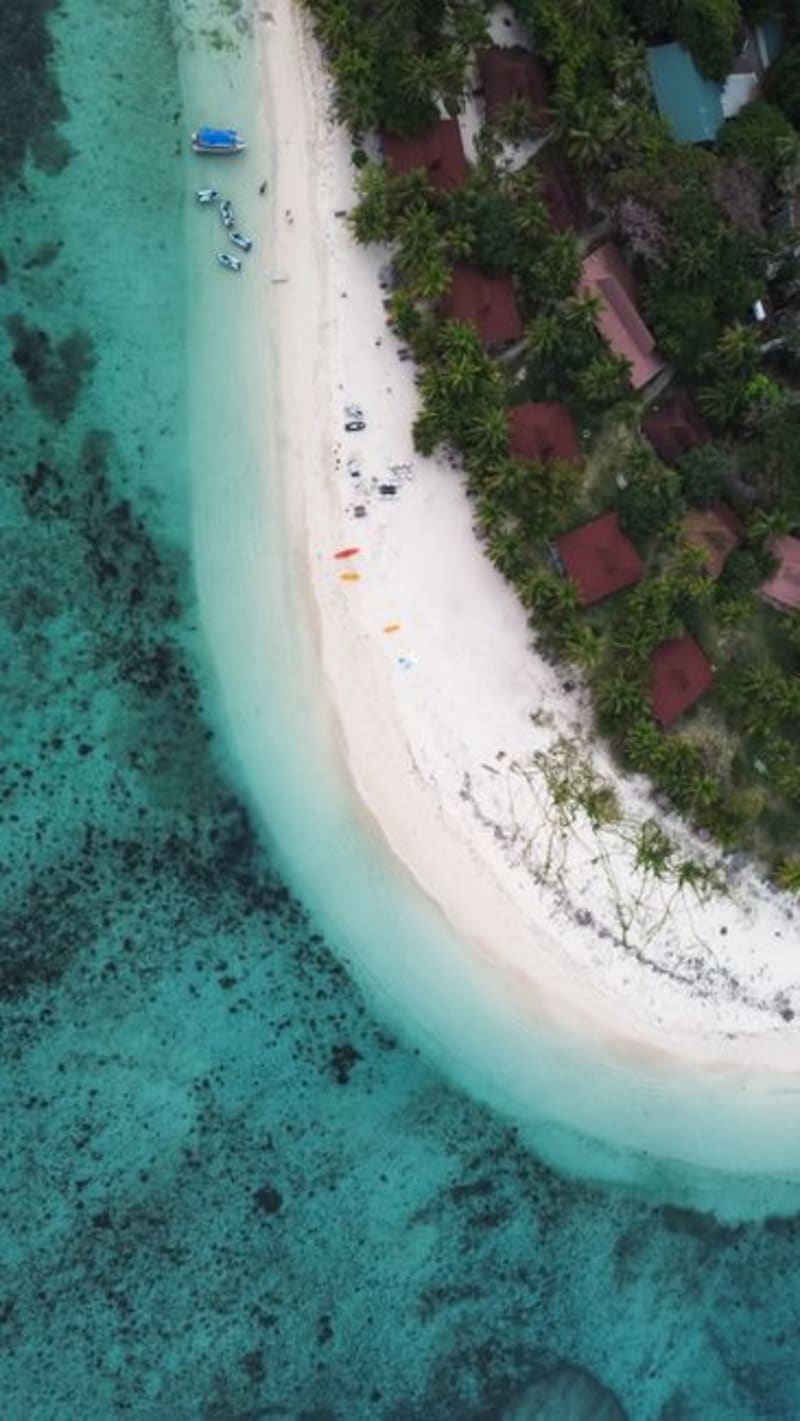 fiji
fiji Robinson Crusoe Island
A day-trip island off the Coral Coast mangroves built entirely around Fijian song, fire, and a lagoon shallow enough to wade to at low tide.
Explore fiji
fiji Sabeto Hot Springs
A grey mud pool tucked into the Sabeto highlands outside Nadi, where locals and travelers alike coat themselves head to toe before rinsing off in a hot spring pool.
Explore fiji
fiji Savusavu
A hot-spring harbor town on Vanua Levu where the ground itself steams, and the yachting crowd and the kava-drinking locals somehow share the same three streets.
Explore