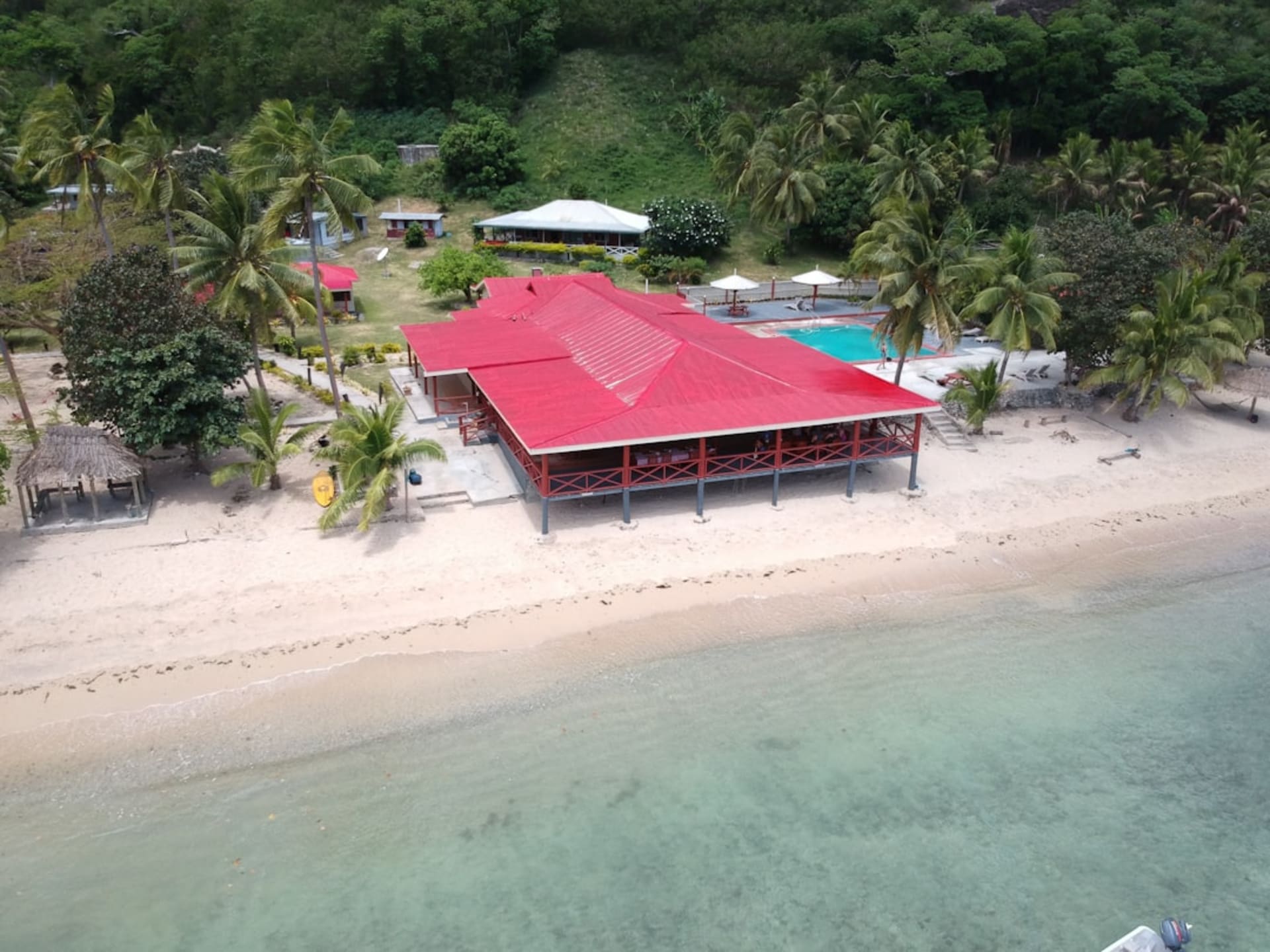
Lami Town
"Lami smelled like diesel, curry, and low tide, and I mean that as a genuine compliment."
Suva's scruffy, working waterfront suburb, home to fishing boatyards, the country's best curry houses, and a mangrove foreshore locals actually use rather than photograph.
Every guidebook description of Lami I read before arriving used some version of the word “industrial,” usually as a polite way of saying skip it, and I understand the impulse — Lami sits right on Suva’s western edge along Queens Road, a strip of boatyards, timber mills, and light industry that has none of the postcard appeal of the Coral Coast twenty minutes further on. But we ended up staying two nights in Lami almost by accident, when a guesthouse in central Suva fell through, and it turned into one of the more unexpectedly good stretches of the whole Fiji trip.
The town runs along a narrow foreshore backed by mangroves, and its economy is visibly, unglamorously maritime — several boatbuilding yards where wooden hulls in various states of construction sit under corrugated iron sheds, a fishing cooperative where boats come in with the day’s catch to be sorted and iced before the short drive into Suva market, a scattering of marine supply shops selling rope and outboard parts to a clientele of actual fishermen rather than yacht tourists. We wandered into one yard where a crew was steaming timber planks to bend them around a hull frame, an old-fashioned wooden boatbuilding technique that the owner, a stocky man named Ratu who had inherited the yard from his father, told us was becoming rare even in Fiji as fiberglass took over.
Lami’s other reputation, and the one that actually drew us in, is food. The town has a concentration of excellent, unpretentious Indo-Fijian curry houses that Suva residents will drive out of their way for, and we ate at a place called Curry House whose name told you nothing about how good the fish curry actually was — a whole snapper simmered in a coconut and turmeric gravy thick enough to eat with roti, served at a plastic table under a tin roof with a ceiling fan working overtime against the heat. Lia, who had been slightly skeptical about detouring into an “industrial suburb” for dinner, admitted by the second bite that it was the best meal we had in Fiji, and she has not let me forget that I initially suggested we skip it.
We also walked the Lami foreshore path at dusk, a stretch of boardwalk through mangrove flats that the municipal council built as a modest recreation project, and found it full of locals doing exactly what a foreshore path is meant for — joggers, teenagers on bicycles, an older man doing slow tai-chi-like stretches at the water’s edge, a group of women walking in a tight cluster laughing about something none of us understood. Mudskippers flicked across the exposed flats at low tide, and a heron stood so still at the water’s edge that I mistook it for a decoration until it moved. Lami does not perform itself for visitors, which is exactly why it was worth the two nights.
When to go: Year-round; Lami is a functioning suburb rather than a seasonal draw, though the dry season from May to October makes the foreshore walk and boatyards more comfortable to explore without rain interruptions.