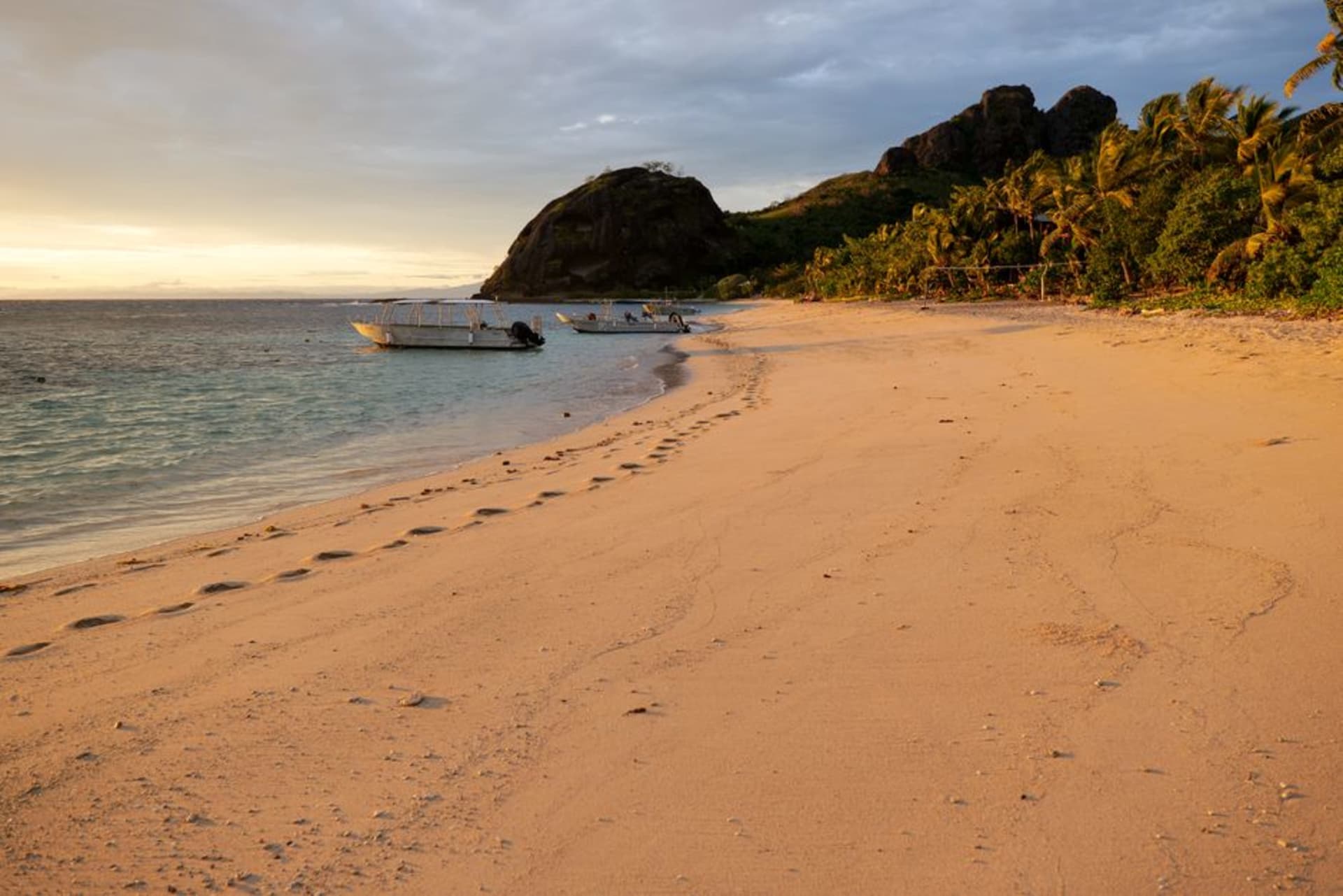
Kuata Island
"The dive briefing was three sentences long: stay low, stay calm, don't touch the sharks. I appreciated the brevity."
The southernmost Yasawa, small enough to circle on foot in an hour, and home to one of the most reliable reef shark dives in Fiji.
Kuata is the first stop the Yasawa Flyer makes after leaving Port Denarau, and for a lot of backpackers it’s also the last stop, in the sense that people arrive planning to stay two nights and leave ten days later. The island is genuinely tiny — you can walk its perimeter in under an hour along a rocky track that skirts the shoreline — and it has almost no permanent village, just a scatter of family-run huts and one larger backpacker lodge that dominates the accommodation options.
The reason most people come to Kuata specifically is the shark dive at a site everyone calls Bula Passage, a channel a short boat ride from the beach where whitetip and blacktip reef sharks gather in numbers that would be alarming anywhere else and here just feel like part of the furniture. I went out with a two-person dive operation run off the back of the main lodge, no wetsuit needed in the warm water, and dropped to about twelve meters where the current keeps a steady procession of sharks moving past a coral ridge. Six or seven sharks in the first ten minutes, cruising with the specific unbothered elegance that reef sharks have when they’re not remotely interested in you.
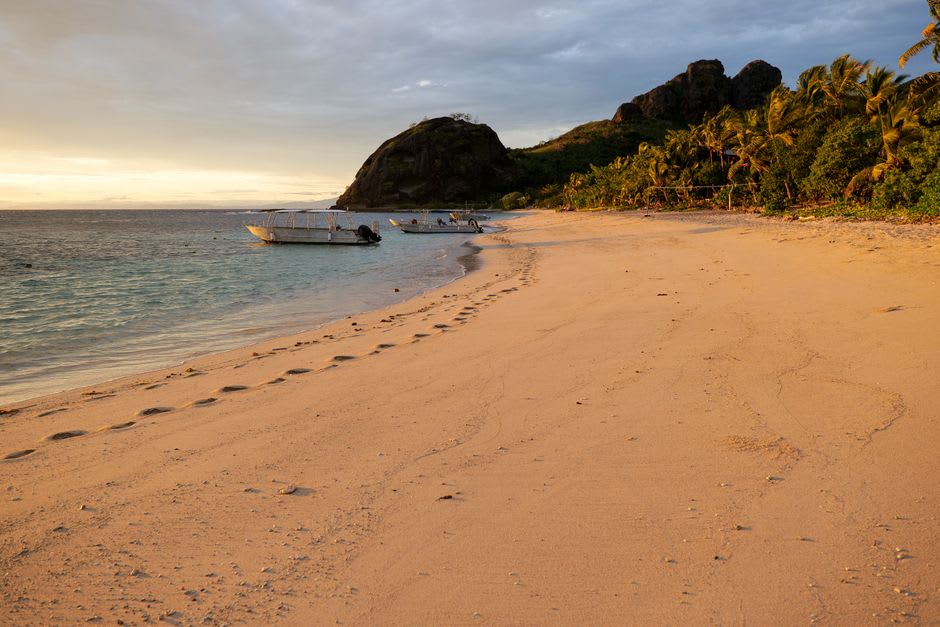
Between dives, the island runs on backpacker time — communal dinners at long tables, a kava bowl that gets passed around most evenings with a rotating cast of Australians, Germans, and a French couple I ended up talking to for two hours about nothing in particular. Lia wasn’t with me on this leg of the trip, and I remember thinking, slightly guiltily, that Kuata’s specific brand of social, unstructured island time is easier to fall into alone than as a couple. It’s the kind of place built for meeting strangers.
There’s a small lighthouse rock formation on the island’s southern point that locals will point you to, a short scramble over volcanic boulders that gives a clean view south toward Waya and, on an especially clear day, back toward the Mamanucas. I went out there at sunset on my last evening and had the whole rock to myself.
When to go: Year-round for the shark dive, though visibility is best May through October. The Bula Passage current runs strongest around the new and full moons, which is also when the shark activity tends to peak.