Kadavu
"Kadavu doesn't have a gift shop. It barely has a road. It has the reef, and the reef is enough."
The flight to Kadavu from Nadi takes thirty-five minutes and lands on a grass strip that requires the pilot to bank hard left over the ocean to line up the approach. I knew we were close when the island appeared below us — a long, irregular shape of dark green hills and bays, no visible roads for the first few minutes, no buildings that weren’t village bures or the occasional tin-roofed school. The other passengers were almost all Fijians returning home: a nurse from the small clinic, two young men with bags of groceries too heavy to have come any other way, an elder who had been to Suva for a medical appointment and was telling the person next to her about it with great animation. I was the only tourist on the flight.
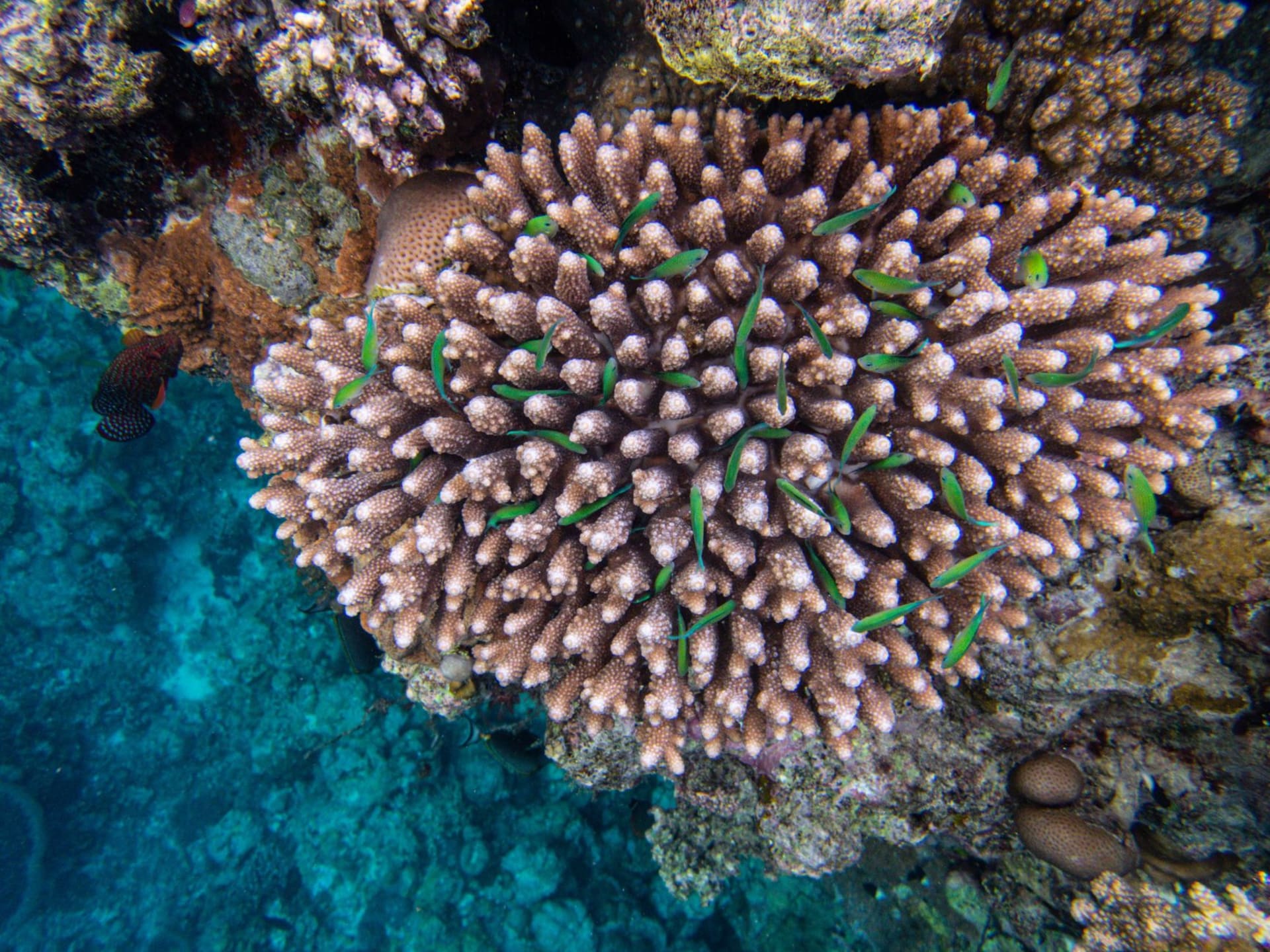
The Great Astrolabe Reef encircles most of Kadavu and much of the adjacent island of Ono, a barrier reef system nearly one hundred kilometres in circumference that ranks among the largest in the world. The dive sites within it have names like North Astrolabe and the Cathedral and Broken Stone, each with its own character — the Cathedral is an enormous swim-through where the light at certain times of day falls through an opening in the coral ceiling and illuminates the interior in blue shafts, and Broken Stone is a dive against a strong current where you hold your position against the reef and watch everything that isn’t attached fly past. I dived for four days straight and didn’t repeat a site.

Village life on Kadavu operates largely without the tourism layer. I was staying at a small dive lodge run by a Fijian family near the village of Vunisea, and while the lodge accepted visitors, the village itself was not particularly oriented toward them. I was invited to a sevusevu, the kava ceremony that formalises a newcomer’s presence in a community, on my second evening — the chief’s eldest son conducted it with the formality appropriate to the occasion, and I sat through it understanding maybe a third of what was said and following the physical cues for the rest. Afterward the younger men in the circle switched to English and spent an hour questioning me about life in Mexico, which they had learned about primarily through movies and found deeply inconsistent with my apparent inability to handle physical heat.
The manta rays of Kadavu deserve a separate sentence. The reef passes around a channel near the southern end of the island where the current concentrates plankton, and the mantas — some with wingspans of four metres — arrive to feed. I went twice: once on scuba, once on a freedive, face-down in eight metres of water watching an animal the size of a dining table pass directly beneath me, its white underside spotted and particular, its movement the silent, effortful grace of something not quite of this world.

Getting anywhere on Kadavu is a negotiation with the road, which exists in theory for about forty kilometres and in practice for about twenty. The rest of the island is connected by boat or by foot, and the tracks between villages are genuine tracks — muddy, narrow, marked by the passage of feet rather than any official designation. I walked one from the lodge to a neighbouring village one morning, an hour each way, and the family at the other end gave me sweet tea and jackfruit and sent me back with a bag of dalo from their garden.
When to go: May through October for the dry season, the clearest dive visibility, and the best manta ray sightings in the channel. Kadavu gets serious rain from November through April and the grass airstrip can close. Book ahead if visiting during peak dry season, as the few lodges have limited beds and fill quickly with divers.