Dravuni Island
"By sunset the cruise ship was a light on the horizon and the whole island belonged to about forty people again."
A speck of sand and green hill at the northern tip of the Great Astrolabe Reef, best known as a cruise ship anchorage that empties out completely by four in the afternoon.
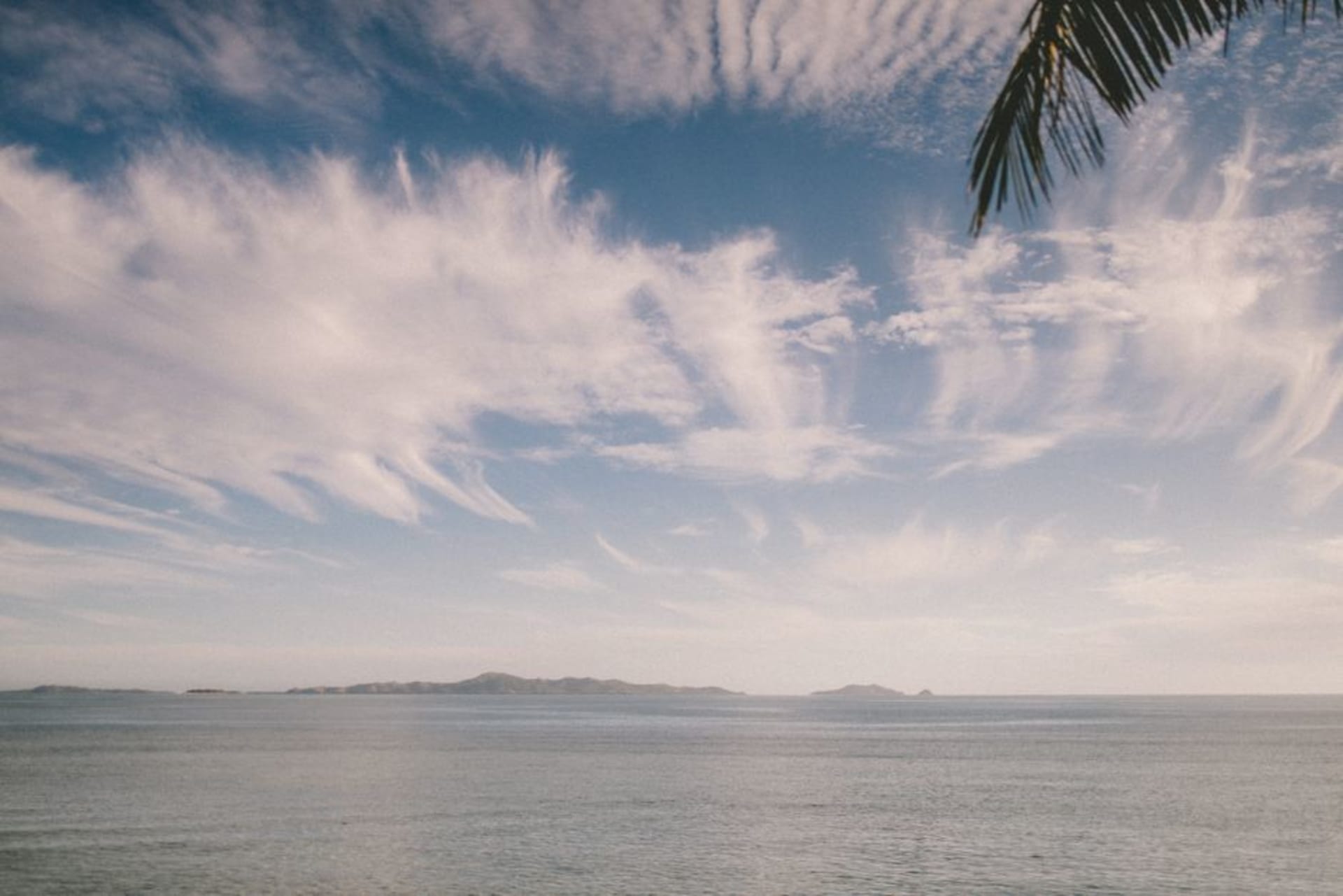
Dravuni sits at the far northern edge of the Great Astrolabe Reef, close enough to open ocean that the water changes color in bands — pale green over the sandbar, then a deep, almost bruised blue where the reef drops away. It is a genuinely tiny island, walkable end to end in under twenty minutes, and its main claim to fame in the wider world is as a tender stop for cruise ships doing the South Pacific circuit. I arrived by a much slower boat from Kadavu proper, a two-hour crossing that Lia spent mostly lying across the bow with her hat over her face, and we timed it badly: a cruise ship had anchored offshore that morning and the village beach had the temporary, slightly surreal energy of two hundred visitors in sun hats buying shell necklaces from a row of foldout tables.
We waited it out. By early afternoon the tenders had started running back to the ship, and by four the beach was empty except for a few kids finishing a game of touch rugby in the shallows and an older man mending a net in the shade. This, it turns out, is the real Dravuni — a village of maybe forty families who have built a small but genuine economy around the two or three hours a day the ship visitors are ashore, and who spend the rest of daylight doing exactly what they’d be doing if no cruise line had ever discovered the island: fishing, gardening the steep terraced plots on the hill, mending things.
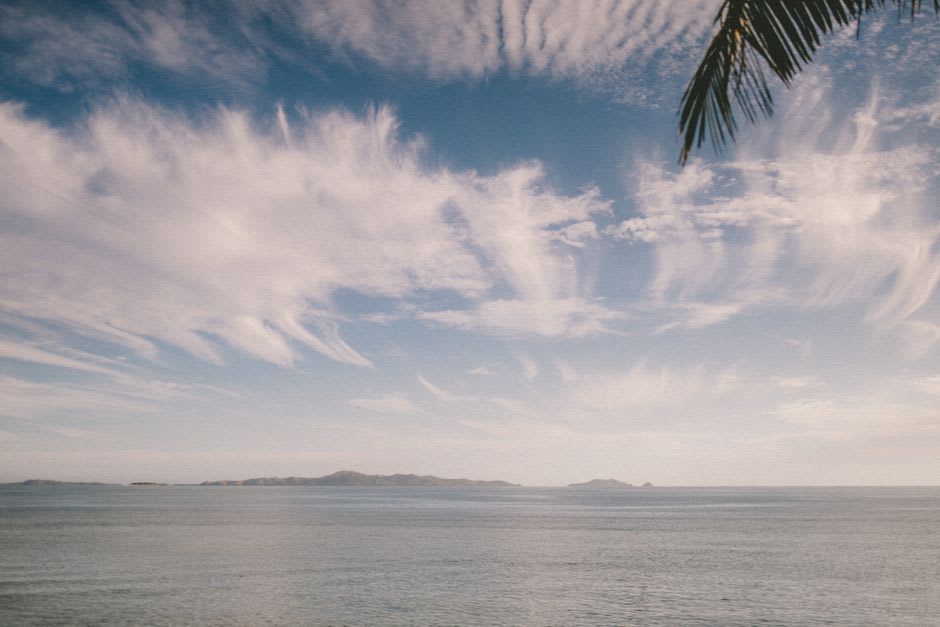
The hill in the middle of the island takes about fifteen minutes to climb and delivers a view that made both of us stop talking for a while — the full curve of the Great Astrolabe Reef visible as a pale line in the water stretching south, Kadavu’s dark hills on the horizon, and the improbable clarity of the lagoon directly below, shallow enough in places to see individual coral heads from the summit. We went up twice, once at midday when the light flattened everything into postcard colors and once near dusk when the whole bay turned the color of weak tea and the fishing boats came in silhouette.
Snorkeling directly off the beach is better than it has any right to be for somewhere this small — a healthy fringing reef within easy swimming distance, reef sharks that cruise the drop-off without much interest in people, and on one afternoon a hawksbill turtle that Lia followed at a respectful distance for almost ten minutes before it got bored of her and disappeared into a coral crevice. There’s no dive operation based on the island itself; anyone serious about diving the reef sites nearby comes over from a lodge on Kadavu or Ono for the day.
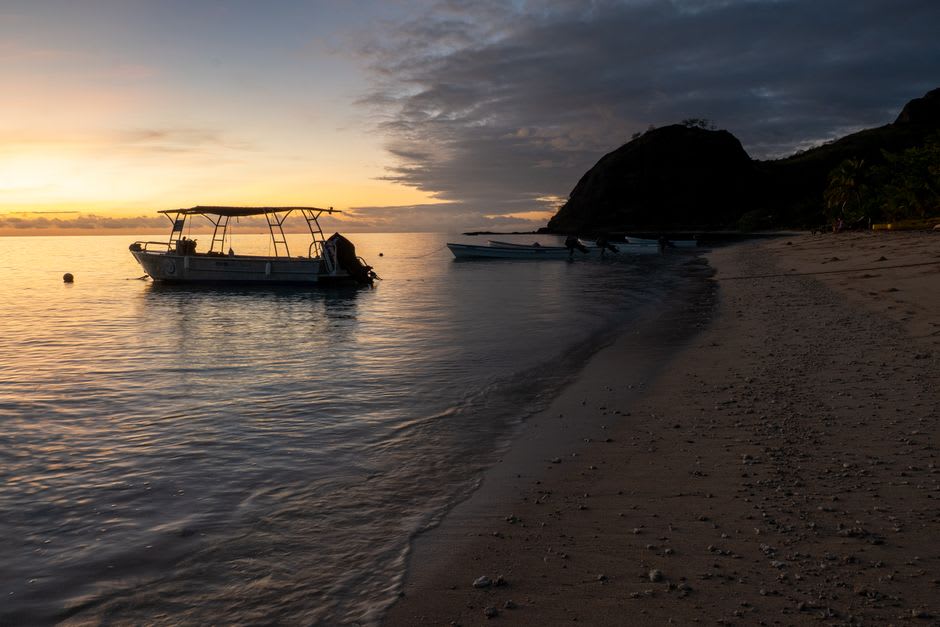
We stayed two nights at a family homestay above the beach, sleeping under a mosquito net with the sound of the reef break audible through the wall, and ate whatever the family had caught that day — usually reef fish, sometimes octopus that had been pounded and marinated in coconut milk in a way that made me embarrassed by every octopus I’d eaten before.
When to go: May through October for calm crossings from Kadavu and clearer water for snorkeling. Cruise ships tend to anchor in the mornings, so plan the beach and village for afternoon if you’d rather have it quiet. There is no ATM and very limited phone signal, so bring cash for the homestay and any handicrafts.