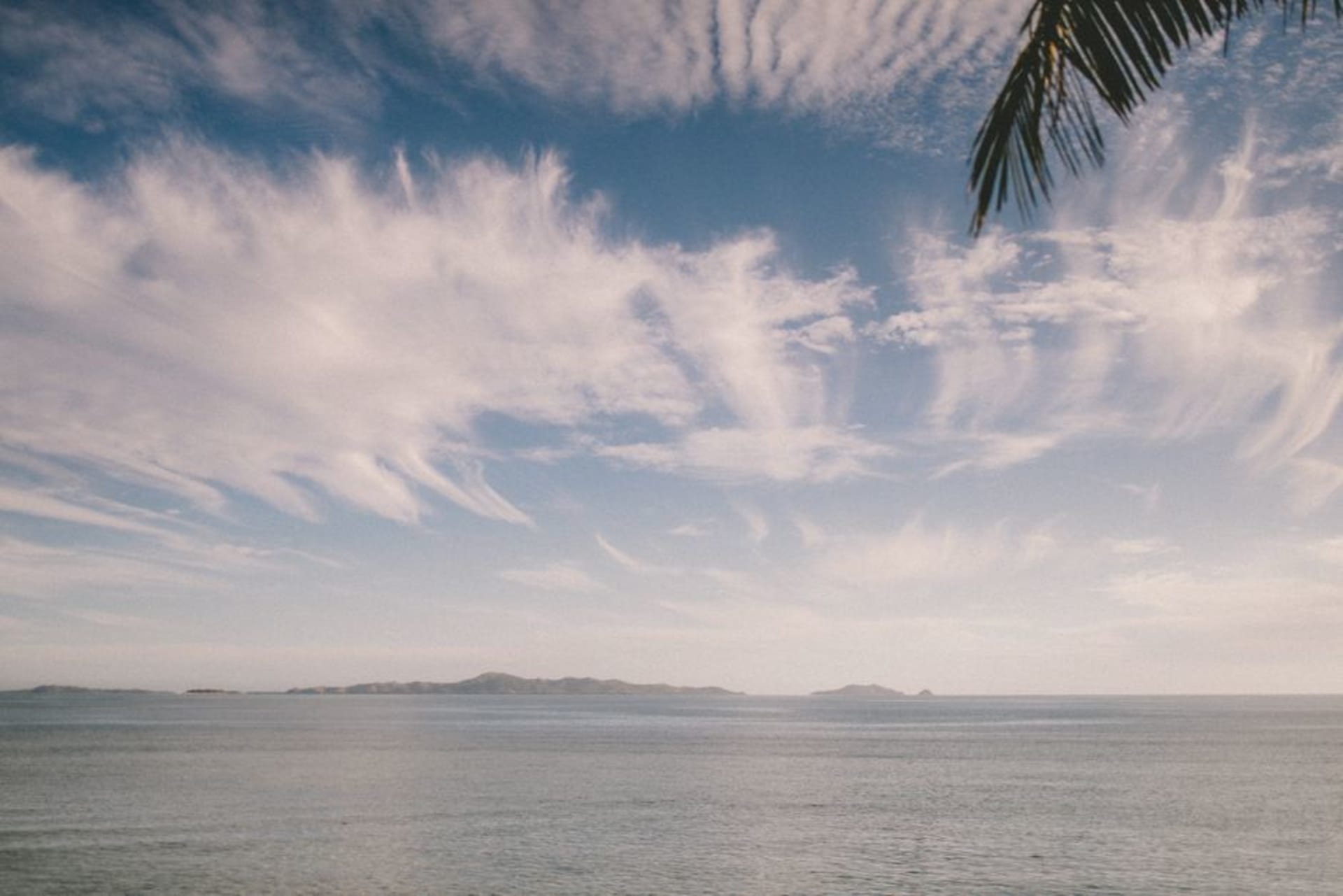
Batiki Island
"A woman beat mulberry bark into cloth on a wooden anvil for two hours while telling us, without once looking up, the entire history of her village."
A flat, dry island in the Lomaiviti group known for its tapa cloth makers and a barrier reef so shallow you can wade most of it at low tide.
Batiki doesn’t appear in most Fiji itineraries, and getting there took us three separate boat conversations in Levuka before someone knew a fisherman willing to make the crossing from Ovalau, a journey of a couple of hours across open water that turns considerably rougher than the map suggests once you’re past the reef shelter. The island itself is flat and comparatively dry compared to its lush Lomaiviti neighbours, ringed by an unusually extensive reef flat that, at low tide, exposes enough ground to walk long stretches of it without ever getting your knees wet.
Batiki has a modest reputation within Fiji for its masi, or tapa cloth, made from the beaten inner bark of the paper mulberry tree and stamped with traditional geometric patterns using natural dyes. We were shown the process by a woman named Litia in the village of Mudu, who sat cross-legged over a wooden anvil beating strips of bark for what must have been two straight hours, the rhythmic thock of the mallet audible from well before we reached her house. She talked the entire time — about her grandmother teaching her the patterns, about which masi designs were traditionally reserved for chiefs, about a wedding masi she was making that would take another three weeks to finish — without breaking her rhythm once.

The reef flat around Batiki is one of the more dramatic low-tide landscapes I’ve seen in Fiji — at the lowest point of the cycle, you can walk out several hundred metres over exposed coral rubble, tide pools, and sand flats where village women collect shellfish and small octopus with a practised efficiency neither Lia nor I could come close to matching when a family let us try. What looks from a distance like a flat, unremarkable stretch of shoreline turns out, up close, to be busy with life in every pool.
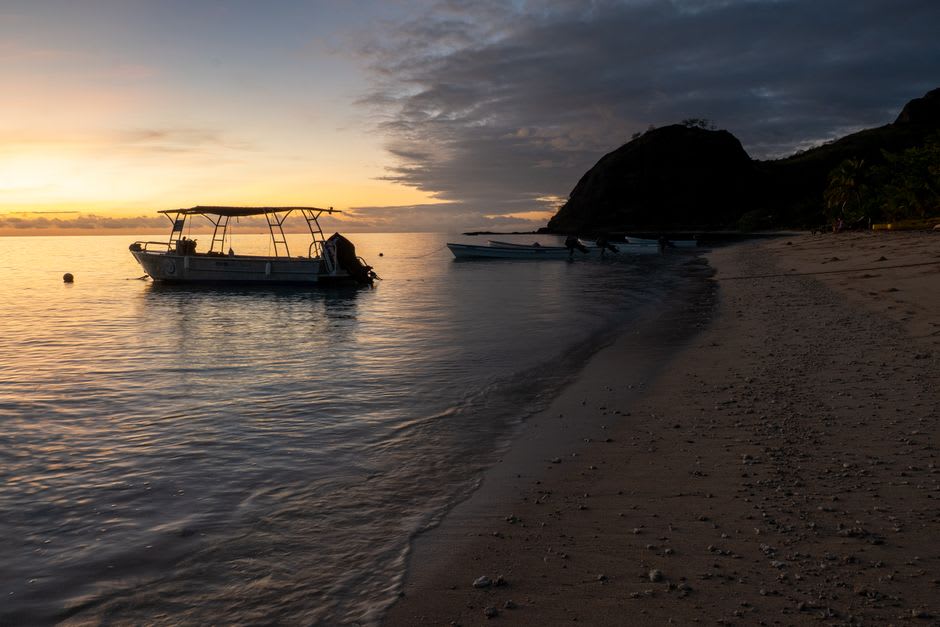
There’s no formal accommodation on Batiki, so any visit runs through a village homestay arranged informally, which meant our two nights there were spent largely in one family’s home, eating what they ate and sleeping on a woven mat on the floor of their front room.
When to go: May through October for calmer boat crossings from Ovalau. Low tide timing matters more than season here, so check tide tables before planning a reef walk regardless of when you visit.