Uzgen
"I came for a ruin and left arguing about rice with a man who had grown it for forty years."
I almost did not stop in Uzgen. It sits in the eastern arm of the Fergana Valley, just inside Kyrgyzstan after the Uzbek border tangle, and most people barrel through it on the way to Osh without a second glance. Lia spotted the minaret from the shared taxi — a fat brick tower the color of old honey, leaning very slightly, the way a tired person leans against a wall — and that was enough to make us get out. We stood on the dusty roadside with our bags while the taxi driver shrugged and drove off, and I had that small jolt of panic I always get when I have just made a decision on instinct in a town I cannot pronounce.
A tower the Mongols somehow missed
The minaret and the three mausoleums beside it are what survives of a Karakhanid complex from the eleventh and twelfth centuries, back when Uzgen was a capital and not a backwater — a stop on the Silk Road grand enough to mint its own coins. The brickwork is the thing. Up close the whole surface is patterned: woven bands, geometric knots, lines of Kufic script laid into the clay like embroidery, all of it done in nothing but baked mud and the patience of people who expected their work to outlive them. It did. The Mongols flattened most of the region a century later; this somehow stayed standing.
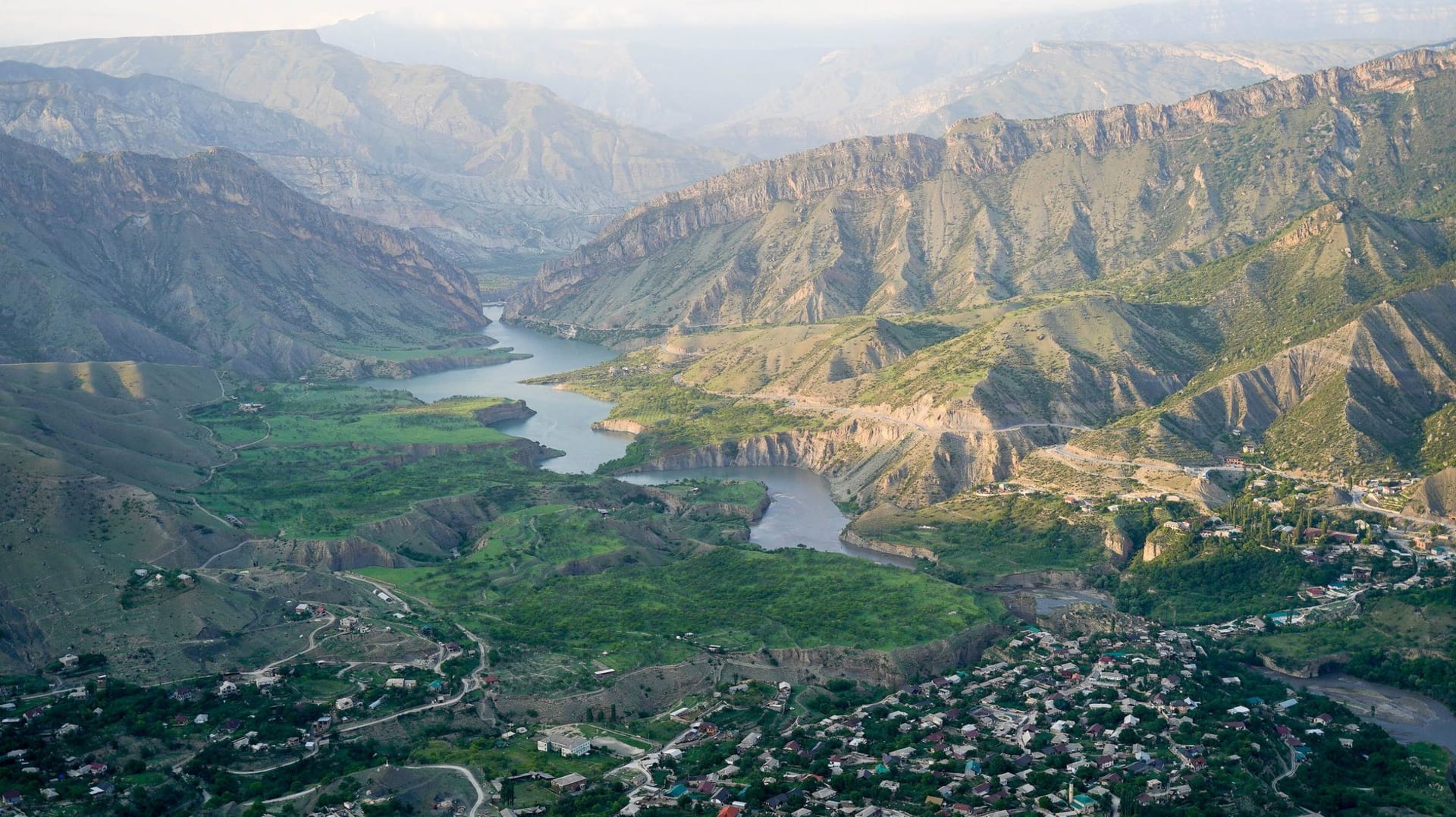
I climbed the minaret, which you can still do — a tight spiral of worn brick steps in the dark, the kind of staircase that makes you very aware of your own knees. At the top there is a wooden platform and a view across the whole valley: flat green fields, the Kara-Darya river sliding past brown and fast, the new town with its tin roofs, and beyond it all the dry hills going gold in the afternoon. A man up there with his grandson told me, in a mix of Russian and gestures, that the muezzin used to climb this every dawn. Now there is a loudspeaker bolted to a pole. Progress, he said, and laughed.

The famous rice
What Uzgen is genuinely famous for, more than its minaret, is rice. Uzgen red rice — devzira — is a long, heavy, pinkish grain that the whole region treats as a kind of edible gold. It is the rice you want for plov, dense enough to soak up mutton fat without turning to mush, and people in this valley will tell you with total sincerity that plov made with anything else is not really plov. At the bazaar a man let me run my hand through an open sack of it. The grains were dusty with their own bran, faintly rose-colored, and heavier than they looked.
We ended up in a tiny canteen near the market eating plov off a shared platter with our hands, the way the next table was doing it, and the owner came over to watch us struggle and then to lecture me — warmly, at length — on why his rice was superior to the rice grown twenty kilometers away. I have no way of verifying any of it. I only know it was the best plov I ate in Central Asia, the grains separate and glossy, the carrots gone sweet, a whole head of garlic buried in the middle that we fought over.

Uzgen is not a place you need a day for. We gave it an afternoon and an evening, slept in a guesthouse where the family fed us breakfast in their garden under an apricot tree, and were on the morning taxi to Osh by nine. But it was the afternoon I think about most from that stretch of the valley — the lean of that old tower, the argument about rice, the quiet sense of standing in a town that had once mattered enormously and was now perfectly content to be small.
When to go: Late spring and early autumn are kindest. The valley bakes in July and August, with temperatures that make the climb up the minaret a genuinely sweaty proposition. Come in May for green fields and apricot blossom, or in late September when the rice harvest is in and the bazaar is at its fullest.