Asia
Fergana Valley
"I came for a day and spent a week watching clay become art."
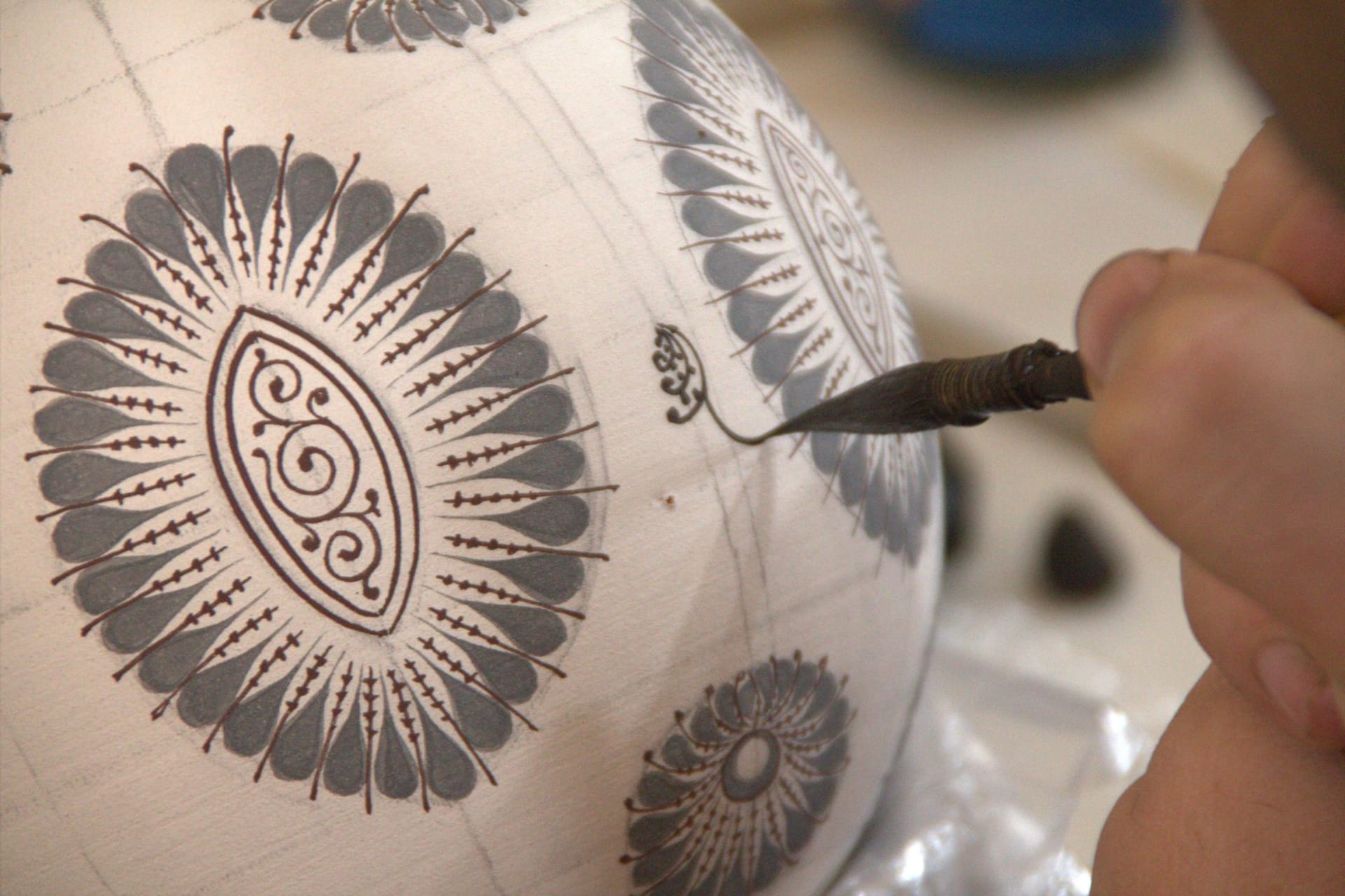
I didn’t plan to linger in the Fergana Valley. I came off a marshrutka from Tashkent with one night booked in Kokand and a vague intention to see the Khudayar Khan palace before moving on. Then I walked into a ceramics workshop on a side street in Rishtan, and a man named Rustam handed me a cup of green tea and a piece of raw clay, and that was the end of my itinerary. I spent the next four days watching him paint pomegranates and geometric borders onto bowls with a brush made from a single cat hair, the kind of patience that makes you ashamed of every shortcut you have ever taken in your own work.
The valley sits between Kyrgyzstan and Tajikistan, a broad green bowl fed by the Syr Darya that somehow produces some of Central Asia’s most sophisticated artisanal culture. Rishtan is the pottery capital — its distinctive blue-and-white ishkor glaze, made from local reeds burned down to alkaline ash, has been produced here for over two thousand years. Margilan, forty minutes west, is where the silk comes from: the Yodgorlik factory still runs Soviet-era wooden looms alongside hand-looms where a single woman weaves the ikat patterns that end up in museums in London and Berlin. In Fergana city itself, the covered bazaar on a Saturday morning is one of the more overwhelming sensory experiences in the region — dried apricots, fresh naan from clay ovens, pyramids of dried chili, suzani embroideries piled in stacks taller than the vendors.
When to go: May and September are ideal — the valley is agricultural and gets genuinely hot in July and August, sometimes above 40°C. Spring brings apricot blossoms across the orchards around Rishtan and the light is extraordinary. Avoid the winter months; while Fergana city stays accessible, many of the smaller workshops and family ateliers close or run reduced hours.
What most guides get wrong: They treat Fergana Valley as a day trip from Samarkand or a box to tick on the Silk Road circuit. It is not. The workshops, the family ateliers, the bazaars — none of it reveals itself to someone who shows up for three hours with a tour group. You need to stay at least three or four nights, wander without a program, and be willing to accept tea from strangers repeatedly. The valley rewards the unhurried almost aggressively. Speed through it and you will leave with a nice bowl and nothing else.