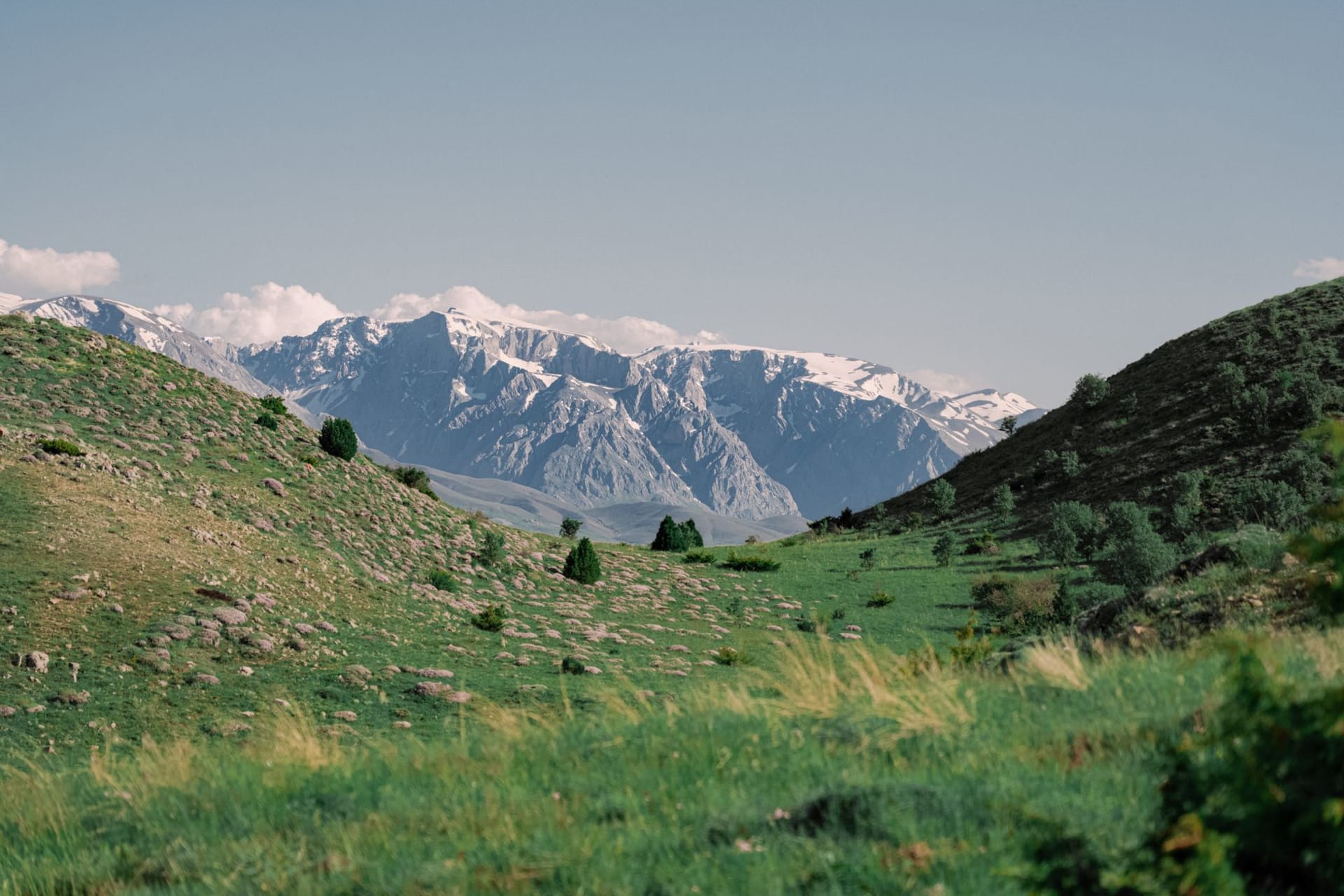
Shakhimardan
"To get here you cross into another country and then back again. The mountains don't acknowledge either border."
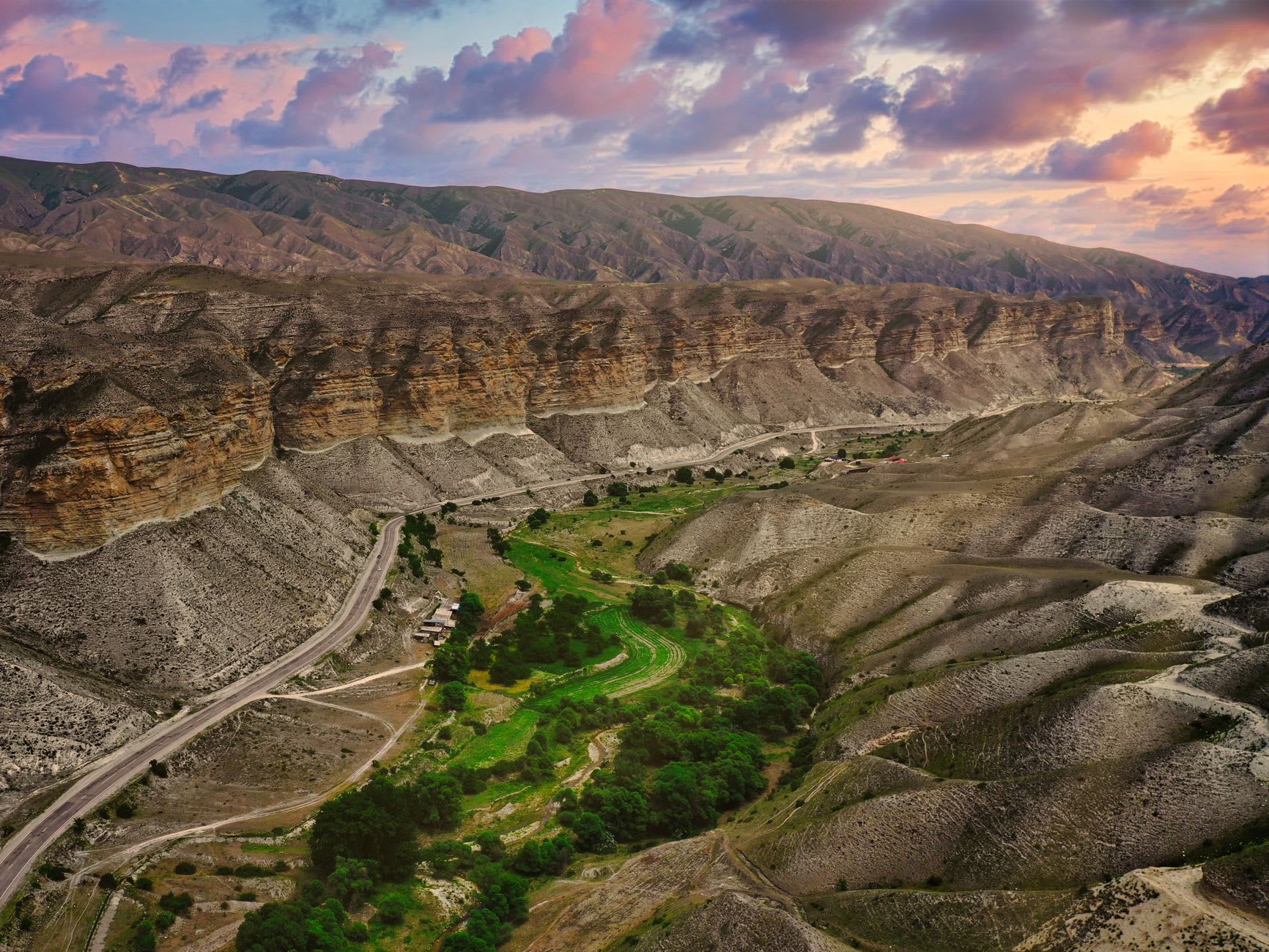
To reach Shakhimardan from Fergana city, you pass through Kyrgyzstan twice. The road climbs out of the valley floor and into a gorge where the Shakhimardan River runs fast and glacier-green, the mountains rising on both sides until the sky is reduced to a ribbon overhead. At the Kyrgyz border post, a soldier who looked about nineteen years old examined my passport with thoroughness and a magnifying loupe. Then you cross into Kyrgyzstan, drive through a few kilometres of dramatically different landscape — wider, steppe-edged, the villages more scattered — and then re-enter Uzbekistan at another checkpoint, where the soldier has the same magnifying loupe and the same expression. The exclave beyond is a strange and beautiful place.
Shakhimardan — the name means “Lion of Men,” a title of Imam Ali — is both a pilgrimage site and a former Soviet resort, a combination that shouldn’t work and somehow does. The mausoleum of Imam Ali sits at the upper end of the valley, embedded in rock above a mountain stream, and on Fridays pilgrims arrive from across the region — women in bright headscarves, men in white skullcaps, families spreading blankets for picnics on the grass above the mausoleum with the easy intermingling of the sacred and the domestic that characterises Central Asian pilgrimage culture. The water from the spring beside the mausoleum is considered holy, and pilgrims fill plastic bottles with a focus I found touching.
Below the mausoleum, the former Soviet sanatorium district is a time capsule: concrete rest-houses, faded murals of mountain scenery on buildings that house mountain scenery, a park with a Ferris wheel that appeared to be functioning and also appeared not to have been painted since 1987. In summer the sanatoriums fill with Uzbek families on holiday — children in the river, men at chessboards in the shade, the smell of grilled meat from dozens of mangal stalls that set up in the afternoon. The combination of pilgrimage energy and Soviet holiday energy produces an atmosphere that I found difficult to describe and easy to enjoy.
The walking here is extraordinary. A trail above the village leads to a viewpoint over the surrounding Tian Shan, and on a clear morning the peaks — permanent snow visible even in August — produce the particular vertigo that very large mountains produce when you are not expecting them. The river that runs through the valley is cold enough to hurt and clear enough to read through. I sat on a rock above it for an hour watching it and eating bread and dried apricot I’d bought from a woman at the sanatorium gate who sold from a cloth spread on the ground with the prices written on a piece of cardboard.
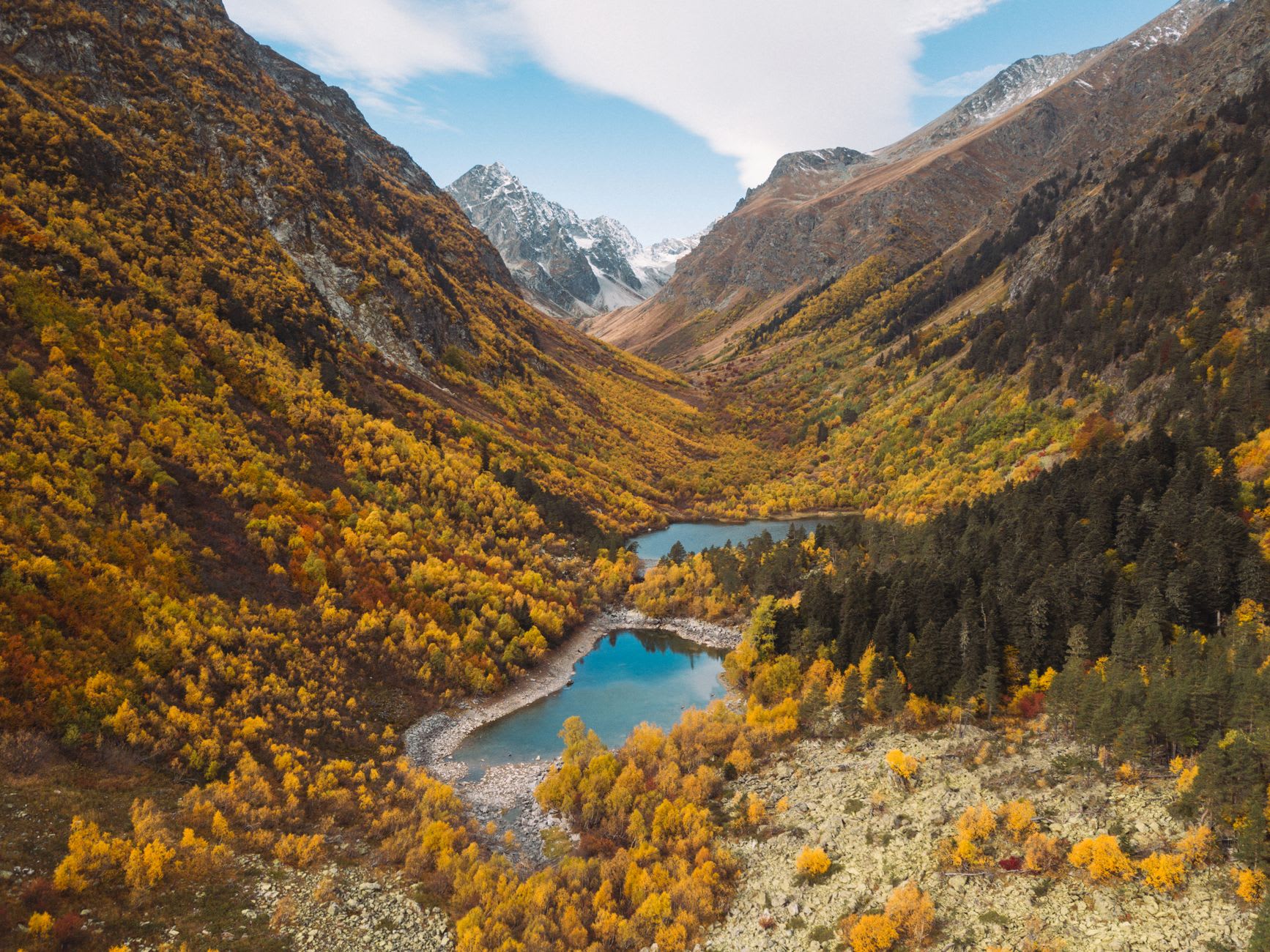
The border crossings add an hour or more in each direction, and the road is impassable in winter. But in summer the combination of mountain landscape, active pilgrimage, and Soviet holiday camp is unlike anything else in the Fergana Valley, and the sense of arriving somewhere genuinely unusual — a nation inside a nation, a holy site inside a rest complex — stays with you.
When to go: June through September only — the road into the exclave is closed in winter due to snow and avalanche risk. August sees the most activity at the sanatoriums and the most pilgrims at the mausoleum. June offers wildflower meadows and fewer crowds. Bring your passport and check current border-crossing requirements before making the trip.