Kokand
"The throne room is empty now. You can hear your own footsteps and the distant sound of a city that moved on without asking permission."
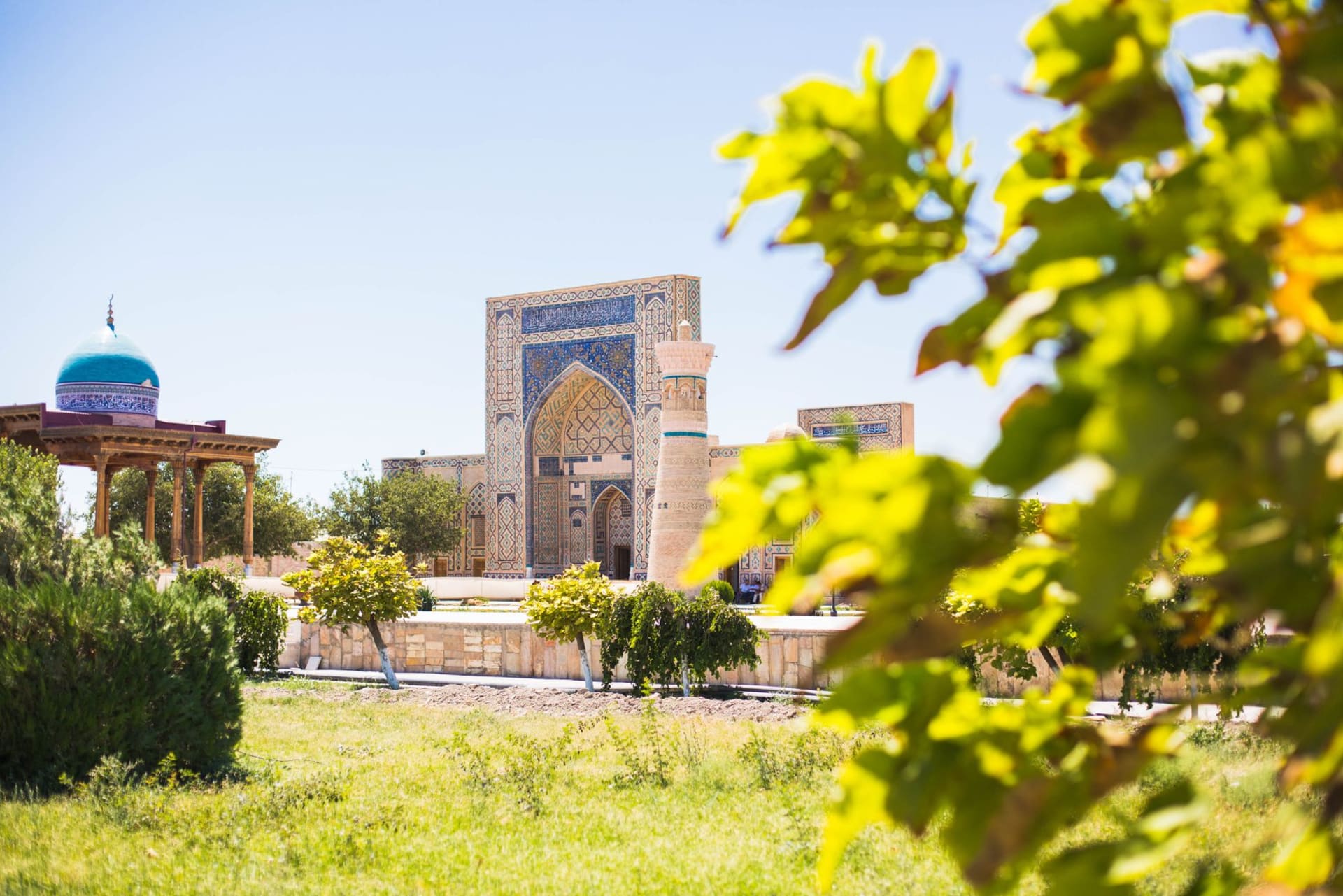
The first thing I noticed about Khudayar Khan’s palace was the scale of the ambition — and then, almost immediately, the evidence of its failure. The front facade is extraordinary: three elaborately tiled portal arches, hand-painted geometrics in turquoise and white and yellow, a frieze of floral motifs running the full width that someone spent years producing. Behind it, though, the palace is largely hollow. The Russians took it in 1875, turned it into various administrative things, stripped the interior, and now what remains is a shell that houses a regional history museum with exhibits under low lighting and hand-lettered labels in Uzbek and Russian, presiding over objects that deserve better. I stayed longer than I expected, not because of the museum but because the courtyard outside, with its mulberry trees and its absolute quiet on a Tuesday morning, felt genuinely melancholy in a way I found compelling.
Kokand was once the capital of the Kokand Khanate — a state that at its 19th-century peak controlled much of what is now Uzbekistan, Tajikistan, and Kyrgyzstan. The city still carries that history in its bones: mosques, madrasas, mausoleums clustered around the old town in various states of restoration and decline. The Jome Mosque is particularly striking — rebuilt in the late Soviet period but based on original plans, with a main prayer hall supported by 98 hand-carved wooden columns, each one slightly different, a forest of ornament that takes a while to absorb.

The Narbutabey Madrasa, tucked into a residential neighbourhood twenty minutes’ walk from the palace, was more affecting. It was functioning again — I arrived during afternoon prayer time and sat outside in the courtyard while the sound of recitation came from behind the door. The building is beautiful in an unrestored, unselfconscious way: the tilework faded, some of the brickwork patched with mismatched material, a cat sleeping in the shadow of the portal. There was an old man selling sunflower seeds from a paper cone near the entrance who looked at me with complete neutrality, neither curious nor hostile, and offered me a handful when I approached.
The bazaar in Kokand feels older and less touristic than Fergana city’s — a covered market section with hardware stalls and fabric merchants that gives way to an outdoor section where men sell tools laid out on blankets, and women offer dried herbs from cloth bags. I ate at a chaikhana near the bazaar where the plov was cooked in a kazan the size of a bathtub and served in a portion that felt like a challenge. The rice was stained golden from the lamb fat and had an almost smoky sweetness I couldn’t account for. I sat at a low table on a raised wooden platform and ate slowly while two old men played backgammon next to me with the air of men who had been playing the same game since approximately the 1980s.

Kokand is a city that has been important and then forgotten, and the combination gives it a particular texture — the grandeur is there if you look, but it’s not being sold to you, which is rare enough to feel significant. Most people come through for half a day, photograph the palace facade, and leave. I think that’s the wrong speed. Spend a full day, eat the plov, sit in the madrasa courtyard, let the city’s slow, sad, impressive weight accumulate.
When to go: April and October are ideal — the heat hasn’t peaked and the light on the tilework is extraordinary. The palace and mosques are open daily, though some smaller sites keep unpredictable hours. Kokand is easily reached by shared taxi or marshrutka from Fergana city in under an hour.