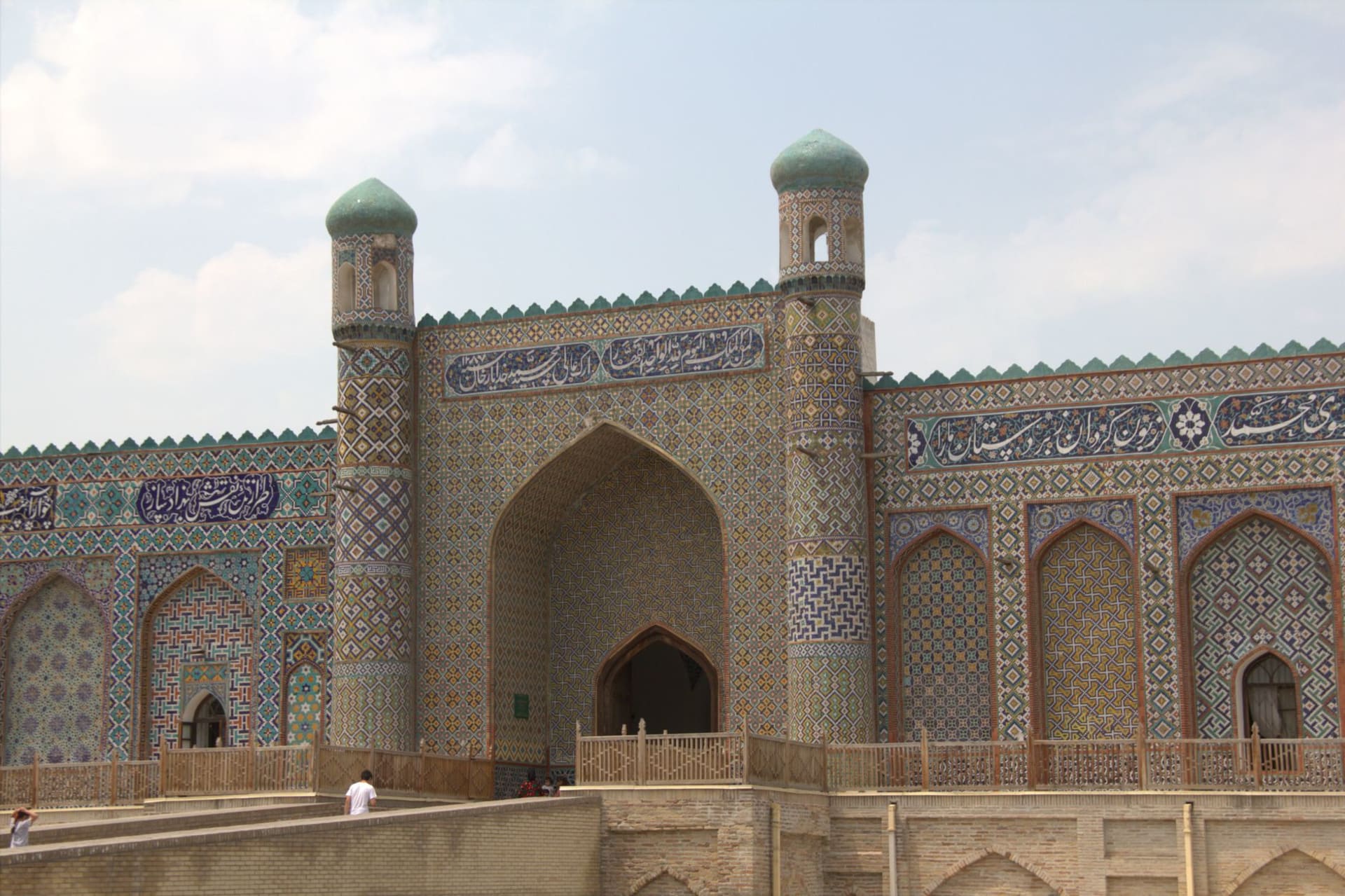
Fergana City
"They built it with Russian rulers on a Russian grid, but the city that grew inside it had other ideas."
The valley's unlikely Russian-built capital, where wide colonial boulevards meet a Saturday bazaar that operates on an entirely different logic.

Fergana city is not what you come to the Fergana Valley for. That’s the honest version. You come for Rishtan’s ceramics, Margilan’s silk, Kokand’s ruined palace — Fergana city is where you stay, where you eat, where you recover from twelve hours of standing in workshops asking questions through a phone translator. And then, if you stay long enough, you start to notice that the city itself is strange in a way that takes a while to articulate. It was built by Russian colonists after 1876 on a European grid — wide, tree-lined boulevards, a central park, uniform apartment blocks — and then the actual Central Asian city grew up inside and around this imported skeleton, and the collision between those two logics has produced something you don’t quite get anywhere else.
The Saturday bazaar is where the collision is most visible. It occupies a sprawling complex on the eastern side of the city, and on Saturday morning it is so full and so loud and so actively in progress that the first impression is simply volume — voices, truck horns, a man with a megaphone whose purpose I never determined, the high call from a naan baker whose clay oven faces the street. The covered sections hold spices in open sacks — coriander seeds, dried barberries, bright orange turmeric, whole dried chilis piled in pyramids that reaching eye level. The fabric section has suzani embroideries stacked taller than the vendors, and the vendors sit at the front of their stalls on folding chairs, unhurried, available for negotiations that will proceed at exactly the pace they have always proceeded.
Outside the bazaar, the city’s Russian quarter has a sleepy, leafy dignity — the tree-lined streets were designed generously, and on summer evenings the population moves outside to sit on benches and walk slowly, the same evening ritual you see across Central Asia and the former Soviet space. The regional museum is worth an hour — it has a decent collection of ceramics and textiles that provides context for everything you’ve seen in the workshops, and a natural history section that seems to have been unchanged since approximately 1983. I find that kind of underfunded, slightly dusty museum more moving than a glossy one. The objects feel real inside it.
The food in Fergana city is what you eat when you are tired of asking whether something is halal and just want lamb and bread and something cold to drink. The chaikhanas near the bazaar do lagman — hand-pulled noodles in a broth with lamb and vegetables — at a quality I hadn’t expected. There is a tea house in the central park where old men drink tea in the shade and the sound of fountains almost covers the traffic from the road beside it. I sat there for an hour one afternoon with nothing in particular to do and felt the particular satisfaction of being temporarily without a plan in a city that also appears to be temporarily without a plan.

The guesthouses in the old residential quarters — actual family homes with a room or two let out, breakfast served in a courtyard under a grapevine — are the best places to stay. Your host will probably have a cousin who makes ceramics, a sister-in-law who embroiders, a neighbour who can drive you to Rishtan for a reasonable price. The city works as a base because it functions as a web, and you are a new node in it the moment you sit down to breakfast.
When to go: Year-round as a base. The Saturday bazaar is at its most overwhelming in summer but is worth visiting in any season. Spring brings fruit blossom on the trees lining the central boulevard. The city is the warmest place in the valley to be based in winter, when many village workshops run reduced hours.
Keep exploring
More from Fergana Valley
 fergana-valley
Jalal-Abad
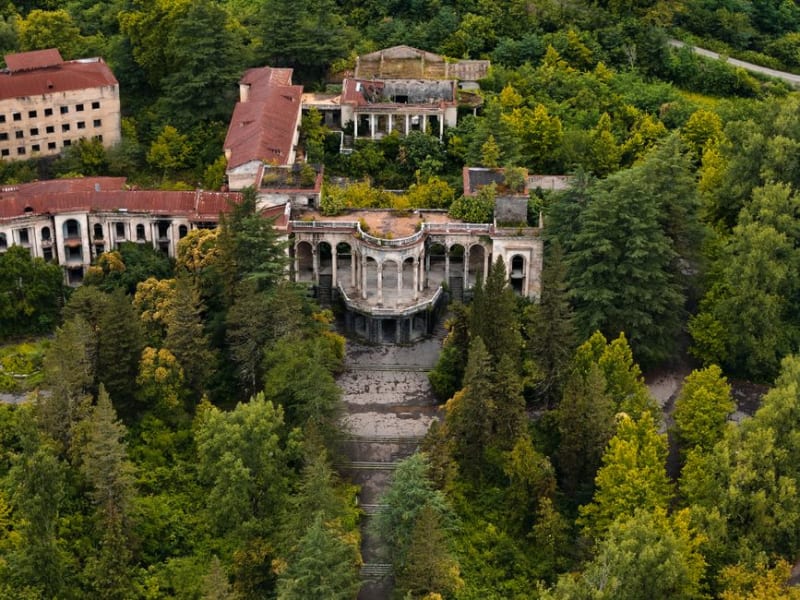
On the Kyrgyz edge of the valley, I wandered a Soviet-era sanatorium park where pensioners still come each summer to take the mineral waters.
Explore fergana-valley
Kasan
A forgotten caravanserai town in the valley's northern reaches where walnut trees shade ancient trade routes nobody travels anymore.
Explore fergana-valley
Kokand
A khanate capital frozen between grandeur and ruin, where a 19th-century palace still wears its hand-painted ceilings like a fading crown.
Explore fergana-valley
Kuva
A dusty roadside town hiding one of Central Asia's most unexpected finds — ruins of a pre-Islamic Buddhist temple in the heart of the Silk Road.
Explore fergana-valley
Margilan
The silk city of Central Asia, where ikat patterns have been woven on wooden looms since before the Silk Road had a name.
Explore fergana-valley
Namangan
The valley's most devoutly Muslim city, where carved wooden mosques and pomegranate orchards define a pace of life older than Uzbekistan itself.
Explore