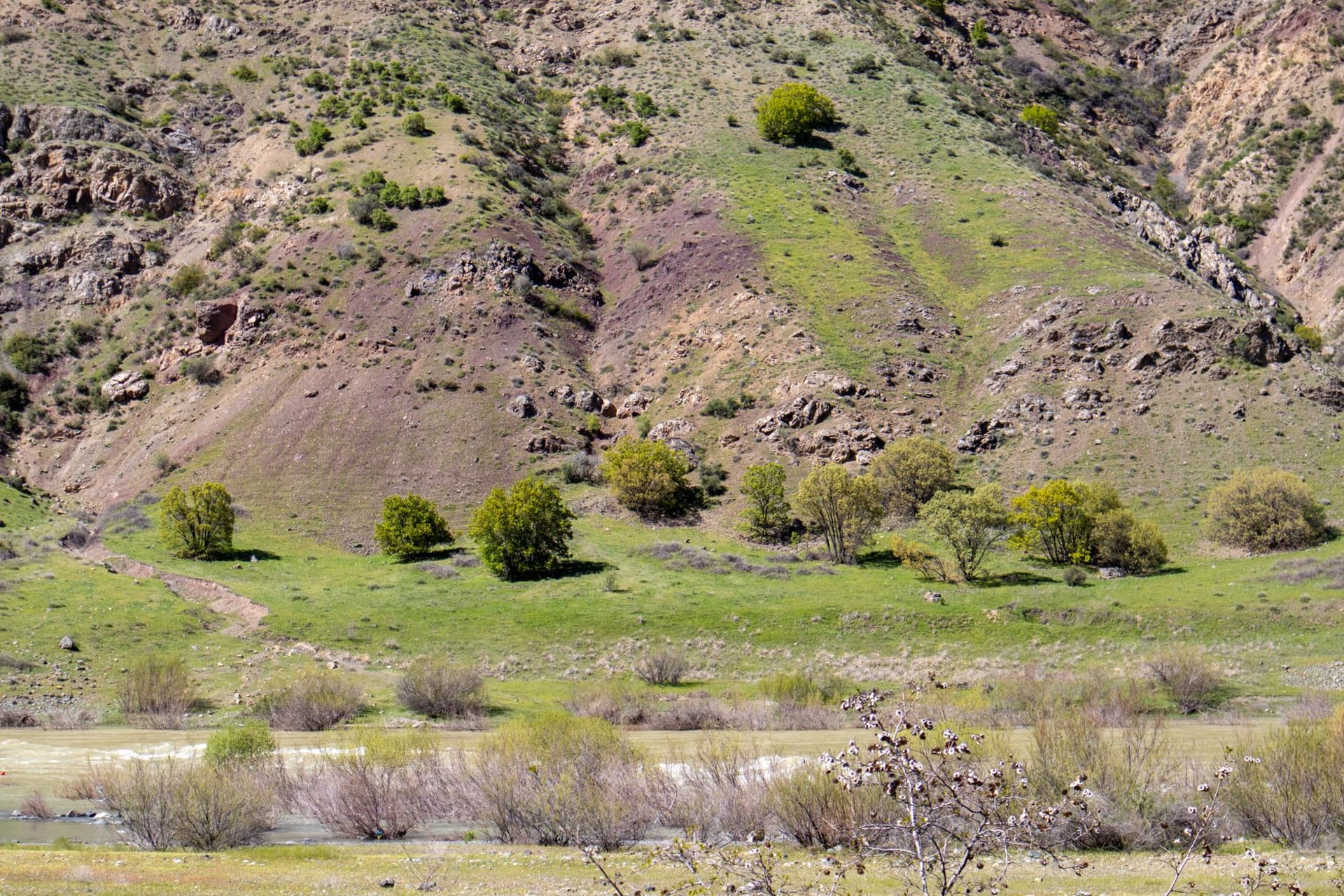
Andijan
"Babur was born here and spent his life trying to get back. Standing at the city's edge, I began to understand the pull."
Andijan sits at the eastern end of the Fergana Valley, pressed against the Kyrgyz border, and carries more history per square metre than most cities twice its size. Babur was born here in 1483 and lost the city to the Uzbeks before he was twenty. He spent the rest of his life conquering things — Kabul, then Delhi, then most of the Indian subcontinent — and wrote in his memoir with a longing for Andijan’s particular light and its particular melons that reads, six centuries later, like something embarrassingly sincere. I read that passage sitting in the Bobur Literary Museum, where they keep a copy of the Baburnama open to a page describing the city, and felt the slightly absurd vertigo of reading someone’s homesickness while sitting in the place they were homesick for.
The museum is small but taken seriously — the displays cover Babur’s life with real care, and there is a reading room with reproductions of manuscript pages that a librarian unlocked for me specifically, producing a key from her cardigan pocket with the air of someone accustomed to this ritual. Outside, the street named for Babur runs toward the central square past a tree he is said to have sat under, now protected by a low iron railing and regarded by the pigeons with complete indifference.
The Jome Mosque in the centre of Andijan is one of the Fergana Valley’s most beautiful — a large courtyard with a pool, the main prayer hall supported by carved wooden columns, the whole space quieter than a mosque of this size and reputation has any right to be on a weekday morning. I arrived just after fajr and watched men in prayer, then sat in the portico as the sun came up over the courtyard wall and turned the pool’s surface from black to gold. A cat appeared from somewhere and sat beside me with the authority of ownership.
Andijan is also the site of a 2005 massacre that left several hundred people dead when government forces opened fire on protesters in the central square — a fact the city carries quietly and officially barely acknowledges. In the square itself now there are flower beds and a large Uzbekistan flag and benches where people sit in the evenings. History happens in places that then continue to be places. I found the ordinariness of the square more sobering than a monument would have been.

The bazaar in Andijan is large and active, oriented more toward local commerce than Fergana city’s tourist-adjacent offerings. The food section has extraordinary produce — this corner of the valley is particularly fertile, and the tomatoes in late summer are the kind that require no preparation, eaten standing at the vendor’s stall with a small pinch of salt the vendor provides without being asked. I found a stall selling nothing but different varieties of melon, the vendor cutting thin slices of each variety for anyone who stopped to look, operating entirely on the logic that once you taste it, you buy it. He was correct.
When to go: Late August to September for the melon season — the valley produces varieties unavailable anywhere else, some of them so sweet they feel implausible. April and May are also excellent. Andijan is two to three hours by marshrutka from Fergana city, making it a day trip or an overnight depending on your pace.