A 140-meter double cascade tumbling off a hanging valley on Streymoy, close enough to the road that we almost didn't stop.
We were driving north from Tórshavn toward Haldarsvík with no real plan beyond “follow the coast and see what happens,” which is how most of our best days in the Faroes went. Lia spotted it before I did — a thin white ribbon splitting a mountainside off to our left, dropping so far down that the bottom of it seemed to belong to a different landscape than the top. I pulled onto the gravel shoulder without really deciding to. That was Fossá, and I didn’t know yet it was the tallest waterfall in the whole archipelago, about 140 meters, falling in two distinct stages.
There’s something almost anticlimactic about how easy Fossá is to reach — it sits right off the main road, no hike required, which after four days of scrambling up wet grass to see other falls felt like cheating. But standing at the base changes that impression fast. The upper tier pours out of a hanging valley, invisible from below until the water reappears and drops again toward the sea. I remember tilting my head back so far to follow it that I lost my balance a little, laughing, while Lia just stood there filming with her phone shaking from the wind.
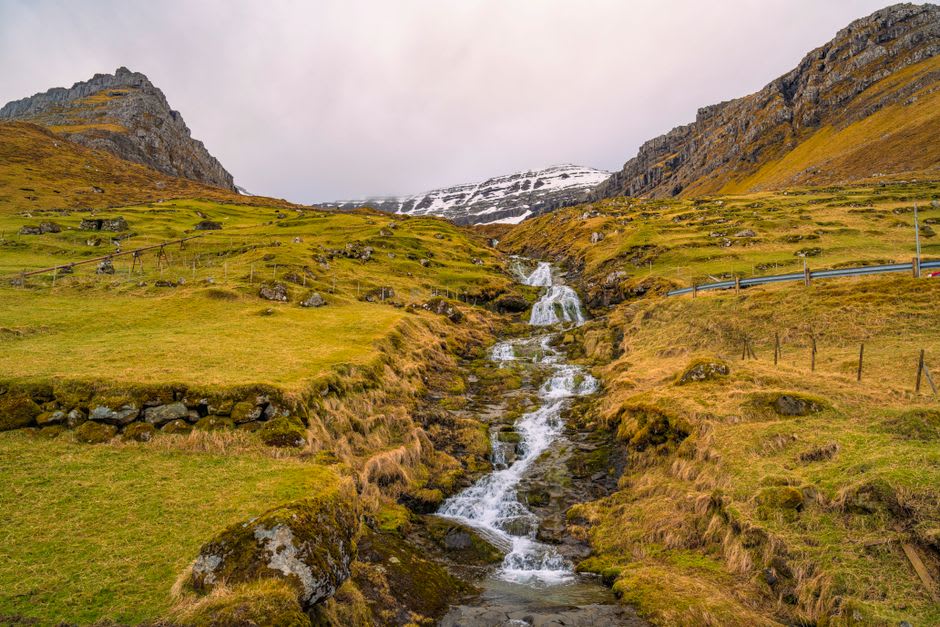
We’d stopped in late May, a week or so after the last of the snowmelt had worked its way down from the higher ground, and the volume was genuinely loud — not a trickle you squint at, but a full, insistent roar that carried across the road. I ate a squashed rúgbrauð sandwich sitting on a rock nearby, watching a couple of sheep completely ignore the spectacle a few meters from them, which felt like the most Faroese image of the entire trip. Even the name is unassuming: Fossá just means “waterfall” in Faroese, no embellishment needed when the thing speaks for itself.
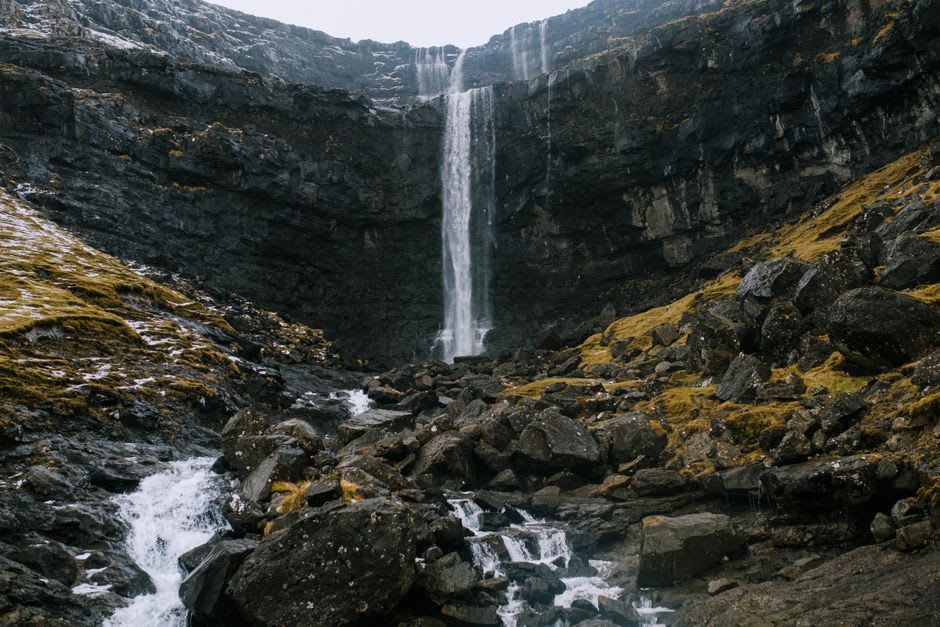
What stayed with me wasn’t the height, exactly, it was how casually it fits into daily life there — cars passing, a farmhouse nearby, nobody treating it as a landmark to be roped off. We ended up staying almost an hour longer than planned, just sitting with the noise of it, before continuing on to Haldarsvík for coffee.
When to go: We got lucky with our late-May timing, right after the spring snowmelt had pushed the flow to its loudest — if you miss that window, aim for after a stretch of autumn rain instead, since a dry summer visit can leave Fossá looking noticeably thinner.
Keep exploring
More from Faroe Islands
 faroe-islands
 Funningur
A fjord-end village on Eysturoy where the mountains close in from three sides and the light changes fast enough to feel like weather having second thoughts.
Explore faroe-islands
 Gásadalur
A village so isolated it had no road until 2004, bookended by a waterfall that drops straight to the Atlantic and eleven people who never needed much more.
Explore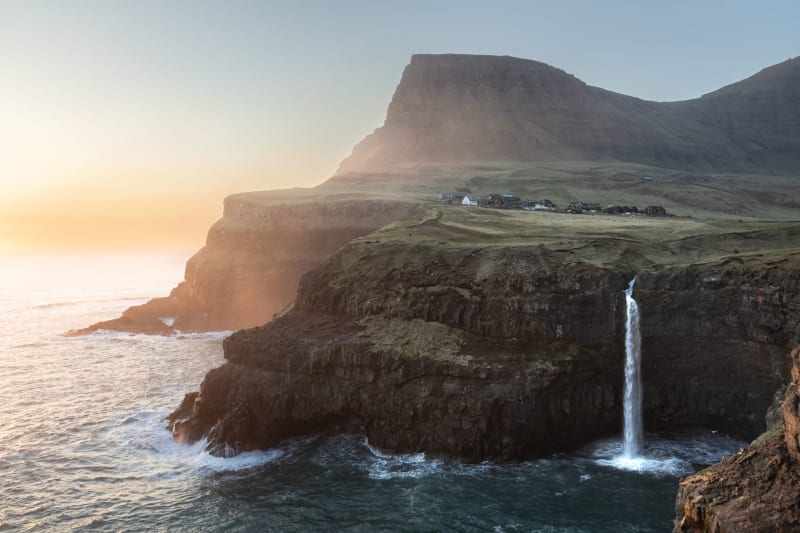 faroe-islands
 Gjógv
A village at the tip of Eysturoy where a natural gorge cuts through the basalt to the sea and the silence between weather systems has real weight.
Explore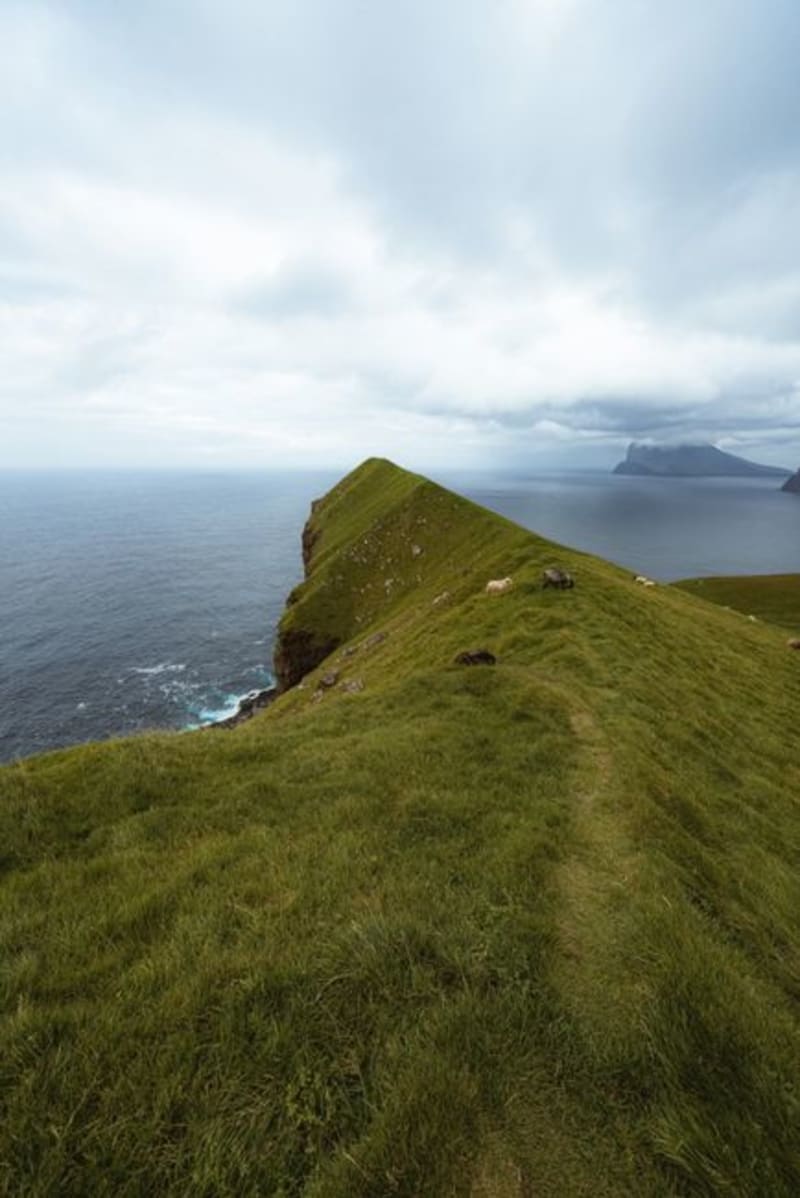 faroe-islands
 Kalsoy
A narrow finger of basalt pierced by four dark tunnels, ending in a ridge walk to a lighthouse above sheer 600-meter cliffs.
Explore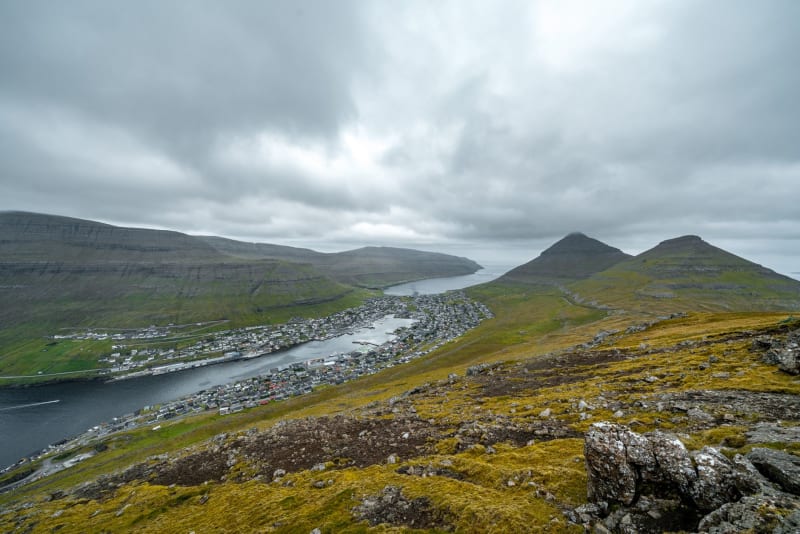 faroe-islands
 Kirkjubøur
The medieval heart of the Faroes — a roofless cathedral that was never finished, and a farmhouse continuously inhabited for over nine hundred years.
Explore faroe-islands
 Klaksvík
The Faroes' working second city occupies a fjord valley on Borðoy island — trawlers, a modern church with a Viking font, and a quieter energy than the capital.
Explore