West Point Island
"I've stood at a lot of cliff edges, but none where the birds outnumbered every thought in my head."
A remote sheep farm turned albatross sanctuary, where thousands of black-browed albatross nest beside rockhopper penguins on wind-carved cliffs.
The boat ride out from West Falkland took longer than I expected, long enough that Lia and I stopped talking and just watched the water change color under a sky that couldn’t decide what it wanted to do. When West Point Island finally came into view, it didn’t look like much — low, green-brown, wind-scoured. I’d read that the Napier family has farmed sheep here without interruption since 1860, and that the island only opened to visitors in 1968, and somehow both facts made the place feel more private, like we were being let in on something rather than shown a tourist stop.
We walked inland first, across open farmland, before the path started climbing toward Devil’s Nose. That name did a lot of work before we even arrived, and it delivered. Around 2,000 breeding pairs of black-browed albatross nest there, packed into tussac grass alongside rockhopper penguins, and the noise hits you before the smell does, and the smell hits you before you can process either one. I sat down on a patch of grass because my legs genuinely needed a second — not from the walk, but from watching an albatross chick get fed six feet away like we weren’t even there.
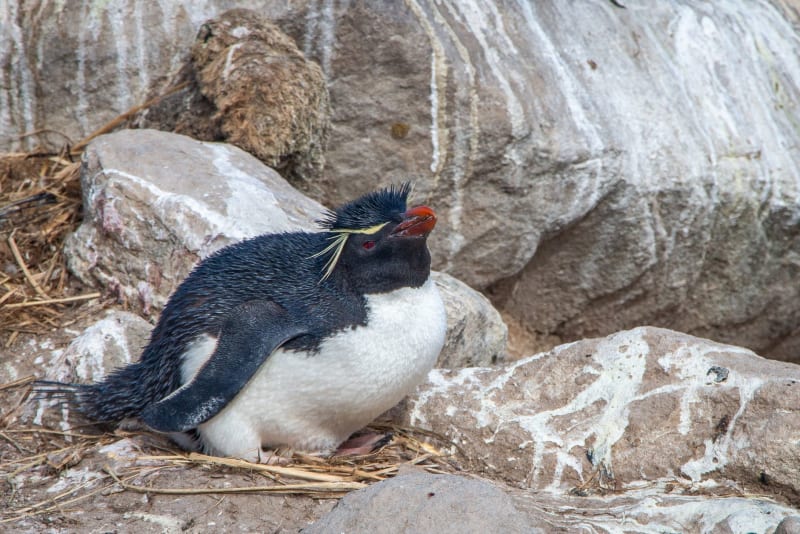
Lia kept pointing out the rockhoppers threading between the albatross nests, hopping over roots and rocks with this stubborn, comic determination, completely unbothered by birds three times their size. I tried to get a photo of one mid-hop and failed about a dozen times before I gave up and just watched. Above the colony, Cliff Mountain rises to 381 meters, the tallest sea cliff in the Falklands, and from partway up its slope the whole nesting ground opens out below you — white and black wings shifting like something breathing.
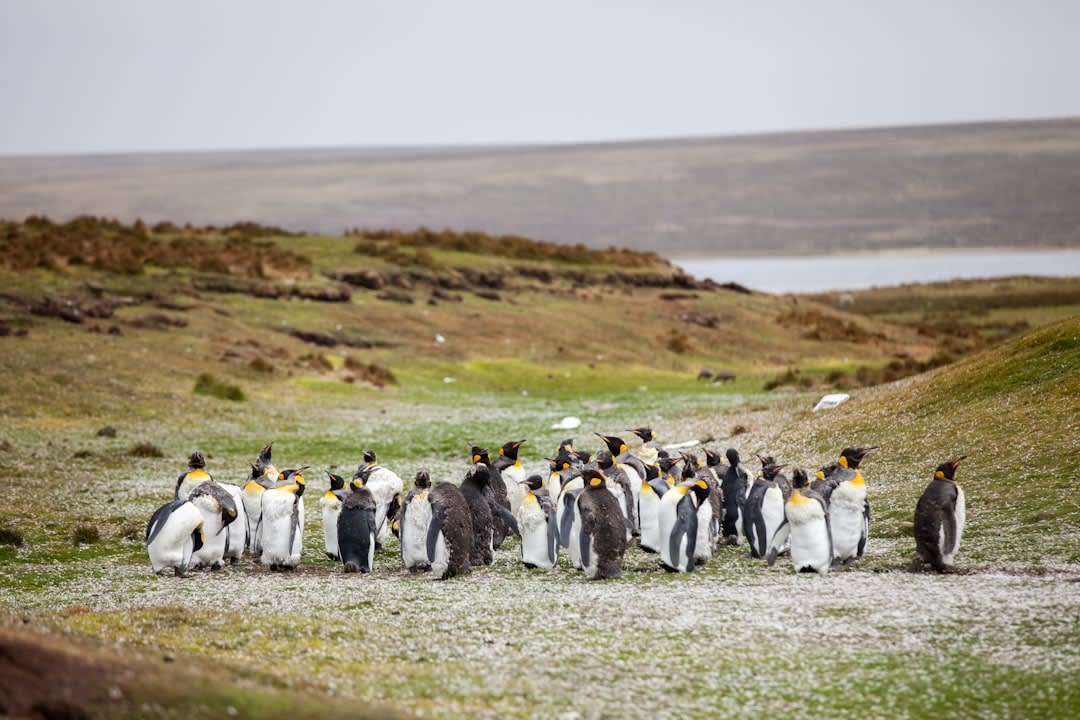
We ended the afternoon back near the settlement, where the current Napier generation still runs the farm and, that day, put out tea and cake for the handful of us who’d come ashore. It was such a small, ordinary gesture after something so overwhelming, and it’s the detail I keep coming back to — sheep farmers who’ve kept this island going for over 160 years, sharing a table with strangers who came for the birds.
When to go: Aim for the austral summer, roughly October through March, when the albatross are nesting and the penguin chicks are hatching — any earlier or later and the cliffs go quiet.
Keep exploring
More from Falkland Islands
 falkland-islands
 Bleaker Island
Despite its name, Bleaker Island is luminous with wildlife — gentoo penguins, magellanic burrows, endemic geese, and white-sand beaches that belong to almost no one.
Explore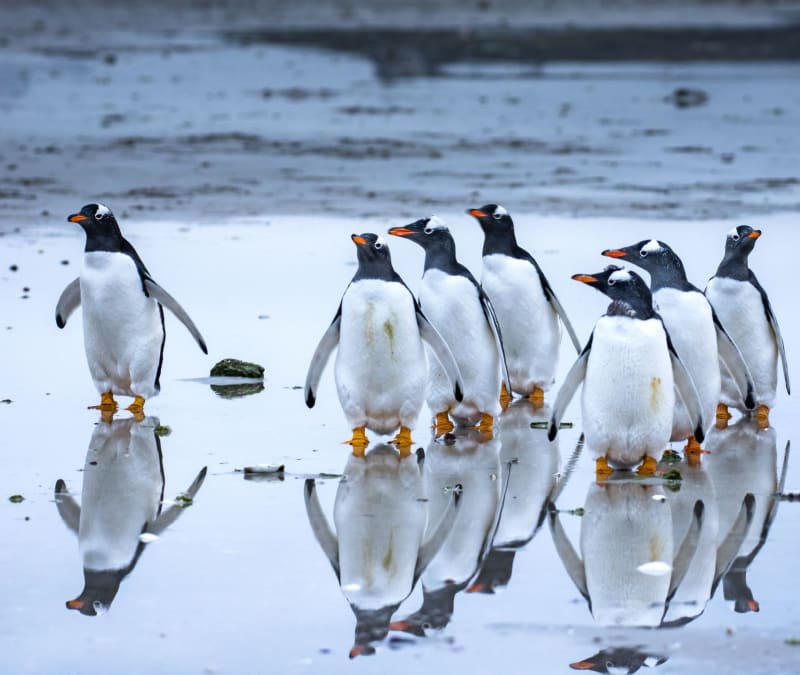 falkland-islands
 Carcass Island
A rat-free island where striated caracaras steal food from your plate at afternoon tea and black-browed albatrosses wheel overhead with magnificent indifference.
Explore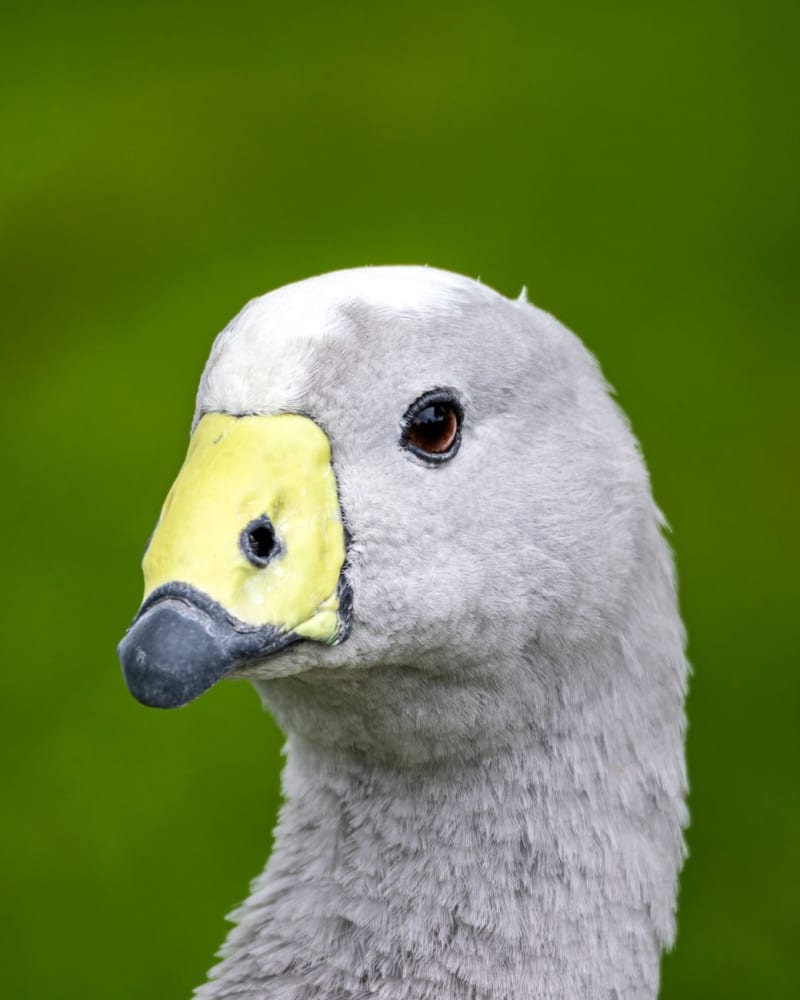 falkland-islands
 Goose Green
A tiny sheep-farming settlement on East Falkland, the largest community outside Stanley, where the most famous land battle of the 1982 war was fought across windswept grass that looks like nothing at all.
Explore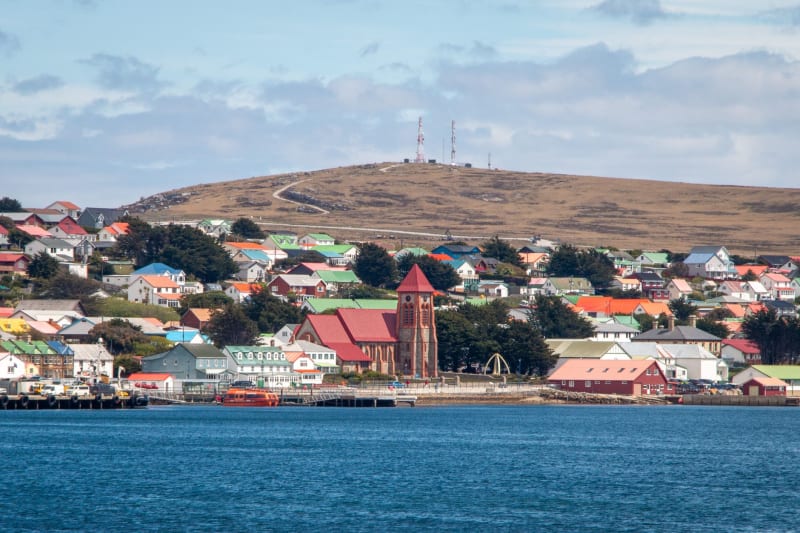 falkland-islands
 Mount William
The quartzite ridge above Stanley where the 1982 war reached its decisive hours — a day hike that moves through geology, military history, and the widest view in the islands.
Explore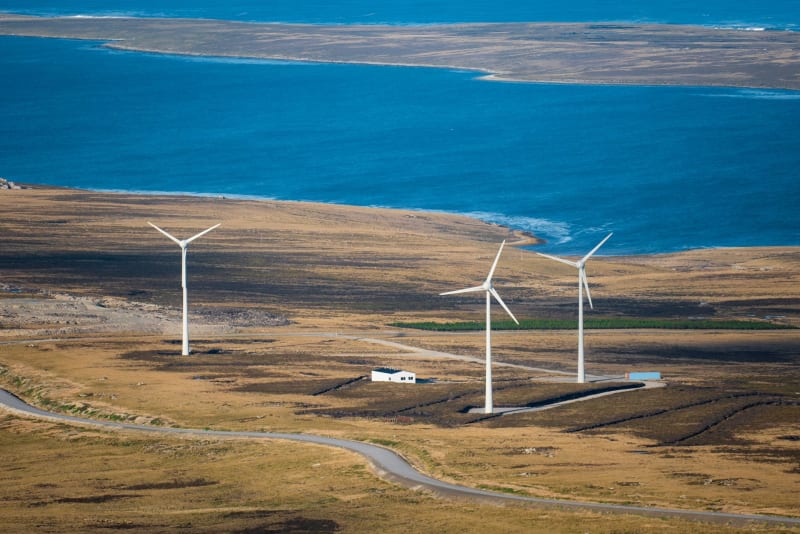 falkland-islands
 New Island
At the western extreme of the archipelago, New Island's dramatic cliffs hold rockhopper penguins, black-browed albatrosses, and a silence that feels like the end of the navigable world.
Explore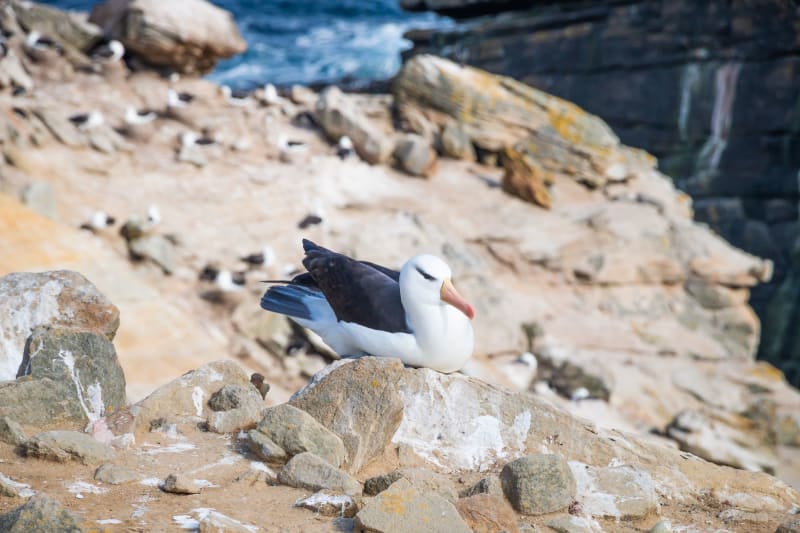 falkland-islands
 Pebble Island
Named for its semi-precious stones, Pebble Island layers 1982 war history over some of the Falklands' finest wildlife — and the beach itself is a kind of treasure hunt.
Explore